
Curlew Sandpiper Identification Guide
A slim, long-legged Eurasian shorebird best known for its evenly downcurved bill and, in breeding plumage, brick-red underparts, with a white rump visible in flight year-round.
Read the full Curlew Sandpiper encyclopedia entry →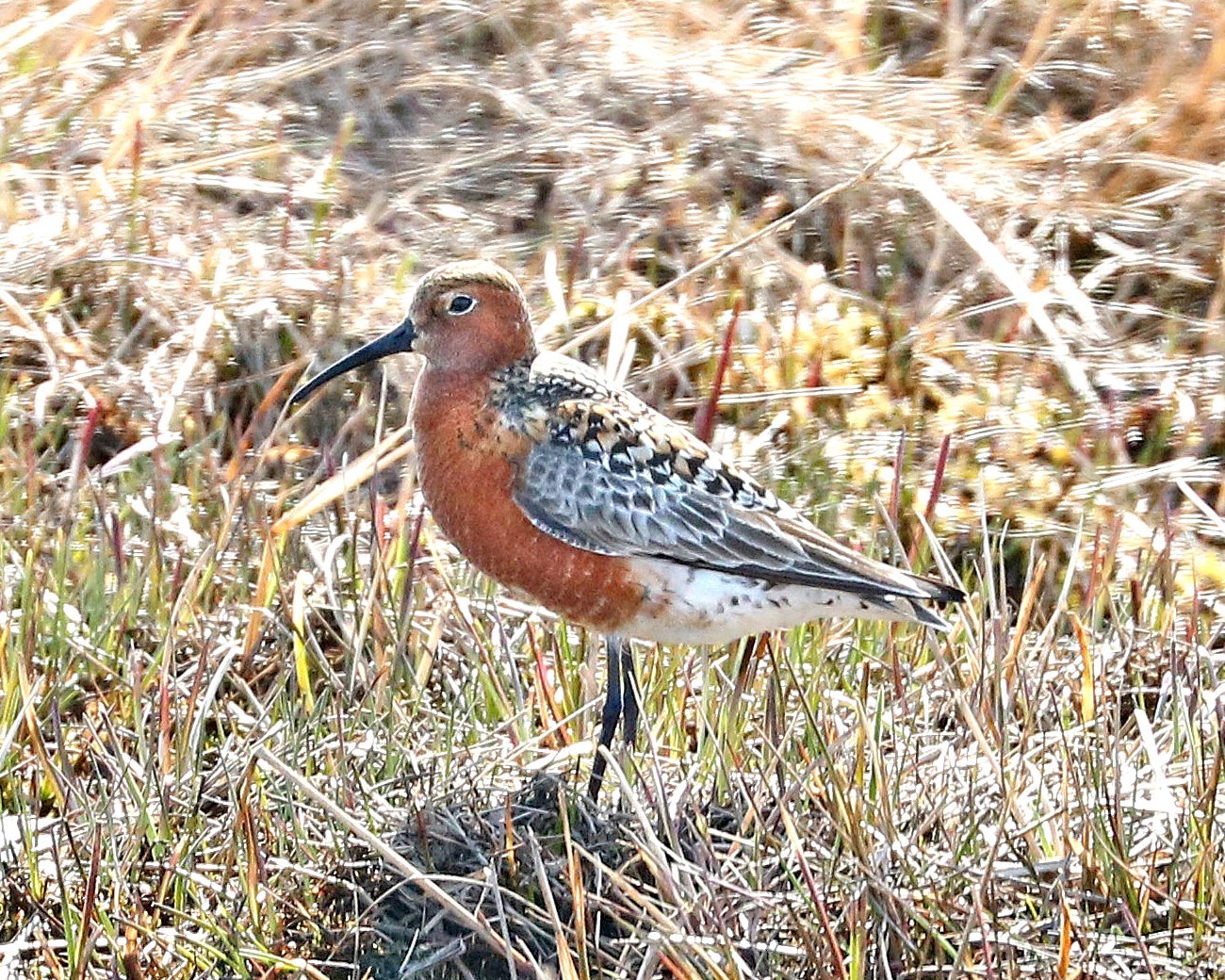
Overview
The Curlew Sandpiper (Calidris ferruginea) is a medium-sized "peep"-type sandpiper that breeds in the high Russian Arctic and migrates long distances to winter in Africa, South Asia, and Australasia, with regular vagrancy elsewhere. Its evenly curved bill and clean white rump are useful at any season.
Key Field Marks
- Size & shape: About 18–23 cm (7–9 in), noticeably longer-legged and longer-billed than a Dunlin, with an elegant, elongated look.
- Bill: Fairly long and evenly decurved along its whole length (unlike Dunlin's bill, which droops mainly at the tip) — the single best structural clue.
- Breeding plumage: Head, neck, and underparts deep brick-red to chestnut, with fine dark barring on the flanks and a scaly dark-and-buff patterned back.
- Non-breeding plumage: Pale grayish above and white below, with a clean white supercilium (eyebrow stripe) contrasting with a grayer crown and eye-line — cleaner and paler overall than non-breeding Dunlin.
- Rump: Square white rump patch, obvious in flight and contrasting with the dark tail — differs from Dunlin's dark-centered rump.
- Legs: Blackish and proportionately long, giving a leggier stance than Dunlin.
Similar Species
- Dunlin: Shorter, straighter legs, bill droops mainly near the tip rather than curving evenly, and shows a dark center to the rump rather than clean white; non-breeding Dunlin is duller and less crisply patterned.
- Stilt Sandpiper (in the Americas): Longer, greenish-yellow legs and a straighter bill; breeding plumage shows barring rather than solid rufous underparts.
- Red Knot: Much bulkier and shorter-billed, lacking the fine decurved bill shape.
Habitat & Range
Breeds on Arctic tundra in Siberia. On migration and in winter, favors mudflats, estuaries, saltpans, and shallow lagoons, often in mixed flocks with Dunlin and other small shorebirds. A regular but scarce migrant well outside its core Old World wintering range (including coastal North America) during migration periods.
Behavior
Forages by wading in shallow water and soft mud, probing actively and sometimes sweeping the bill side to side, picking at the surface as well as probing deeply — more active and "busier" in its feeding action than the steadier probing of Dunlin.
Voice
Flight call is a soft, rolling, liquid "chirrup" or "prrreet," distinct from Dunlin's harsher, buzzier "treep" — useful for picking birds out of mixed flocks overhead.
Best Viewing Tips
Check mixed Dunlin/peep flocks on coastal mudflats during migration; look for the taller stance, evenly curved bill, and — in flight — the clean white rump to confirm identification.
Frequently asked questions
How do I tell a Curlew Sandpiper from a Dunlin?
The Curlew Sandpiper has an evenly downcurved bill along its whole length, longer legs, and a clean white rump in flight, whereas Dunlin's bill droops mainly at the tip and it shows a dark-centered rump.
What does a breeding Curlew Sandpiper look like?
Breeding adults are deep brick-red to chestnut on the head, neck, and underparts, with a scaly dark-and-buff patterned back.
Where does the Curlew Sandpiper breed and winter?
It breeds on Arctic tundra in Siberia and winters mainly in Africa, South Asia, and Australasia, migrating through Europe and Asia and occurring as a scarce vagrant elsewhere.
What call does the Curlew Sandpiper make?
A soft, rolling, liquid "chirrup" or "prrreet" in flight, softer and more musical than Dunlin's buzzier call.