
Crimson Rosella Identification Guide
A vividly colored Australian parrot with a deep crimson body, blue cheeks and wings, and a scalloped black-and-red back pattern.
Read the full Crimson Rosella encyclopedia entry →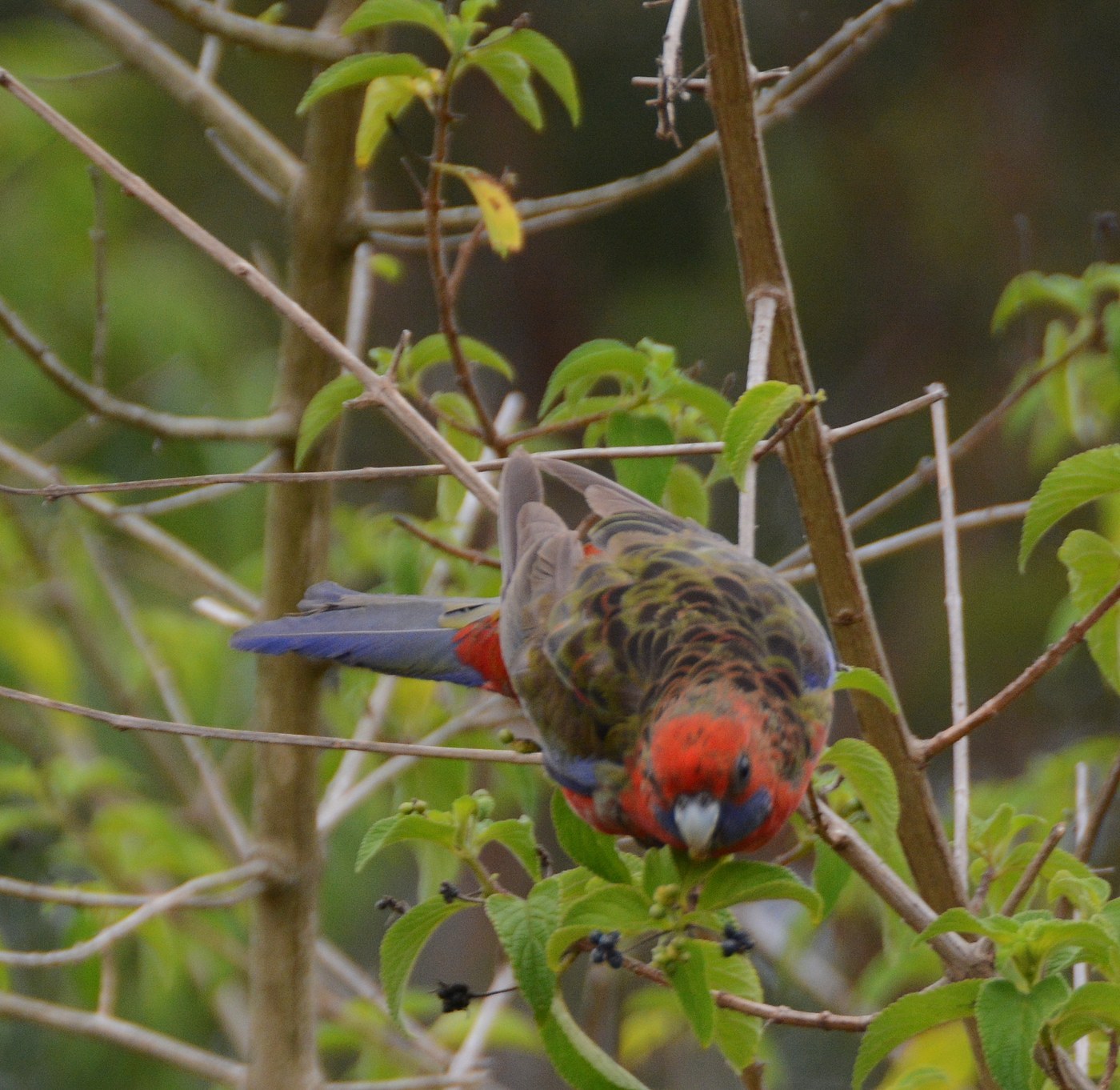
Key Field Marks
- Size & shape: A medium-large parrot around 32–37 cm long, with a long, broad tail typical of rosellas.
- Plumage: Adults are deep crimson-red over most of the head, underparts, and rump, with vivid blue cheek patches, blue flight feathers, and a blue tail.
- Back pattern: Mantle feathers are black with red edging, creating a distinctive scalloped or scaled look on the back.
- Juveniles: Mostly green with patches of red and blue coming in gradually as the bird matures, quite different from the adult plumage.
Separating It From Similar Species
- Eastern Rosella: Has white cheek patches (not blue) and a yellow-green body rather than overall crimson.
- Adelaide Rosella: Occurs in a hybrid/intergrade zone with orange-toned plumage intermediate between Crimson and Yellow Rosella — a genuinely tricky identification challenge where ranges meet.
- Juvenile birds: Can be confused with other green parrots, but the developing blue cheek patch and scalloped back pattern help confirm species.
Where & When to See It
- Range: Eastern and southeastern Australia; also introduced populations in New Zealand and Norfolk Island.
- Habitat: Forests, woodlands, and increasingly gardens and parks, where it readily visits bird feeders.
- Season: Resident year-round; sedentary within home range.
Voice & Behavior
- Voice: A metallic, ringing "kwink-kwink" flight call, along with softer whistles and chattering notes.
- Habits: Often seen in pairs or small family groups; forages on the ground and in trees for seeds, fruit, nectar, and insects.
- Behavior at feeders: Bold and confiding in suburban gardens, often approaching close to people.
Frequently asked questions
Why do young Crimson Rosellas look green?
Juveniles have mostly green plumage that gradually molts into the adult crimson, blue, and black pattern over roughly a year or more.
How do you tell a Crimson Rosella from an Eastern Rosella?
Crimson Rosella has blue cheek patches and an overall crimson body, while Eastern Rosella has white cheek patches and yellow-green body coloring.
What is the call of a Crimson Rosella?
A distinctive metallic "kwink-kwink" given in flight is the most recognizable call.
Where do Crimson Rosellas live?
They are found in forests, woodlands, and gardens across eastern and southeastern Australia.