
Cory's Shearwater Identification Guide
A large, languid-flying Atlantic shearwater with a stout yellowish bill and a gradual, soft transition from gray-brown crown to white face rather than a sharply demarcated dark cap.
Read the full Cory's Shearwater encyclopedia entry →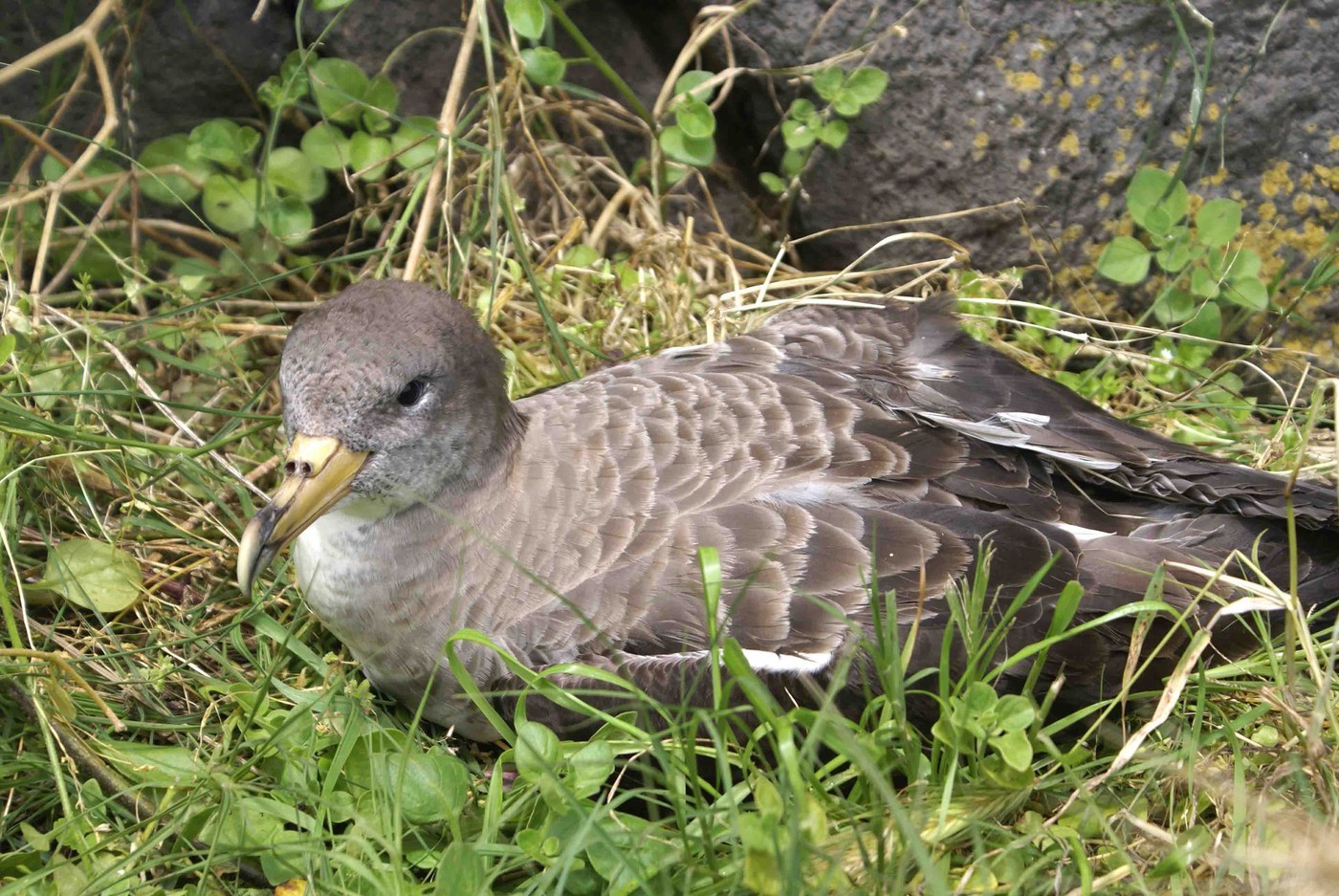
Key Field Marks
- Size & shape: A large shearwater, 45–56 cm long with a wingspan of roughly 112–126 cm, appreciably bigger and heavier-billed than most other Atlantic shearwaters.
- Plumage: Pale grayish-brown upperparts and clean white underparts; the crown blends gradually into the white face and throat without a sharply defined dark cap, a key distinguishing feature.
- Bill: Notably thick and stout, pale yellowish with a darker tip, distinctly heavier than the bills of smaller shearwater species.
- Flight style: Slow, languid wingbeats interspersed with long glides on stiff, gently bowed wings, appearing more leisurely and less frenetic than smaller shearwaters like Manx or Sooty.
- Behavior: Highly pelagic, feeding by surface-seizing and shallow plunge-diving; readily follows fishing vessels and can gather in large feeding flocks over baitfish.
Separating It From Similar Species
- Great Shearwater: Shows a sharply demarcated dark cap contrasting with a white face, a dark smudgy belly patch, and a pale horseshoe-shaped band across the uppertail coverts — all absent in Cory's.
- Scopoli's Shearwater: Extremely similar and only recently split from Cory's; Scopoli's typically shows more white extending into the underwing primary tips, along with subtle bill and structural differences that require careful, close observation.
- Sooty Shearwater: Much darker overall with silvery underwing linings and lacks the white underparts entirely.
Where & When to See It
- Habitat: Open ocean far from shore; breeds colonially on islands.
- Range: Breeds on Atlantic islands including the Canary Islands, Azores, and Madeira; disperses widely across the Atlantic Ocean, including regular occurrence off the eastern coast of North America in summer and fall, and winters in the southern Atlantic off South America and southern Africa.
- Season: Most reliably seen well offshore during the warmer months when post-breeding dispersal brings birds far from their colonies.
Voice
- Largely silent at sea; at breeding colonies gives eerie, wailing and moaning calls at night, rarely heard by observers away from nesting islands.
Frequently asked questions
What is the best field mark to separate Cory's Shearwater from Great Shearwater?
Cory's lacks a sharply defined dark cap, instead showing a gradual blend from gray-brown crown into a white face, while Great Shearwater has a crisply demarcated dark cap and a dark belly patch that Cory's lacks.
How can you tell Cory's Shearwater from Scopoli's Shearwater?
They are very similar; Scopoli's typically shows more white extending into the primary tips on the underwing, along with subtle bill differences, making careful, close views necessary for certain identification.
What does Cory's Shearwater's flight look like?
It flies with slow, languid wingbeats and long glides on stiff, bowed wings, appearing more leisurely than smaller, faster-flapping shearwater species.
Where is the best place to see a Cory's Shearwater?
Look well offshore on pelagic boat trips, especially in the warmer months when post-breeding birds disperse widely across the Atlantic, including off the eastern coast of North America.
Does Cory's Shearwater call at sea?
It is largely silent away from breeding colonies; its eerie wailing calls are heard mainly at night at nesting sites on remote islands.