
Common Wood Pigeon Identification Guide
Europe's largest and bulkiest pigeon, identified by its white neck patch, pink breast, and the bold white wing crescent that flashes in flight.
Read the full Common Wood Pigeon encyclopedia entry →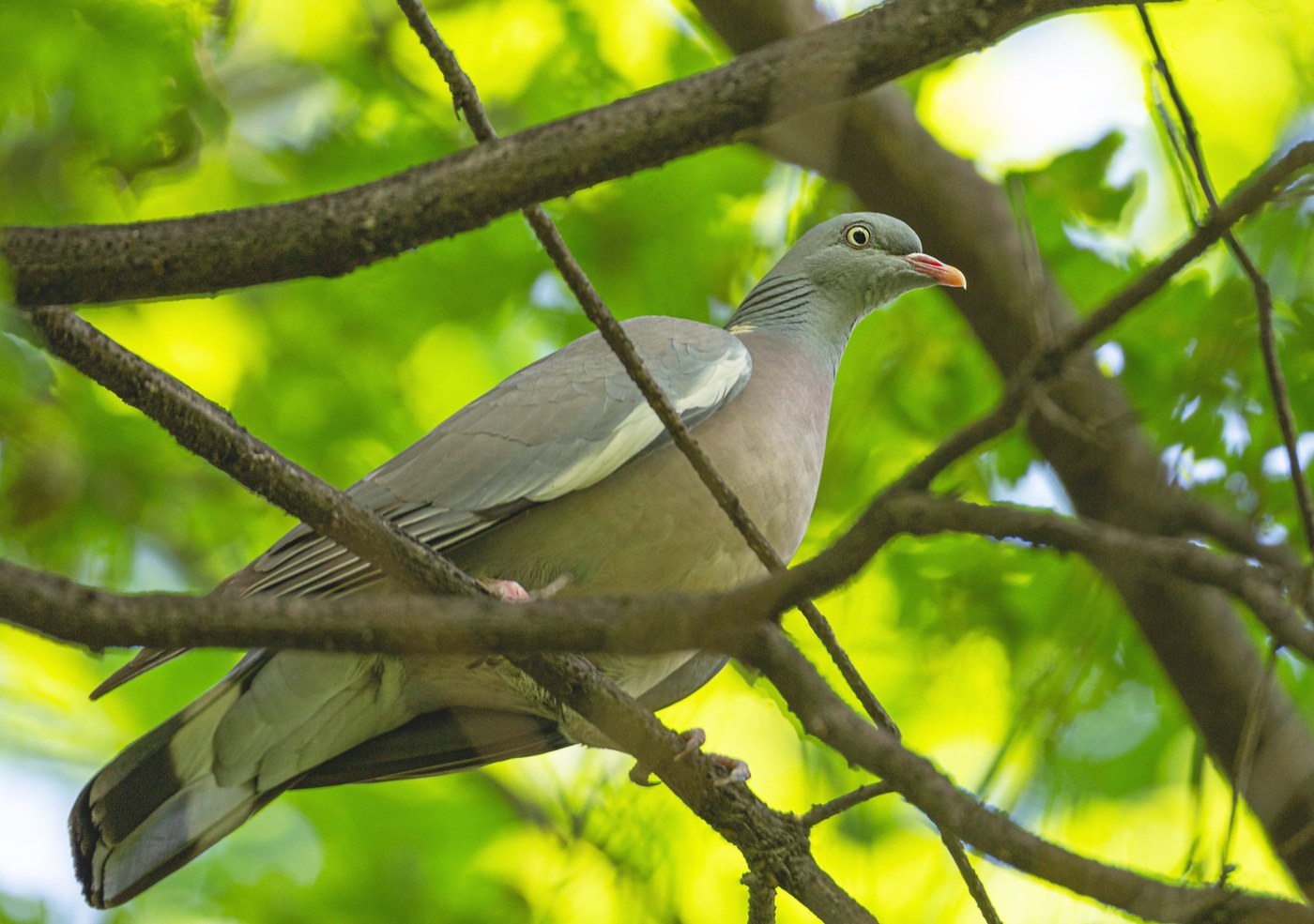
Key Field Marks
- Size & shape: A large, heavy-bodied pigeon, roughly 40–45 cm long, with a small head, thick neck, and full chest — noticeably bigger and bulkier than a feral pigeon.
- Plumage: Blue-grey overall with a soft pinkish wash on the breast; the neck shows an iridescent green and purple sheen.
- Diagnostic patch: Adults have a bold white crescent patch on each side of the neck — the single best field mark, absent in juveniles.
- In flight: A conspicuous white bar crosses each wing, easily seen as the bird flies off, along with loud, clattering wingbeats on take-off.
- Bare parts: Pinkish-red bill with a yellowish tip and cere, small orange-yellow eye.
- Behavior: Forms large flocks, especially outside the breeding season, feeding on the ground in fields or grazing on crops and acorns; performs a rising, wing-clapping display flight followed by a gliding descent.
Separating It From Similar Species
- Stock Dove: Noticeably smaller and daintier, lacks the white neck patch, has a dark eye, and shows two short black bars on the closed wing rather than a bold white flight bar.
- Rock Dove / Feral Pigeon: Smaller and more variable in color (many show black wing bars or odd plumage patterns); glossy neck sheen present but never a defined white patch, and lacks the pink breast wash.
- Turtle Dove (where present): Much smaller and slimmer with a scaly-patterned back and black-and-white striped neck patch, quite different from Wood Pigeon's plain grey back.
Where & When to See It
- Habitat: Broadleaf and mixed woodland, farmland, hedgerows, parks, and increasingly gardens and city centers.
- Range: Widespread and common across nearly all of Europe, extending into North Africa and the Middle East.
- Season: Largely resident, though northern and eastern populations move south in winter; often most conspicuous in large post-breeding and winter flocks feeding in stubble fields.
Voice
- Song: A deep, rhythmic cooing of five syllables, often rendered as "coo-COOO-coo, coo-coo," repeated steadily from a perch.
- Other sounds: A loud, startling clatter of wings when flushed, and an audible wing-clap at the top of its display flight.
Frequently asked questions
How can I tell a Common Wood Pigeon from a feral pigeon?
Wood Pigeons are noticeably larger and bulkier, show a pink breast wash, and adults have a bold white patch on each side of the neck plus a white wing bar in flight — features feral pigeons lack.
Do young Wood Pigeons have the white neck patch?
No, juveniles lack the white neck patch and the iridescent sheen, appearing plainer grey until they mature.
What does the Wood Pigeon's call sound like?
A deep, rhythmic five-note coo, often described as "coo-COOO-coo, coo-coo," repeated from a perch throughout the breeding season.
Where do Wood Pigeons like to feed?
They feed mainly on the ground in fields, farmland, and parks, taking grain, clover, acorns, and other seeds, often in large flocks outside the breeding season.
Is the Common Wood Pigeon migratory?
Most populations are resident, but northern and continental birds move south or west in winter, sometimes forming very large flocks on migration.