Common Starling Identification Guide
A stocky, glossy black songbird famous for iridescent spangled plumage, a strutting walk, and spectacular murmuration flocks in winter.
Read the full Common Starling encyclopedia entry →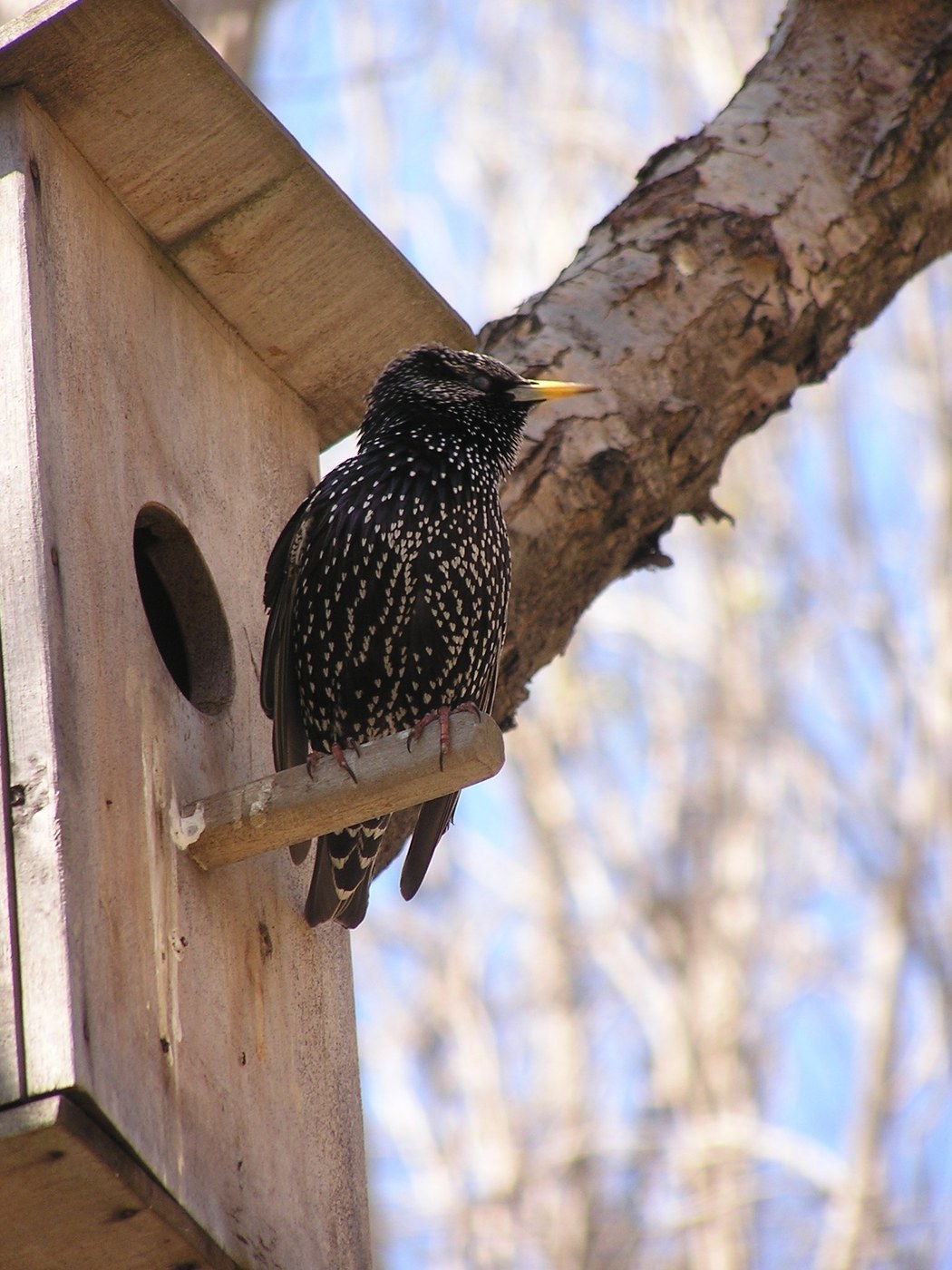
Key Field Marks
- Medium-sized, chunky, short-tailed songbird, about 20–22 cm long.
- Breeding adult plumage is glossy black with strong green and purple iridescence; fine white spangles are most visible in fresh winter plumage and largely wear off by the breeding season, when birds look almost uniformly glossy black.
- Bill color changes seasonally: bright yellow in the breeding season (with a blue-grey base in males and a pink base in females), duller brownish-grey in winter.
- Juveniles are plain grey-brown with a pale throat, quite different from the glossy adults.
- Flight silhouette is fast and direct on short, pointed, triangular wings; large winter flocks form dramatic swirling murmurations.
- Walks and struts confidently on the ground rather than hopping, often probing the soil for invertebrates.
Separating It From Similar Species
- Blackbird: longer tail, slower more deliberate hopping gait, plain (non-iridescent, non-spangled) black plumage in males, and a very different, more musical song; starlings are chunkier with pointed wings and a shorter tail.
- Juvenile Starling vs. other brown birds: the plain grey-brown body with a contrastingly pale throat, combined with the characteristic starling shape (short tail, pointed bill, upright stance) and often being seen alongside adult starlings, usually clinches the identification.
Where and When to See One
- Highly adaptable, found in farmland, grassland, urban parks, gardens, and city centers.
- Native to Europe, North Africa, and western Asia, but has been widely introduced elsewhere, including North America, Australia, New Zealand, and southern Africa, where it is often abundant.
- Present year-round across much of its range, with northern breeders migrating south to join resident populations in milder areas during winter.
Voice
- A remarkable vocal mimic, weaving in imitations of other bird species, mechanical sounds, and even human-made noises into its own song.
- Song is a lively, extended medley of whistles, clicks, warbles, and chattering, often delivered from a rooftop or high perch with wings held slightly drooped and fluttering.
Frequently asked questions
Why do starlings look spotted in winter but glossy black in summer?
Fresh winter feathers have pale spangled tips; these tips gradually wear away over the winter and spring, leaving the breeding adult looking almost uniformly glossy black by summer.
How can you tell a Starling from a Blackbird?
Starlings are chunkier and shorter-tailed with pointed wings and iridescent, sometimes spangled plumage, and they walk with a strutting gait, whereas Blackbirds are longer-tailed, plain matte black (in males), and hop rather than walk.
What is a starling murmuration?
It's a large, densely packed flock of starlings — sometimes numbering in the tens of thousands — that performs swirling, coordinated aerial displays, typically at dusk in winter before settling to roost.
Can Common Starlings mimic other sounds?
Yes, they are accomplished mimics that regularly incorporate the calls of other bird species and various mechanical or environmental sounds into their own varied song.
Common Starling identified by the community
Recent Common Starling sightings identified with Bird Identifier.