
Common Sandpiper Identification Guide
A small, constantly bobbing wader of rivers and lake edges, recognized by its horizontal stance, stiff flickering flight, and teetering tail.
Read the full Common Sandpiper encyclopedia entry →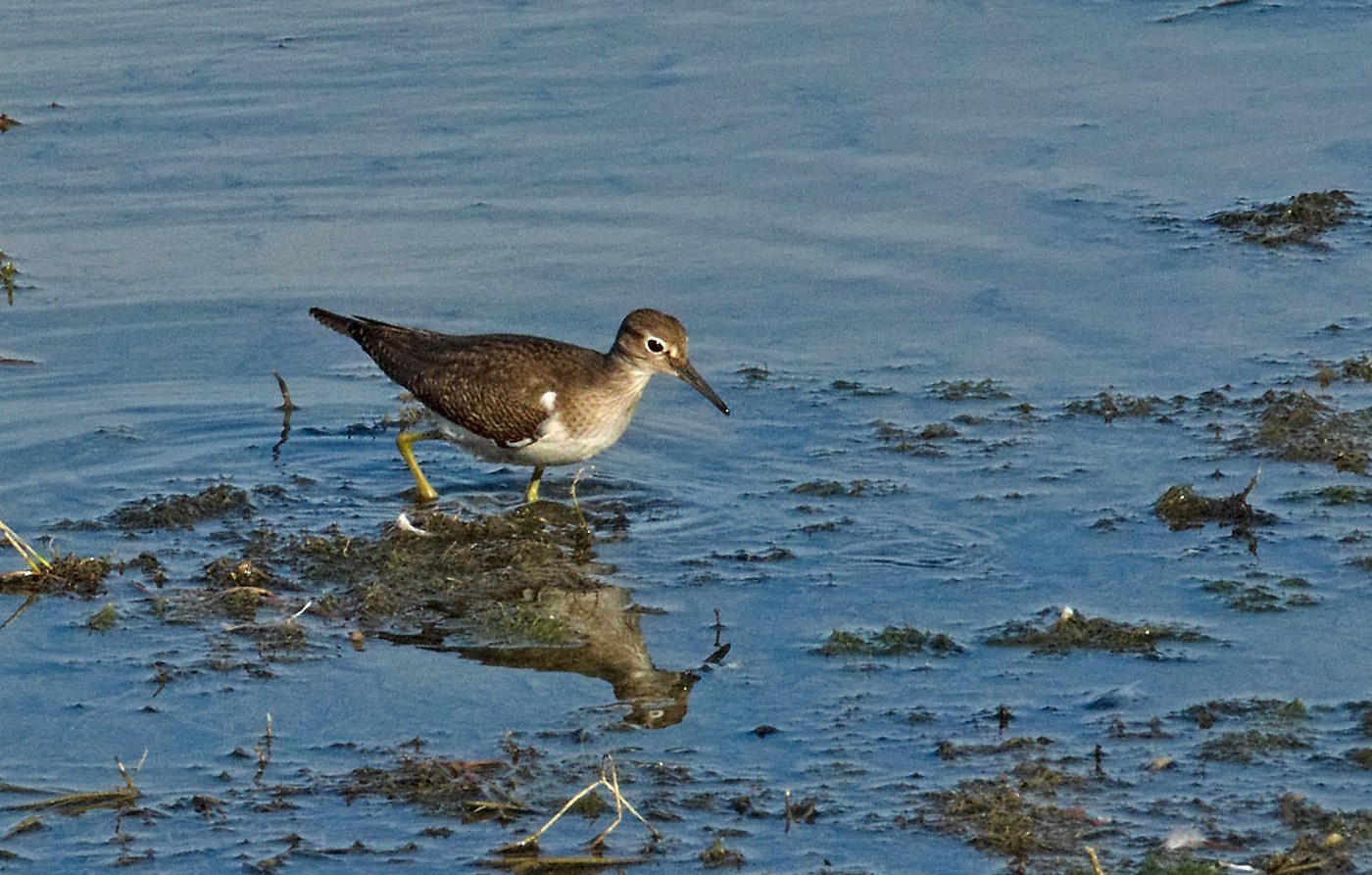
Key Field Marks
- Small wader, about 20 cm long, with a horizontal, short-legged, almost hunched stance.
- Brown upperparts and clean white underparts, with a brown patch at the sides of the breast that does not meet across the chest.
- Short whitish supercilium (eyebrow stripe) and a fine dark bill.
- Constantly bobs and teeters its rear end up and down while walking or standing — one of the most reliable behavioral clues among European waders.
- In flight, low over the water with quick, shallow, stiff, flickering wingbeats on bowed wings, showing a white wing bar.
Separating It From Similar Species
- Spotted Sandpiper (chiefly a vagrant from North America): in breeding plumage shows bold dark spots across the underparts (Common Sandpiper's underparts are clean white); has a shorter tail that barely extends past the folded wingtips (Common Sandpiper's tail extends clearly beyond the wingtips), brighter yellowish legs, and a different, sharper call.
- Green Sandpiper: darker, more contrasting blackish-brown above with a white rump obvious in flight, bounding erratic flight rather than low flickering flight, and a sharper, more urgent call.
- Wood Sandpiper: longer-legged, more spangled upperparts, white rump, and does not share the constant tail-bobbing habit.
Where and When to See One
- Breeds along fast-flowing rivers, streams, and upland lake shores across much of Europe and temperate Asia.
- A summer visitor to most of its breeding range, arriving in spring and departing in late summer/autumn.
- Winters along rivers, lakes, and coasts across Africa, southern Asia, and Australasia; also regularly seen on passage at inland waters and reservoirs.
Voice
- Call is a shrill, piping "twee-wee-wee," frequently given as the bird flies off low over the water.
- Song, delivered in a fluttering display flight, is a fast repetition of similar piping notes.
Frequently asked questions
What is the most distinctive behavior of the Common Sandpiper?
It constantly bobs and teeters its tail and rear body up and down while standing or walking, a habit that is diagnostic even at long range.
How do you tell Common Sandpiper from Spotted Sandpiper?
In breeding plumage Spotted Sandpiper has bold dark spots on white underparts while Common Sandpiper's underparts are unmarked white; Common Sandpiper also has a longer tail projecting well past the wingtips.
What kind of flight does a Common Sandpiper have?
A distinctive low, fast flight over water with shallow, stiff, flickering wingbeats and bowed wings, usually just above the surface.
Where do Common Sandpipers breed?
Along fast rivers, streams, and upland lake margins across Europe and temperate Asia, typically nesting on gravelly or vegetated banks close to water.