
Common Redshank Identification Guide
A vocal, orange-legged wader of coastal mudflats and marshes, best known for its ringing alarm call and bold white wing trailing edge in flight.
Read the full Common Redshank encyclopedia entry →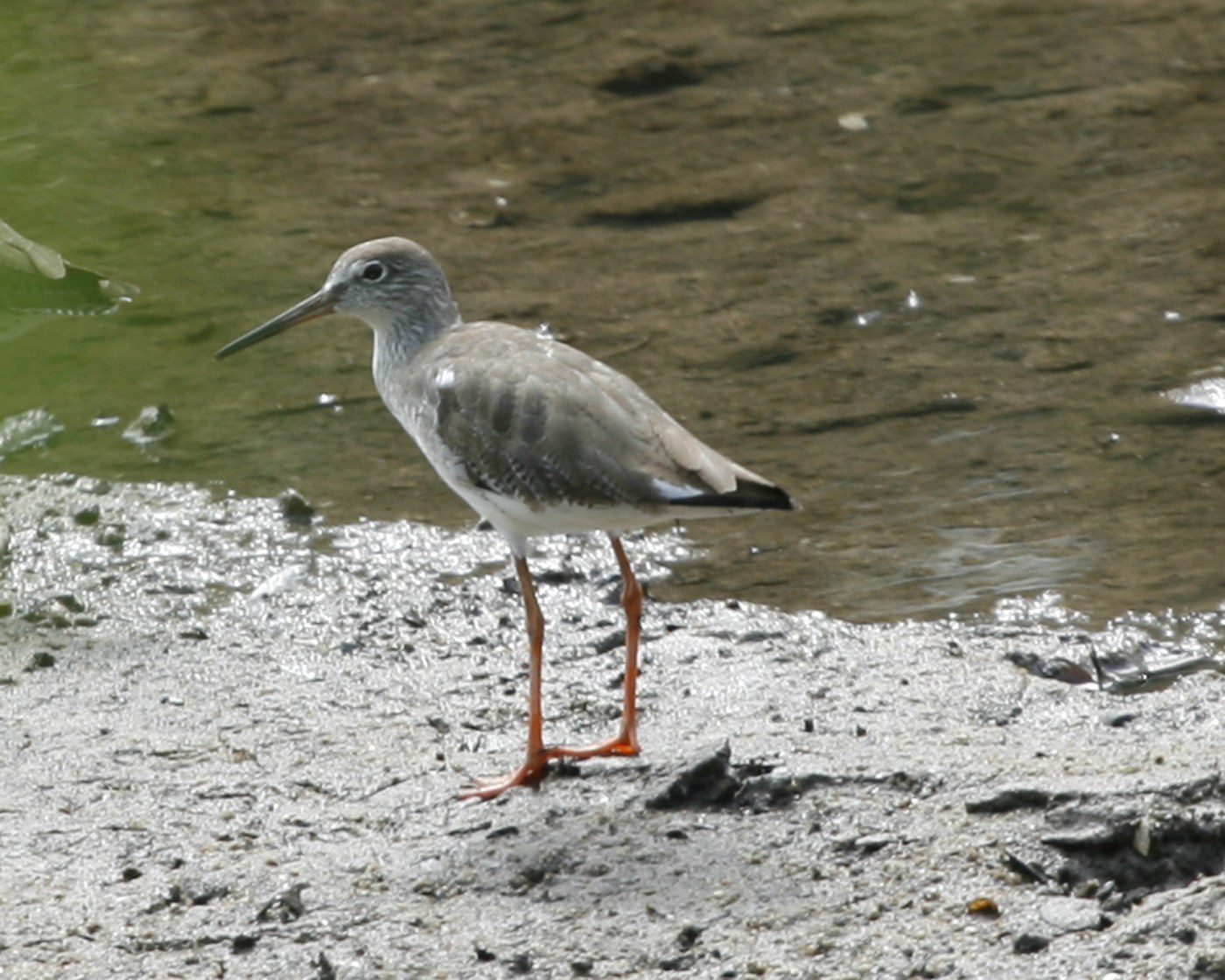
Key Field Marks
- Medium-sized, fairly slim wader, about 27–29 cm long, with a distinctly upright stance on long legs.
- Bright orange-red legs are the standout feature (duller orange-yellow in juveniles).
- Straight, medium-length bill is dark-tipped with an orange-red base.
- Grey-brown upperparts with darker streaking; underparts whitish with fine streaking on the breast, heavier in breeding plumage.
- In flight, shows a broad white trailing edge along the secondaries and a white rump/lower back that extends up the back in a wedge — very distinctive even at distance.
Separating It From Similar Species
- Spotted Redshank: more slender build, longer fine-tipped bill with a slight droop, legs darker red; lacks the white wing trailing edge in flight and shows a plain grey-brown or (breeding) sooty-black body instead of streaked underparts.
- Common Greenshank: noticeably larger and paler, with green-grey legs and a slightly upturned bill; no white trailing edge on the wing.
- Marsh Sandpiper: smaller and daintier with a fine needle-like bill and greenish legs; lacks the redshank's orange legs and bold wing pattern.
- Wood Sandpiper: smaller, more delicately marked, with yellowish-green legs and no white wing bar.
Where and When to See One
- Breeds on wet grasslands, saltmarshes, moorland edges, and machair across temperate and northern Europe into Asia.
- Outside the breeding season it is found almost entirely on the coast — estuaries, mudflats, and saltmarsh creeks — across Western Europe, Africa, and South Asia.
- Present year-round in many coastal areas of Britain and Ireland, with numbers boosted in winter by Icelandic and Scandinavian breeders.
Voice
- Extremely vocal and often the first bird to give alarm at a wetland, earning it the nickname "sentinel of the marshes."
- Alarm call is a loud, ringing "tyu-hyu-hyu," often given in flight when disturbed.
- Song, delivered in display flight over breeding territory, is a repeated fluty "tleu-tleu-tleu."
Frequently asked questions
What is the easiest way to identify a Common Redshank?
Look for bright orange-red legs, a dark-tipped orange-based bill, and — most diagnostic of all — a broad white trailing edge along the wing visible as soon as it takes flight.
How do you tell Common Redshank from Spotted Redshank?
Common Redshank shows a white trailing edge on the wing in flight and streaked underparts; Spotted Redshank lacks that wing pattern, has a finer drooped bill, and in breeding plumage is largely sooty black.
Why is the Common Redshank called the 'sentinel of the marshes'?
It is one of the wariest and noisiest waders, calling loudly and flying up at the first sign of danger, which often alerts other birds on the marsh.
Where can I find Common Redshanks in winter?
They gather on coastal mudflats, estuaries, and saltmarshes, often in loose flocks, probing soft mud for invertebrates at low tide.