
Common Pochard Identification Guide
A medium-sized diving duck with a rich chestnut head and pale gray body in the male, found on lakes and reservoirs across Europe and Asia.
Read the full Common Pochard encyclopedia entry →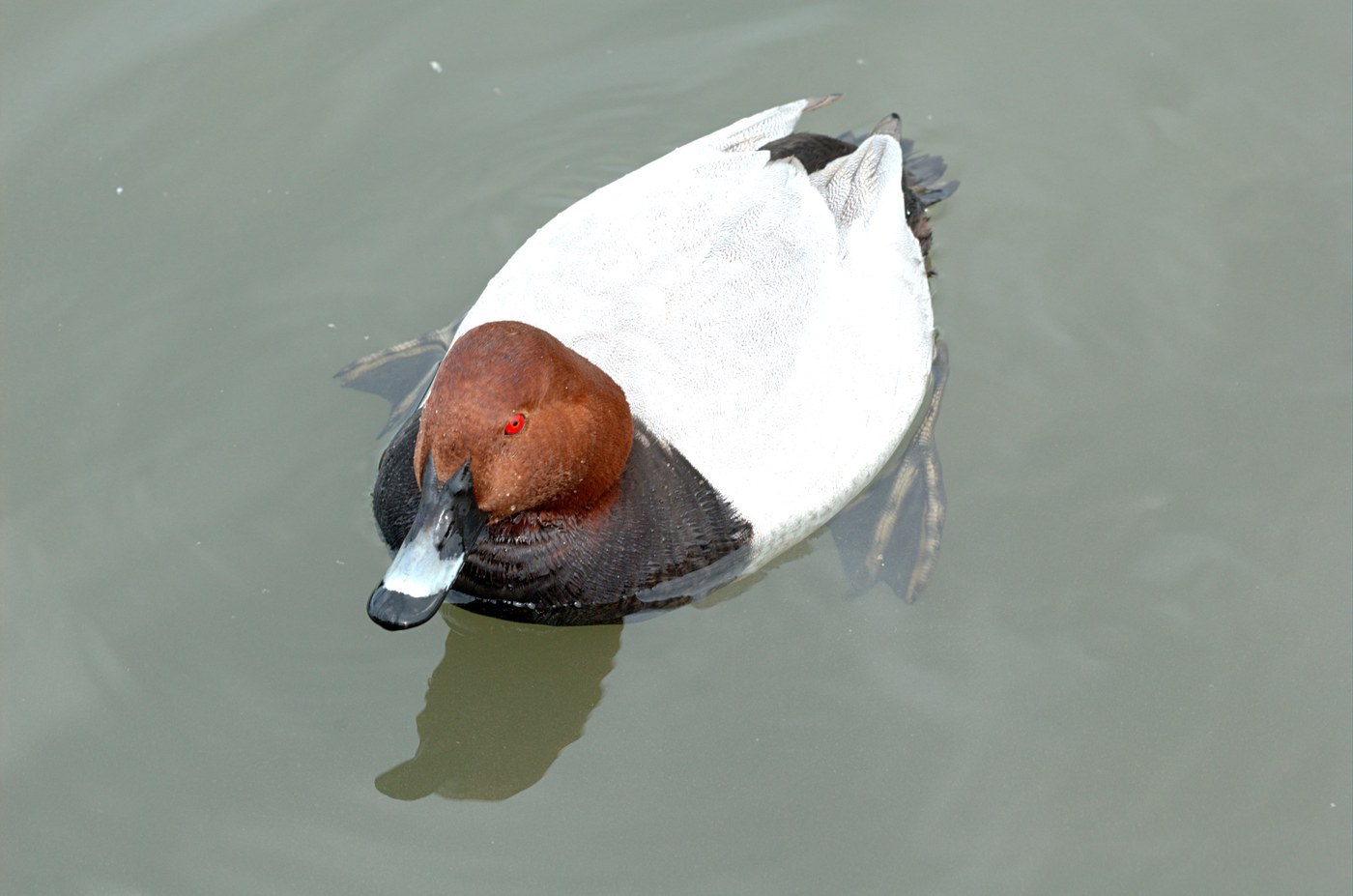
Key Field Marks
Size & Shape
- Medium-sized diving duck, about 42–49 cm long, with a compact, rounded body typical of the genus Aythya
- Head shape is a key clue: rounded with the highest point toward the rear of the crown, giving a smoothly sloping forehead-to-bill profile
- Bill is broad and fairly long relative to head size
Plumage
- Breeding males: rich chestnut-red head and neck, black breast and rear end, and a body that looks pale gray at a distance due to fine gray vermiculation; the bill is black with a pale bluish-gray band near the tip; eyes are red
- Females: duller grayish-brown overall with a paler face and throat, brownish wash on the head and breast, and dark eyes
- In flight, shows a broad pale gray wing stripe
Behavior
- A diving duck that feeds by submerging to reach aquatic vegetation, seeds, and invertebrates, often in open water
- Frequently associates in mixed flocks with other diving ducks such as Tufted Duck and scaup
- Rests in tight rafts on open water during the day
Similar Species
- Redhead (North America): similar chestnut-headed appearance but has a more rounded head, a yellow (not red) eye, and largely separate range, with limited overlap
- Canvasback: larger, with a longer, sloping forehead-to-bill profile and a whiter body
- Ferruginous Duck: overall darker chestnut-brown with a white undertail patch and pale eye, lacking the Pochard's pale gray body
- Tufted Duck (female vs female Pochard): Tufted Duck shows a rounder head, sometimes a small crest, and often a more contrasting pale face patch, while female Pochard has a more evenly sloped head profile
Habitat & Range
- Breeds on lakes, reservoirs, and slow-moving rivers with reedy margins across temperate Europe and Asia
- Winters further south, including around the Mediterranean, parts of Africa, and South and East Asia, on large lakes, reservoirs, and coastal lagoons
- A migratory species, moving between separate breeding and wintering grounds
Voice & Song
- Generally quiet outside the breeding season
- Displaying males give a wheezy, whistled note; females give a harsh, growling "kurr" call
Frequently asked questions
How do I tell a male Common Pochard from a Redhead?
Both have chestnut heads, but Pochard has a red eye and a head peaked toward the rear crown, while Redhead has a yellow eye and a more evenly rounded head; range is also a useful clue since the two species barely overlap.
What is the best field mark for female Common Pochard?
Look for the sloping forehead-to-bill head profile combined with an overall grayish-brown body and paler face and throat.
Where do Common Pochards live?
They breed on lakes and slow rivers across temperate Europe and Asia and winter further south on large lakes, reservoirs, and coastal wetlands.
Is the Common Pochard a diving duck or a dabbling duck?
It is a diving duck, submerging fully to feed on aquatic vegetation, seeds, and invertebrates rather than tipping up at the surface like dabbling ducks.
Does the Common Pochard migrate?
Yes, it is migratory, breeding in temperate latitudes and moving to more southerly wintering grounds each year.