
Common Pheasant Identification Guide
A large, long-tailed gamebird with iridescent copper-and-green plumage in the male, widely introduced across farmland and hedgerows worldwide.
Read the full Common Pheasant encyclopedia entry →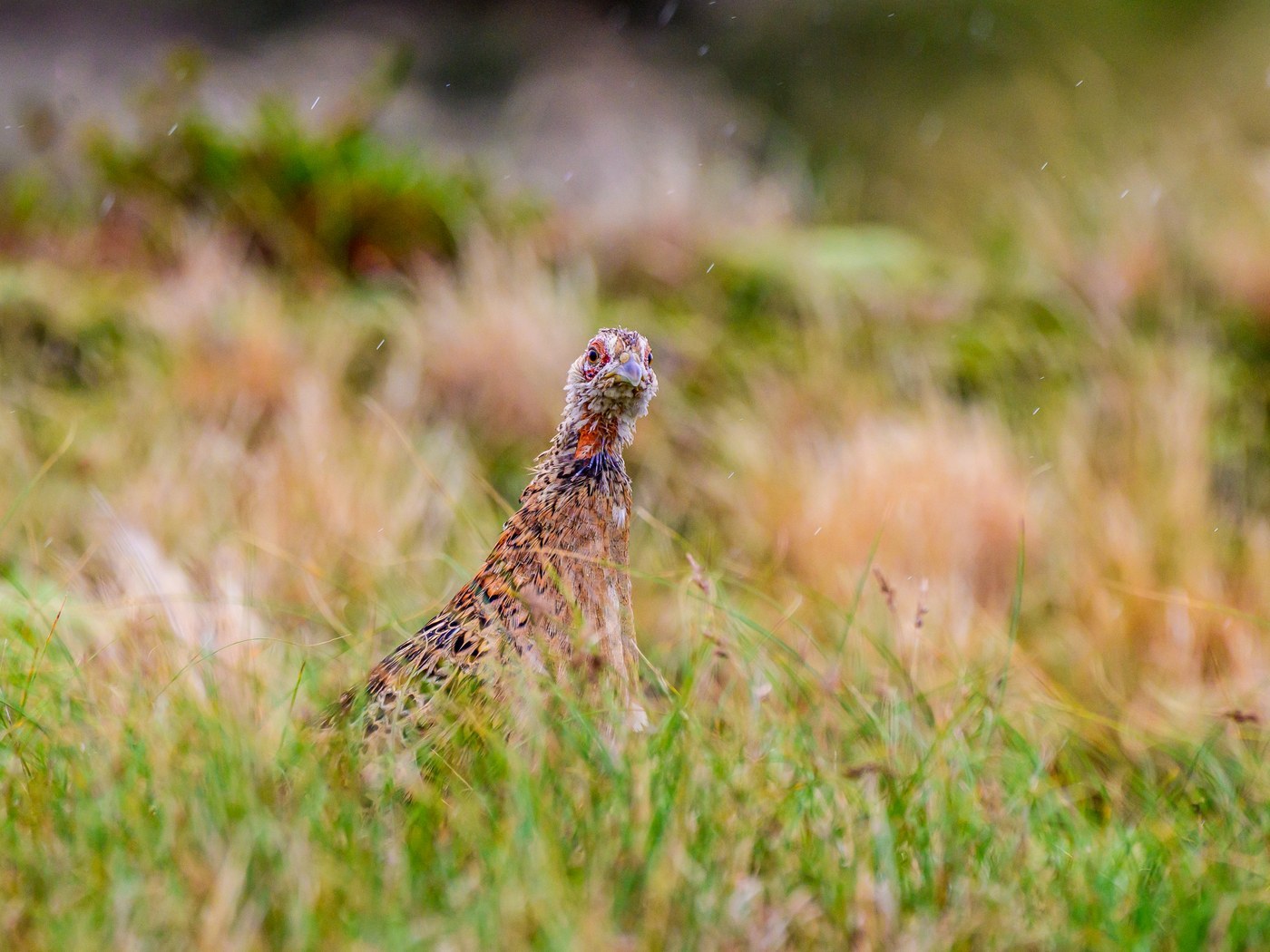
Key Field Marks
Size & Shape
- Large gamebird with a long, pointed, barred tail that makes up much of its total length
- Males measure roughly 76–89 cm including the tail; females are notably smaller at 55–70 cm but still show a relatively long tail
- Plump body, small head, and strong legs built for running through cover
Plumage
- Males: strikingly iridescent copper, gold, and green plumage, bare red facial skin/wattles, and often a white neck ring (present in many but not all populations)
- Females: cryptic mottled brown and buff overall, providing camouflage while nesting on the ground
- Both sexes show the diagnostic long, barred tail, though shorter and less colorful in females
Behavior
- Prefers to run from danger through cover rather than fly, but flushes explosively with loud wingbeats when pressed
- Flight is fast and direct over short distances, typically low over vegetation before dropping back down
- Males are polygynous and defend territories with loud crowing calls accompanied by a whirring wing display
- Gregarious outside the breeding season, often seen in small groups feeding in open fields
Similar Species
- Common Quail: much smaller with no long tail and a whirring, low flush; easily separated by size alone
- Grey Partridge: smaller, rounder-bodied, with an orange face patch and no long tail
- Golden Pheasant and other ornamental pheasants: differ sharply in color pattern (e.g., golden crest and scarlet body) and are far more localized/escaped-population birds rather than the widespread rusty-copper Common Pheasant
Habitat & Range
- Native to Asia, but introduced very widely and now established across much of Europe, North America (where it is often called Ring-necked Pheasant), New Zealand, and elsewhere
- Favors farmland, hedgerows, grassland, open woodland edges, and marshy field margins
- Non-migratory resident wherever established
Voice & Song
- Males give a loud, harsh, two-note crowing call, often rendered "korr-kok" or "kutuk-kok," typically followed by an audible whirring of the wings
- Most vocal at dawn and dusk and when startled into flushing
Frequently asked questions
How do I tell a male from a female Common Pheasant?
Males are unmistakable with iridescent copper-gold-green plumage, red facial wattles, and often a white neck ring, while females are uniformly mottled brown for camouflage.
Why is it also called Ring-necked Pheasant?
Many introduced populations, especially in North America, carry a white ring around the neck, a trait derived from certain Asian subspecies used in introductions; the ring is variably present or absent depending on ancestry.
Does the Common Pheasant fly well?
It prefers to run and only flies in short, fast, explosive bursts when flushed, typically covering a limited distance before landing again.
Where do Common Pheasants live?
They favor farmland, hedgerows, open woodland edges, and grassy or marshy field margins, and are found across native Asian range plus many introduced regions worldwide.
What does a Common Pheasant sound like?
Males give a loud, harsh crowing call followed by a whirring wing-beat display, most often heard at dawn and dusk.