
Common Myna Identification Guide
A bold, adaptable Asian starling relative with a chocolate-brown body, black head, and bright yellow bill, eye patch, and legs, now widely established outside its native range.
Read the full Common Myna encyclopedia entry →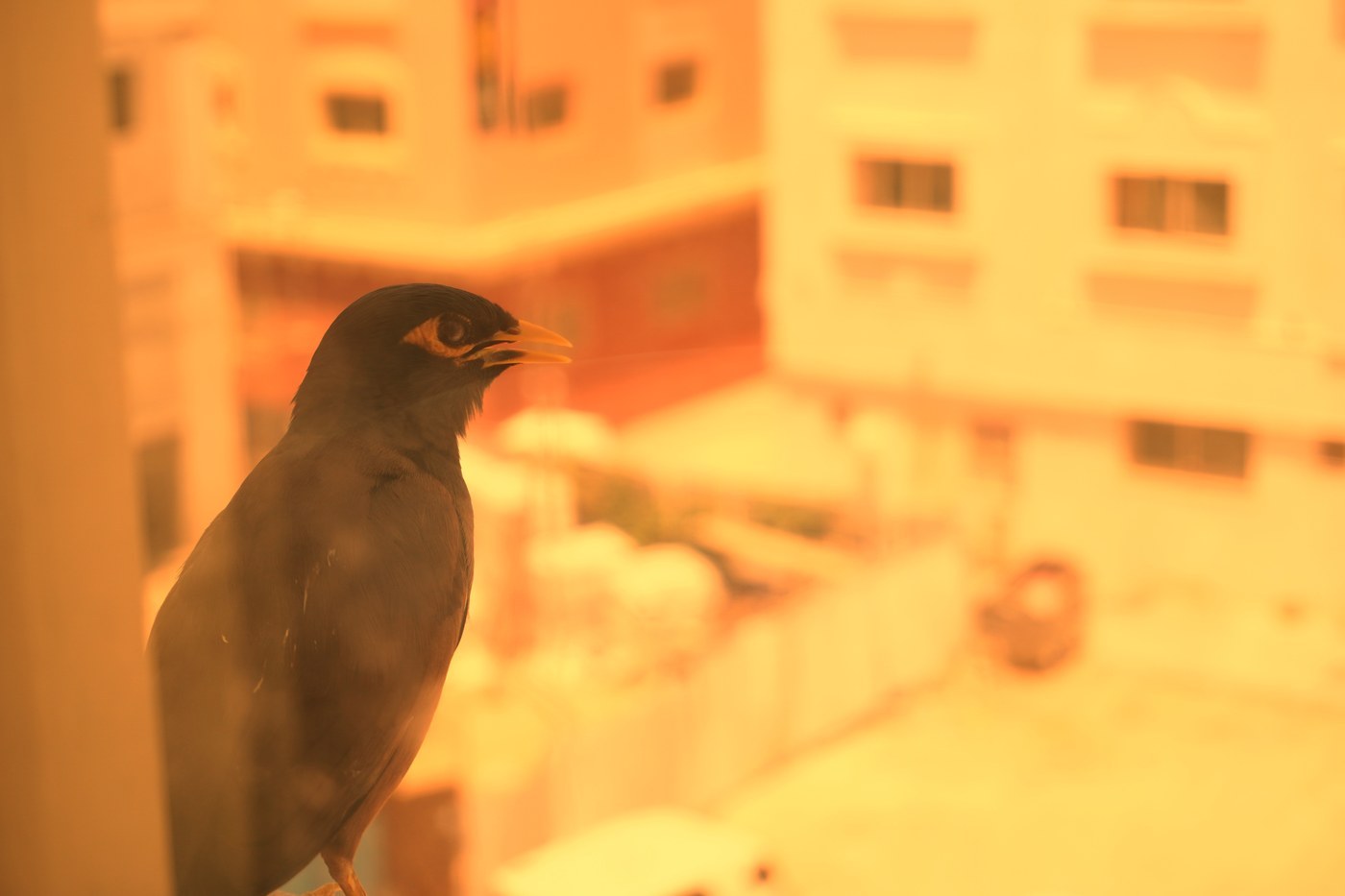
Key Field Marks
- Size & shape: A medium-sized, stocky songbird with a fairly long tail, a robust build, and a confident, upright walking gait on the ground.
- Plumage: Glossy black head and upper breast, warm chocolate-brown body, with a white patch on the wing (visible as a bold white flash in flight) and white tips to the tail.
- Bare parts: Bright yellow bill, a distinctive bare yellow patch of skin behind and around the eye, and yellow legs — a combination unique among similarly sized birds in most of its range.
- Behavior: Bold, conspicuous, and highly adaptable, often seen walking on open ground, lawns, and pavement in pairs or small groups; frequently associates closely with human habitation, foraging around buildings, markets, and agricultural land.
Separating from Similar Species
- Jungle Myna: Similar overall shape and brown-and-black coloring but shows a small tuft of feathers on the forehead and lacks the bare yellow eye patch of Common Myna, instead showing bluish-white bare skin around the eye.
- Bank Myna: Greyer overall (less rich brown) with an orange-red (not yellow) bare eye patch and orange-based bill.
- European Starling (non-overlapping native range but similar size class): Starling is more uniformly dark with iridescent spangling and a slimmer pointed bill, lacking the bold yellow bare facial skin and white wing patch of Common Myna.
Where & When to See It
Native to South and Southeast Asia, the Common Myna has been widely introduced and has become established in many parts of the world, including Australia, parts of Africa, the Middle East, Pacific islands, and North America (notably Florida), largely due to its adaptability to urban and agricultural environments. It favors open habitats near human settlement — city parks, farmland, gardens, and roadsides — and is generally non-migratory, remaining in the same areas year-round.
Voice & Song Cues
Common Mynas are highly vocal, giving a varied repertoire of gurgling, chattering, and squawking notes, often delivered in duet by paired birds, along with harsh scolding calls and occasional mimicry of other sounds.
Frequently asked questions
What are the key colors that identify Common Myna?
A black head and upper breast, chocolate-brown body, bright yellow bill and legs, and a bare yellow patch of skin around the eye, plus a white wing patch visible in flight.
How is Common Myna different from Jungle Myna?
Common Myna has a bare yellow eye patch and no forehead tuft, while Jungle Myna shows bluish-white bare skin around the eye and a small crest of feathers on the forehead.
Is the Common Myna native everywhere it is found?
No, it is native to South and Southeast Asia but has been introduced and become established in many regions worldwide, including Australia, parts of Africa, the Middle East, and Florida in the U.S.
What habitat does Common Myna prefer?
Open areas close to human activity, including city parks, farmland, gardens, and urban streets, where it forages on the ground for insects, fruit, and scraps.
Does Common Myna migrate?
No, it is generally non-migratory and resident year-round throughout its native and introduced range.