
Common Loon Identification Guide
A large, striking North American waterbird known for its checkerboard back, black-and-white breeding plumage, and haunting wailing calls.
Read the full Common Loon encyclopedia entry →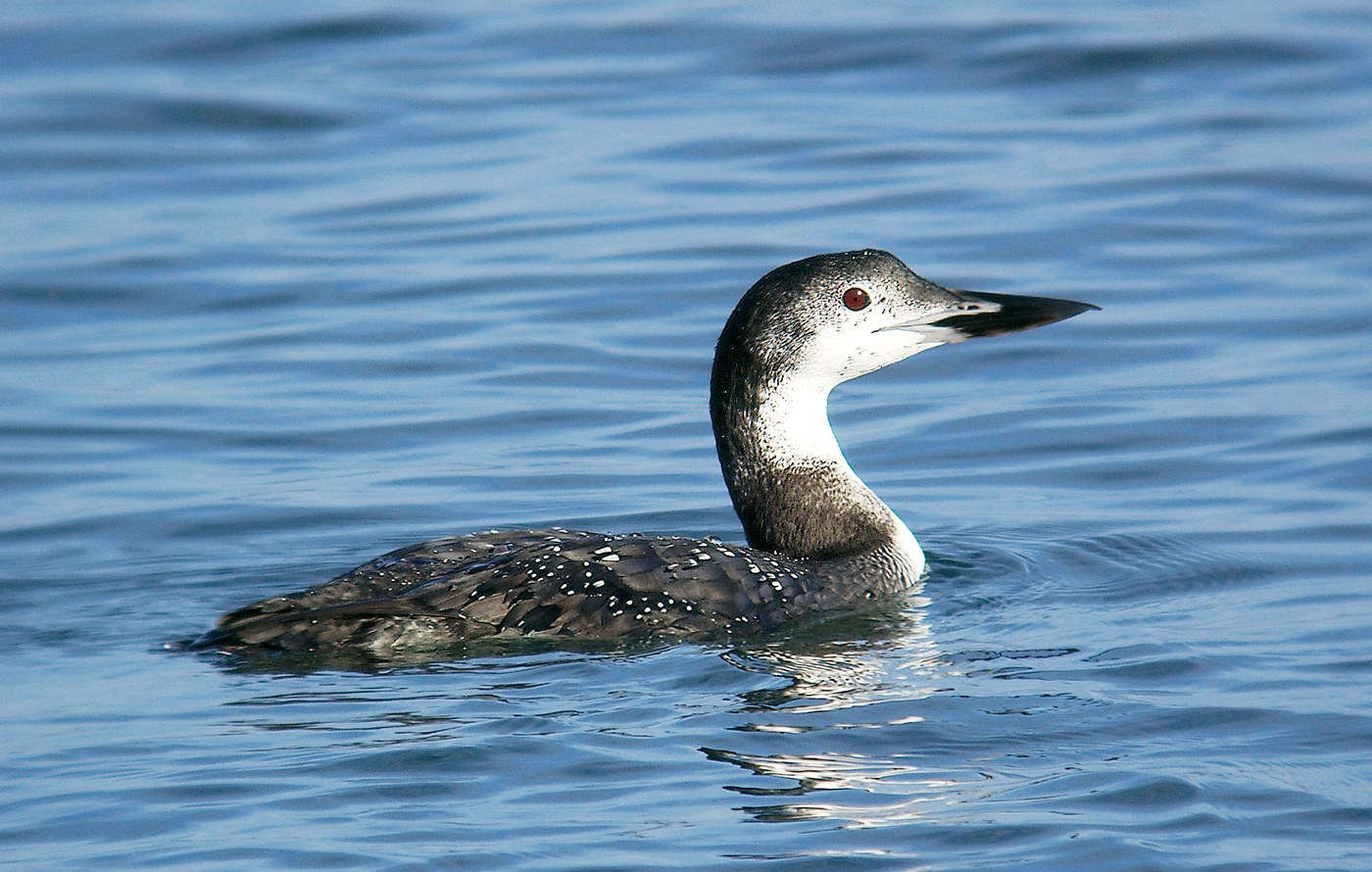
Key Field Marks
- Size & shape: A large, heavy-bodied diving waterbird that rides low in the water, with a thick neck, a straight, dagger-like bill, and a flat-crowned head profile.
- Plumage (breeding adult): Glossy black head and bill, a bold black-and-white checkered pattern on the back, a black-and-white striped necklace on the neck, and clean white underparts.
- Plumage (non-breeding/winter): Plain grey-brown above and white below, with a clean division between the dark cap/nape and white throat/foreneck — best distinguished from similar loons by bill shape and shading pattern.
- Bill: Straight, heavy, and pointed, held horizontally; black in breeding plumage, paler grey with a dark culmen ridge in winter.
- Behavior: Dives frequently and can stay submerged for extended periods while foraging for fish; needs a long running takeoff across the water surface to become airborne due to its heavy body and rearward-set legs; on land it can barely walk and rarely comes ashore except to nest.
Separating from Similar Species
- Yellow-billed Loon: Larger with a pale, upward-tilted (rather than straight) bill, often yellowish or ivory, and a more angular head shape.
- Pacific Loon: Smaller and slimmer, with a more delicate straight bill, a rounder head, and in breeding plumage a pale grey nape/crown contrasting with a black throat (no spotted necklace pattern like Common Loon).
- Red-throated Loon: Smaller, with a thinner, slightly upturned bill often held tilted upward, a plain grey face and hindneck, and (in breeding plumage) a reddish throat patch rather than a checkered back.
- Cormorants (general shape confusion): Cormorants have a hooked bill tip, often swim with the bill angled upward, and typically hold the neck in more of a kinked "S" shape, unlike the straight-billed, straight-necked profile of a loon.
Where & When to See It
Common Loons breed on clear, fish-rich lakes across the northern United States and Canada (the boreal zone), requiring undisturbed shorelines for nesting. In winter, most migrate to coastal waters along the Atlantic and Pacific coasts of North America, as well as large ice-free inland lakes and reservoirs further south, where they molt into duller grey-and-white plumage.
Voice & Song Cues
Common Loons have an iconic, eerie repertoire: a long, mournful wailing call; a tremulous, laughing "loon call" (the tremolo) often given in alarm or flight; and a yodeling call given by territorial males. These calls, especially the wail and tremolo, are strongly associated with wilderness lakes at dusk and are a key identification and cultural signature of the species.
Frequently asked questions
How do you tell Common Loon from Yellow-billed Loon?
Common Loon has a straight, mostly dark bill held horizontally, while Yellow-billed Loon is larger with a pale, often upward-angled bill and a more sloped forehead.
What does Common Loon look like in winter?
It becomes plain grey-brown above and white below, retaining a straight, heavy bill and a fairly sharp border between the dark crown/nape and white face/throat, distinguishing it from smaller loon species.
Why do loons need a long stretch of open water to take off?
Their legs are positioned far back on a heavy body, which is excellent for diving and swimming but makes them need a running takeoff across the water surface to gain enough speed to fly.
What is the difference between the loon's wail and tremolo calls?
The wail is a long, mournful, rising-and-falling call used for contact between mates or family members, while the tremolo is a quavering, laugh-like call often given as an alarm or in flight.
Where do Common Loons spend the winter?
Most winter along the Atlantic and Pacific coasts of North America or on large ice-free lakes and reservoirs, appearing in duller grey-and-white non-breeding plumage.