Common Kingfisher Identification Guide
A small, jewel-colored Eurasian and African kingfisher with brilliant blue upperparts and orange underparts, usually seen as a fast blue flash over water.
Read the full Common Kingfisher encyclopedia entry →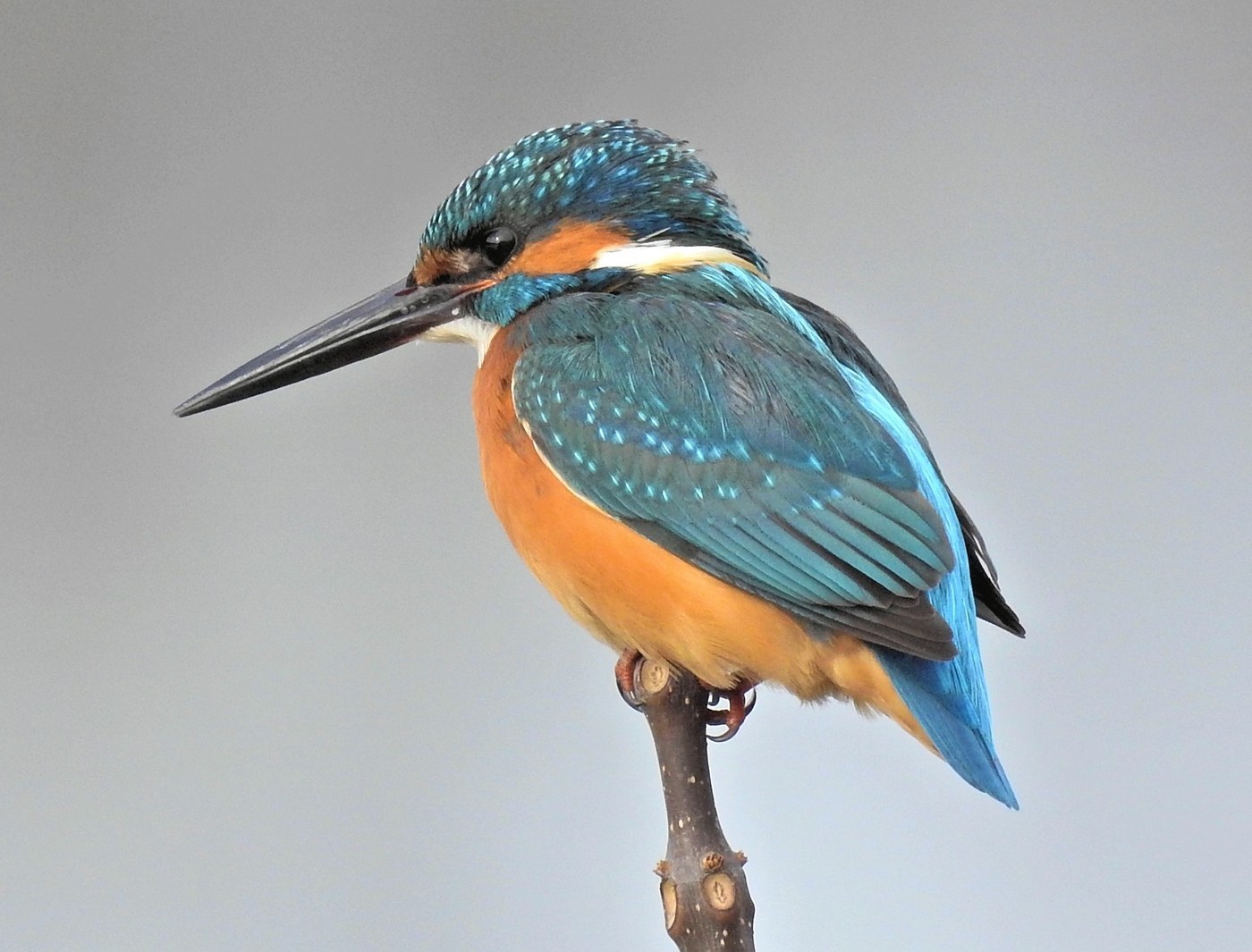
Key Field Marks
- Size & shape: Tiny and compact, roughly sparrow-sized but with a large head, short tail, and a long, dagger-like bill that looks oversized for the body.
- Plumage: Electric blue to turquoise upperparts (brightest on the back, appearing almost luminescent in flight), with a rich orange-chestnut breast and belly, white throat patch, and orange ear patch.
- Bill: Long, straight, and dagger-shaped; black in males, with the lower mandible reddish-orange in females — a reliable way to sex the species.
- Legs: Short, bright red-orange legs and feet.
- Behavior: Perches motionless on low branches, reeds, or wires overhanging water, watching for fish, then plunge-dives headfirst to catch prey; flight is extremely fast, low, and direct over water, often announced by its call before the bird is seen.
Separating from Similar Species
- Other small blue kingfishers (regional, e.g., in parts of Asia and Africa where ranges may approach): Common Kingfisher is told by its combination of solid orange underparts (no blue breast band), orange ear coverts, and small size; regional relatives typically differ in breast color, size, or the presence of additional bands or crests — always check range and specific plumage details for the area.
- European Bee-eater: Superficially colorful but with a longer, downcurved bill, yellow throat, and different flight (graceful glides and swoops on longer, pointed wings) versus the kingfisher's fast, whirring, low flight over water.
Where & When to See It
Common Kingfishers are found across Europe, Asia, and North Africa near clear, slow-moving or still fresh water — rivers, streams, canals, ponds, and lake edges — as well as sheltered coastal creeks in winter. Northern populations move south or to milder coastal areas in winter when inland waters freeze, while southern populations are resident year-round. They require perches with a clear view of the water and, for breeding, vertical earthen banks in which to excavate a nest burrow.
Voice & Song Cues
The call is a short, sharp, high-pitched whistle, "chee" or "tsee," often repeated in a rapid "chee-chee" as the bird flies fast and low along a watercourse — frequently the first clue to its presence.
Frequently asked questions
How can you tell male and female Common Kingfishers apart?
The lower mandible of the bill is entirely black in males, while females show reddish-orange on the base of the lower mandible.
What habitat does the Common Kingfisher need?
Clear, slow-flowing or still freshwater with overhanging perches for hunting and, for breeding, vertical earth banks to dig a nesting burrow.
Why is Common Kingfisher often heard before it is seen?
It typically gives a sharp, high-pitched 'chee' call in flight as it darts low and fast over water, alerting observers before the bright blue flash is spotted.
Does Common Kingfisher migrate?
Northern populations move to milder or coastal areas when inland waters freeze in winter, while populations in temperate and warmer regions are largely resident.
How does Common Kingfisher catch fish?
It watches from a perch above the water, then plunge-dives headfirst to seize small fish or aquatic invertebrates in its bill, returning to a perch to subdue and swallow the prey.
Common Kingfisher identified by the community
Recent Common Kingfisher sightings identified with Bird Identifier.