
Common Gull Identification Guide
A medium-sized Eurasian gull with a gentle, rounded head, dark eye, and greenish-yellow legs, often mistaken for a small Herring Gull.
Read the full Common Gull encyclopedia entry →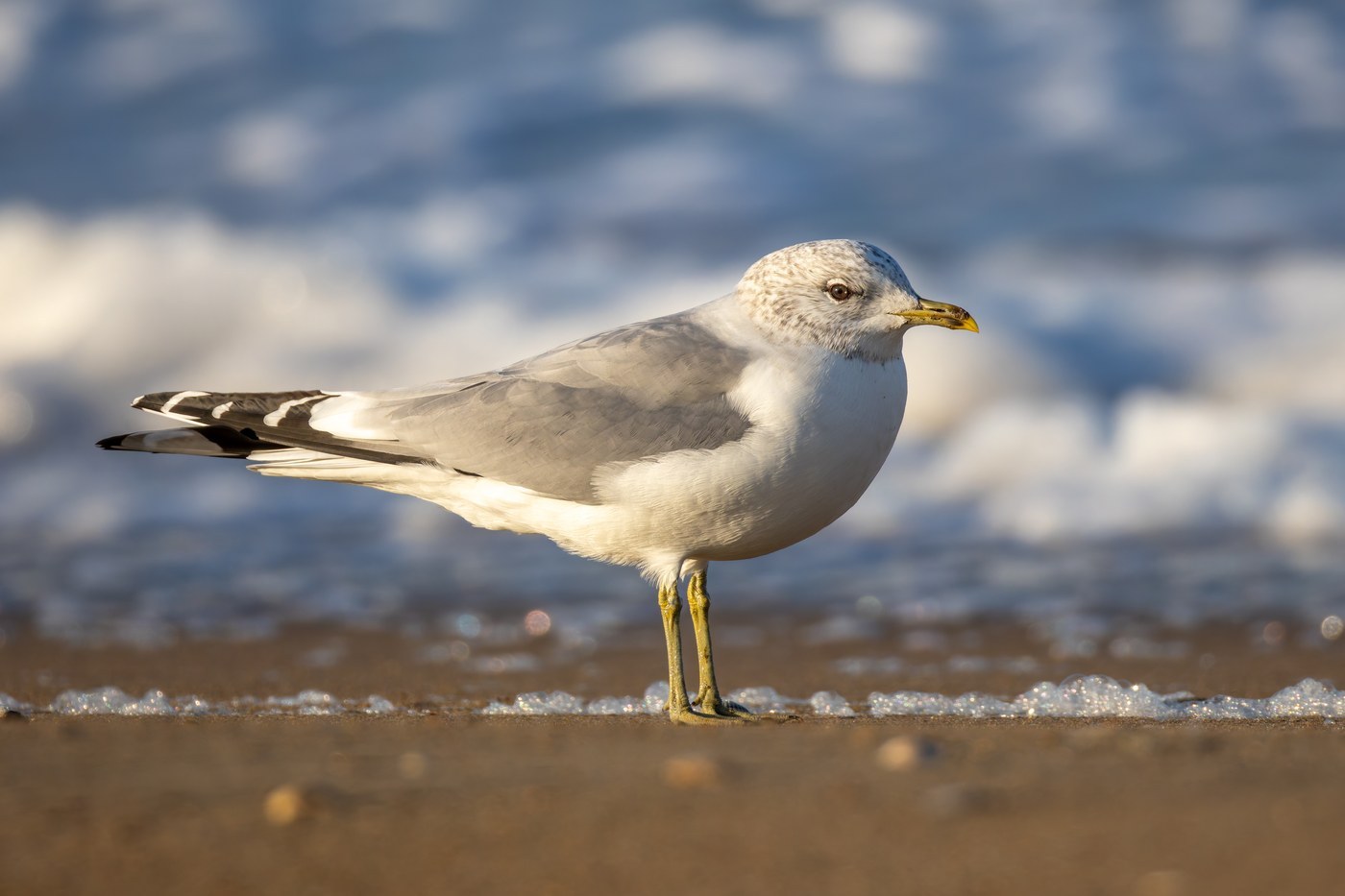
Key Field Marks
- Size & shape: Medium-sized, noticeably smaller and more delicately built than Herring Gull, with a rounded head, gentle expression, and relatively short, slim bill.
- Plumage (adult): Pale grey mantle and upperwings, white head, neck, and underparts (with fine brown streaking on the head in non-breeding plumage), black wingtips with prominent white spots ("mirrors").
- Bill: Yellowish-green, unmarked or with only a faint dark subterminal mark in adults — lacking the strong red gonydeal spot typical of larger gulls.
- Eyes & legs: Dark, "gentle" looking eye (giving a soft facial expression) and yellowish-green to greenish-grey legs.
- Behavior: Forages on open fields, playing fields, and coasts, often walking with quick, dainty steps; frequently seen in mixed gull flocks.
Separating from Similar Species
- Ring-billed Gull (close relative, mainly North American): Very similar in size and structure but shows a pale eye and a black ring around the bill tip in adults, versus the dark eye and largely unmarked bill of Common Gull.
- Herring Gull: Noticeably larger and bulkier, with a heavier bill showing a red gonydeal spot, pink (not greenish) legs, and a paler eye.
- Mew Gull (American form, sometimes treated as a separate species): Very similar to Common Gull structurally; told apart mainly by subtle differences in wingtip pattern and range, with American birds occurring on the Pacific coast.
- Black-headed Gull: Much smaller and slimmer with a red bill and legs and a dark hood in breeding plumage — easily separated by size and color.
Where & When to See It
Common Gulls breed across northern and eastern Europe and northern Asia around lakes, bogs, and coastal areas, and winter widely across western and southern Europe, often well inland on farmland, reservoirs, and playing fields as well as on the coast. They are gregarious outside the breeding season, mixing freely with Black-headed Gulls and other species at roosts and feeding areas.
Voice & Song Cues
Calls include a higher-pitched, more musical "gyeh-gyeh-gyeh" or mewing "kee-ya" compared to the deeper calls of larger gulls, giving rise to the alternative name "Mew Gull" for the wider species complex.
Frequently asked questions
How is Common Gull different from Ring-billed Gull?
Common Gull has a dark eye and a bill that is mostly unmarked or with only a faint dark spot, while Ring-billed Gull has a pale eye and a bold black ring encircling the bill near the tip.
What leg color does Common Gull have?
Yellowish-green to greenish-grey legs, distinguishing it from the pink legs of Herring Gull.
Is Common Gull actually common?
Its name reflects historical abundance in parts of Britain and northern Europe rather than being ubiquitous everywhere; it is common in its core range but scarce or absent elsewhere.
Where can I see Common Gulls in winter?
Look on coastal areas, estuaries, reservoirs, and inland playing fields or farmland across western and southern Europe, often mixed with Black-headed Gulls.
How big is a Common Gull compared to a Herring Gull?
It is noticeably smaller and more slender, with a gentler head shape and thinner bill than the bulkier, heavier-billed Herring Gull.