
Common Chiffchaff Identification Guide
A tiny, plain olive-brown warbler best told by its dark legs, constant tail-dipping habit, and its simple, onomatopoeic chiff-chaff song.
Read the full Common Chiffchaff encyclopedia entry →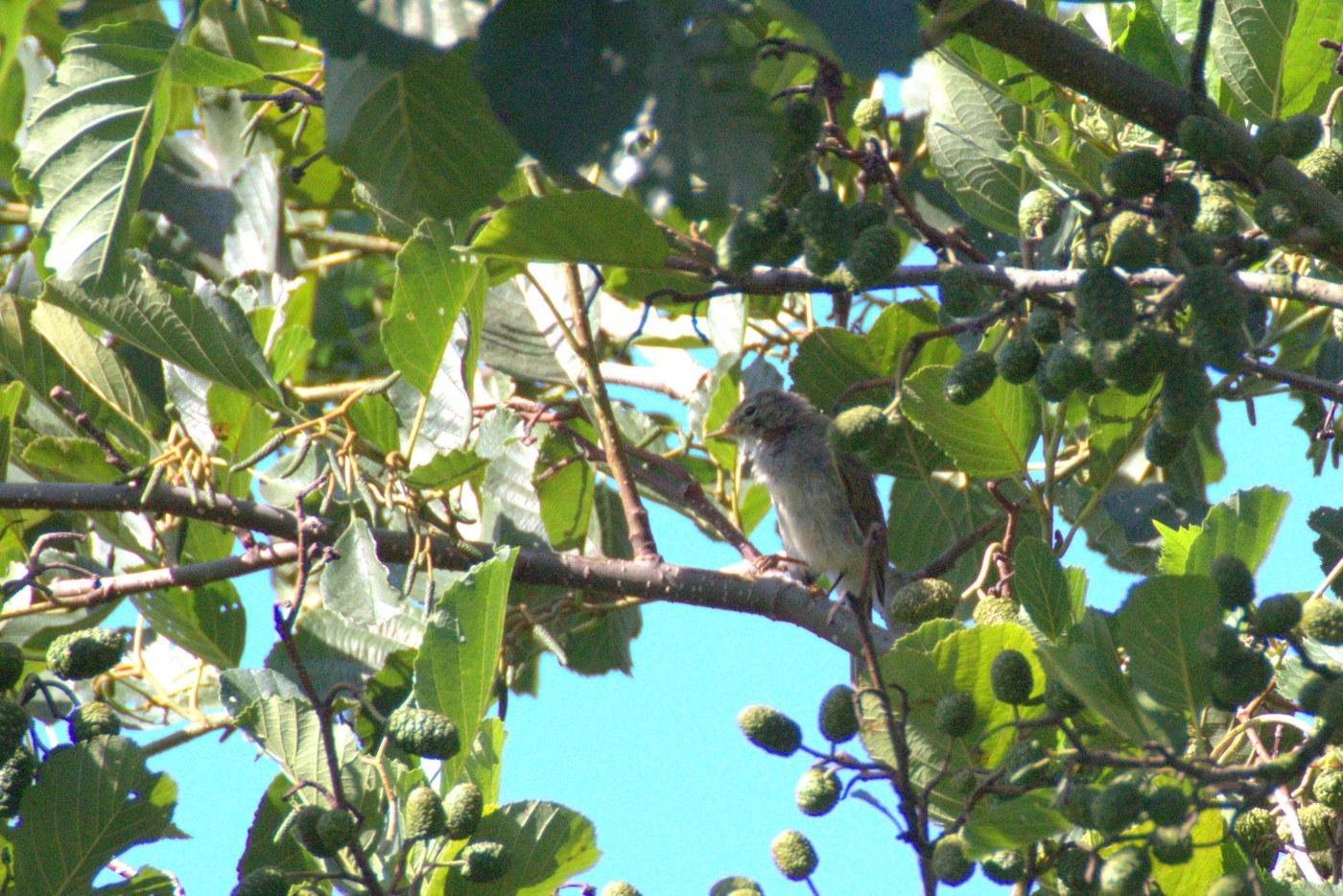
Key Field Marks
- Very small warbler (about 11 cm), plain olive-brown above and dingy whitish-buff below
- Dark (blackish) legs — a key feature separating it from very similar warblers
- Thin, dark, pointed bill; faint pale supercilium (eyebrow stripe) and a subtle dark eye-stripe; overall drab, unpatterned face
- Rounded wings with relatively short primary projection (wingtip extension) compared to migratory relatives
How to Tell It Apart from Similar Species
- Willow Warbler: nearly identical in plumage but has pale pinkish or flesh-colored legs (not dark), is typically brighter yellow-green overall, shows longer primary projection, and gives a completely different song — a sweet, descending series of notes rather than "chiff-chaff"
- Iberian Chiffchaff: very similar but with a slightly brighter, more yellow-green wash; best separated by voice, which includes a different song structure
- Bonelli's warblers: paler and grayer overall with a contrasting yellow-green wing panel and rump, and pale (not dark) legs
Habitat, Range & Season
- Breeds across most of Europe and northern Asia in woodland with a shrubby understory, scrub, and gardens
- Winters mainly in Africa and parts of southern Europe and southern Asia; some birds now overwinter in milder parts of western Europe
- One of the earliest spring migrants to return and sing on breeding grounds
Voice
- Song is a simple, repetitive, onomatopoeic "chiff-chaff-chiff-chaff-chiff," often slightly irregular in rhythm — the species' name comes directly from this song
- Call is a soft, disyllabic "hweet"
Behavior Notes
- Constantly dips and flicks its tail downward while foraging, a habit that helps distinguish it from Willow Warbler even when silent
- Actively gleans insects from foliage in the canopy and shrub layer
Frequently asked questions
What is the best way to separate Common Chiffchaff from Willow Warbler?
Check leg color first — Chiffchaff has dark blackish legs while Willow Warbler has pale pinkish legs. If singing, the song is definitive: Chiffchaff repeats its own name, while Willow Warbler sings a sweet, descending musical trill.
Does Common Chiffchaff have any distinctive behavior?
Yes, it frequently dips and flicks its tail downward while foraging, a habit that is much less pronounced in Willow Warbler and can help identify silent birds.
Where does Common Chiffchaff spend the winter?
Most birds winter in sub-Saharan Africa and around the Mediterranean, though increasing numbers now overwinter in milder parts of western Europe.
How can I recognize the Common Chiffchaff's song?
It sings a simple, repetitive two-note phrase that sounds like its own name, "chiff-chaff, chiff-chaff, chiff," often with an irregular rhythm.