
Common Chaffinch Identification Guide
A colorful, common European finch identified in every plumage by its bold double white wing bars and white outer tail feathers.
Read the full Common Chaffinch encyclopedia entry →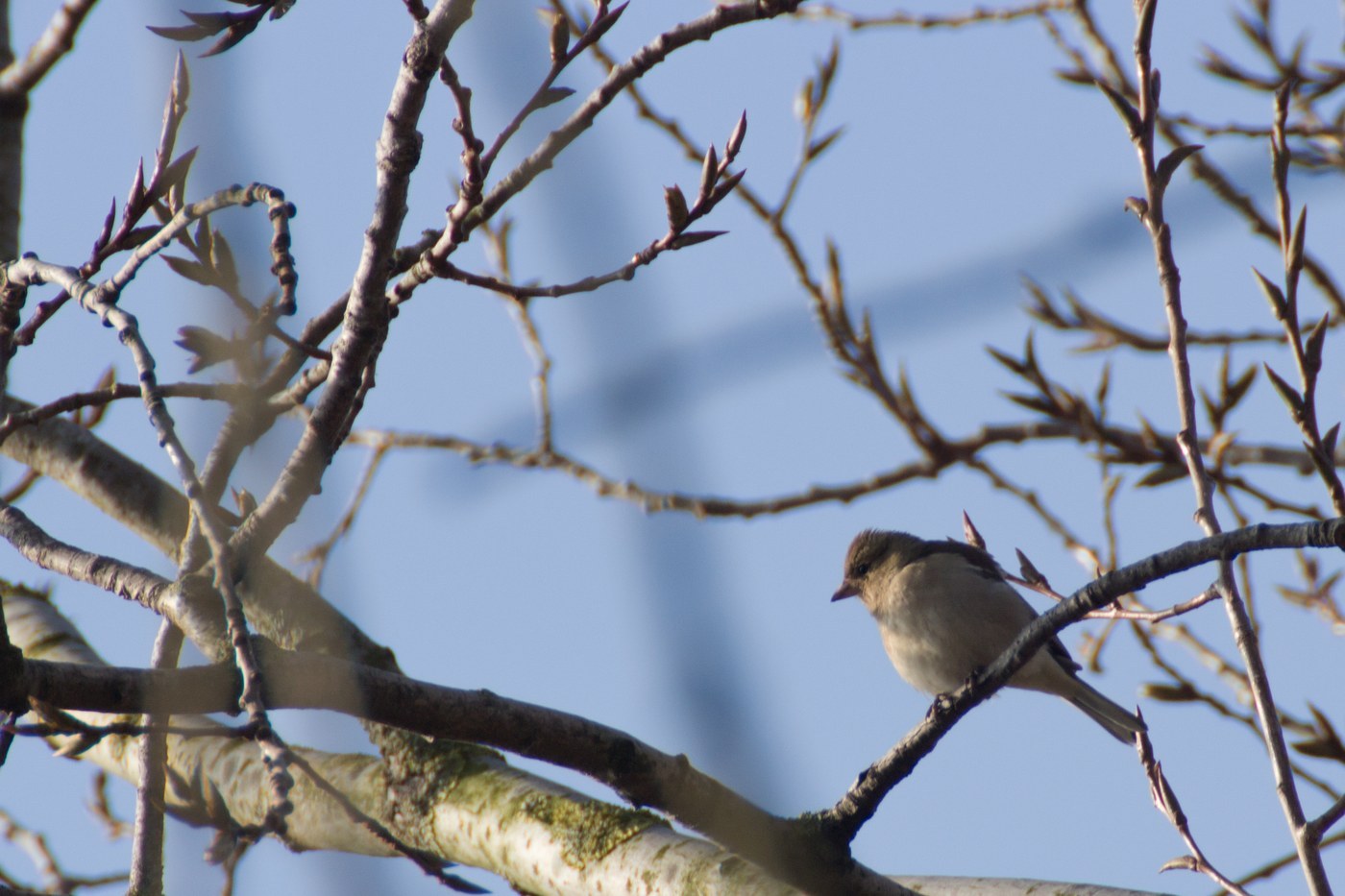
Key Field Marks
- Small finch (about 14.5 cm) with a stubby, conical bill
- Breeding male: blue-gray crown and nape, pinkish-buff face and breast, chestnut-brown back, greenish rump, and black wings crossed by two bold white wing bars plus a white shoulder patch
- Female and non-breeding birds: much duller olive-brown to grayish overall, but retain the same bold white double wing bars and white outer tail feathers as the male — the single best mark for identifying female and winter birds
- White outer tail feathers flash conspicuously in flight
How to Tell It Apart from Similar Species
- Brambling: shows an obvious white rump patch visible in flight and orange-buff (not pink-buff) shoulder and breast tones, with a less bold wing-bar pattern than Chaffinch
- Female House Sparrow: lacks the bold white wing bars and white outer tail feathers that are diagnostic of Chaffinch in all plumages
- Female/winter finches generally: the combination of double white wing bars plus white-edged tail is unique among common European finches and separates Chaffinch from all similarly drab brown finches
Habitat, Range & Season
- Breeds across nearly all of Europe, parts of North Africa, and western Asia
- Found in woodland, hedgerows, gardens, and parks; often the commonest finch in many European gardens
- Northern and eastern populations are migratory, moving south and west in winter and often forming large flocks; southern and western populations are largely resident
Voice
- Song is a cheerful, accelerating cascade of notes ending in a distinctive flourish, often rendered as "chip-chip-chip-chelp-chelp-cherry-erry-erry-tissy-cheweeoo"
- Common calls include a loud, sharp "pink pink" and a soft "hweet" given in flight
Behavior Notes
- Forages mainly on the ground, often in flocks outside the breeding season, hopping between seeds and fallen fruit
- Males sing from prominent perches to defend territory in spring
Frequently asked questions
How do I identify a female or winter Common Chaffinch?
Even though females and winter birds are dull olive-brown rather than colorful, they keep the same bold double white wing bars and white outer tail feathers seen on the male — this pattern is the most reliable field mark in any plumage.
What is the difference between Common Chaffinch and Brambling?
Brambling shows a clean white rump patch in flight and orange-buff tones on the breast and shoulder, while Chaffinch lacks a white rump and shows pinker tones with bolder white wing bars.
What does the Common Chaffinch's song sound like?
A bright, accelerating cascade of notes that speeds up and ends with a flourish, often described as sounding like a bowler's run-up and delivery.
Where can I find Common Chaffinch?
It is one of the most widespread and common finches across Europe, found in woodland, hedgerows, parks, and gardens, often visiting bird feeders.