
Common Buzzard Identification Guide
Europe and Asia's default soaring raptor — a broad-winged, short-tailed buteo with extremely variable plumage, told by its shallow-V soaring style and mewing call.
Read the full Common Buzzard encyclopedia entry →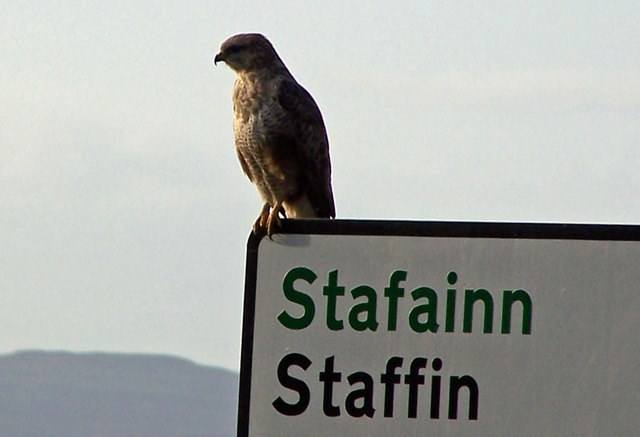
Key Field Marks
- Medium-large raptor (about 51–57 cm) with broad, rounded wings and a relatively short, fan-shaped tail
- Plumage is highly variable, ranging from very dark chocolate-brown birds to pale, almost whitish individuals, but most show a dark trailing edge to the wing, dark carpal ("wrist") patches, and fine dark barring on the tail
- A pale, unmarked breast band bordered by darker breast and belly is a common (though not universal) pattern
- Broad-headed, compact shape compared to slimmer, longer-tailed raptors
How to Tell It Apart from Similar Species
- Rough-legged Buzzard: shows a distinctly white tail base with a solid black terminal band, feathered legs, and hovers into the wind more frequently and persistently
- European Honey-buzzard: has a smaller, more pigeon-like head, a longer tail and neck projection, distinct dark bands near the tail tip plus a dark trailing edge, and a stiffer, more flapping flight style
- Golden Eagle (juvenile): much larger, with obvious white patches at the base of the primaries and at the base of the tail, and longer, more rectangular wings
Habitat, Range & Season
- Breeds across nearly all of Europe and much of temperate Asia; northern and eastern populations migrate south and west for winter, while western and southern populations are largely resident
- Found in a wide range of open and semi-open habitats: farmland, woodland edge, moorland, and roadsides
Voice
- A plaintive, cat-like mewing call, "peee-yoo," often given while soaring or during territorial display
Behavior Notes
- Frequently seen perched on roadside posts, poles, or trees scanning for small mammals
- Soars on broad wings held in a shallow V (dihedral) and will hover briefly, especially in windy conditions
- Often the most numerous and widespread large raptor across much of its range, so it serves as a useful "baseline" for comparing other raptors
Frequently asked questions
Why is Common Buzzard identification so tricky?
The species shows extreme plumage variation, from very dark to very pale birds, so identification relies more on structure (broad rounded wings, short fanned tail) and flight style (shallow-V soaring, occasional hovering) than on color pattern alone.
How do I tell Common Buzzard from Rough-legged Buzzard?
Rough-legged Buzzard shows a clean white tail base with a bold black terminal band and feathered legs, and hovers more persistently, while Common Buzzard's tail is finely barred throughout and it hovers only briefly.
What call does the Common Buzzard make?
A distinctive plaintive, mewing "peee-yoo" call reminiscent of a cat, often given while soaring overhead.
Where is the best place to see a Common Buzzard?
It is one of the most widespread raptors in Europe and Asia, commonly seen perched on roadside poles or soaring over farmland, woodland edges, and open countryside.