
Colima Warbler Identification Guide
A plain, gray-brown warbler with yellow undertail coverts and a broken white eye-ring, famous in the U.S. as a Big Bend specialty found nowhere else north of Mexico.
Read the full Colima Warbler encyclopedia entry →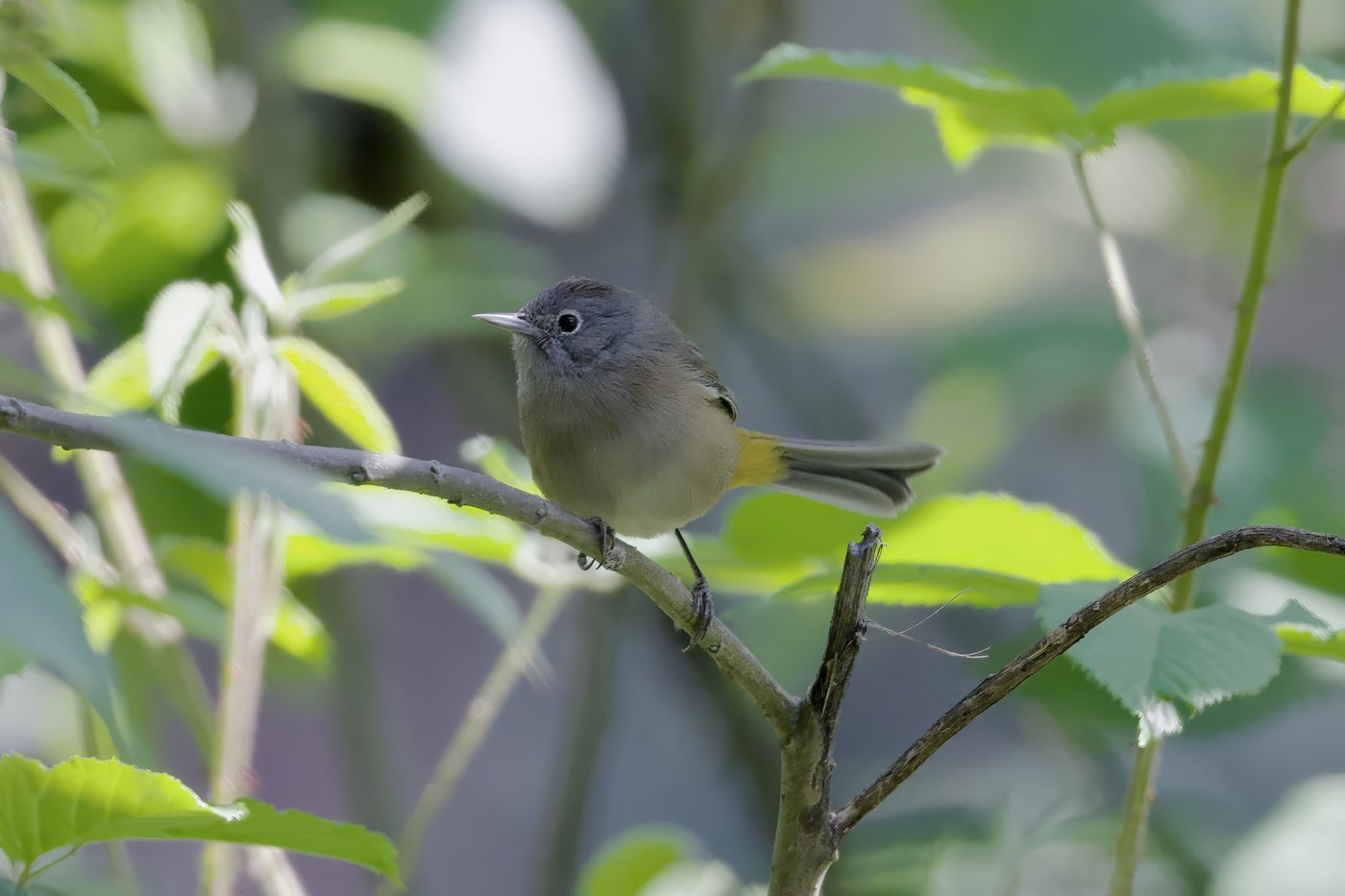
Key Field Marks
- Size & shape: A relatively large, long-tailed warbler for its genus, with a fairly plain overall look and a habit of pumping/wagging its tail while foraging.
- Plumage: Mostly plain grayish-brown/olive-gray above and pale grayish below, with a warm rusty tinge sometimes visible on the crown, and bright yellow undertail coverts that contrast with the otherwise dull body.
- Face: Shows a broken/incomplete whitish eye-ring, giving a fairly plain-faced expression compared to more patterned warblers.
- Behavior: Forages actively but often stays low in dense understory or mid-story vegetation in shaded canyon woodland, frequently flicking its tail.
Separating It From Similar Species
- Virginia's Warbler: Smaller, grayer overall, with a brighter yellow breast patch and yellow rump in addition to yellow undertail coverts, and a more contrasting reddish crown patch; Colima Warbler is larger, plainer, and lacks the yellow breast patch and rump.
- Nashville Warbler: Shows a complete white eye-ring and a bright yellow throat and breast, unlike the grayish underparts and yellow restricted to the undertail of Colima Warbler.
- Lucy's Warbler: Much smaller and paler, with a rusty rump patch instead of yellow undertail coverts, and found in desert wash habitat rather than montane oak-pine canyons.
Habitat, Range & Season
- Breeds in oak and oak-pine woodland in shaded, well-watered mountain canyons at moderate to high elevation, primarily in the mountains of northern and central Mexico.
- In the United States, breeds only in the Chisos Mountains of Big Bend National Park, Texas — its single U.S. breeding location and a major birding target for that reason.
- A short-distance migrant, wintering in west-central Mexico; arrives on U.S. breeding grounds in spring (typically found from March/April through summer) and departs by early fall.
Voice
- Song is a trilled series reminiscent of Virginia's Warbler or Tennessee Warbler — a simple, somewhat mechanical trill, often given from cover, making voice a useful aid for location even when the bird itself stays hidden.
Frequently asked questions
Where in the United States can I find a Colima Warbler?
Only in the Chisos Mountains of Big Bend National Park, Texas — its sole U.S. breeding location; elsewhere it breeds in the mountains of Mexico.
How do I distinguish Colima Warbler from Virginia's Warbler?
Colima Warbler is larger and plainer, lacking the bright yellow breast patch and yellow rump that Virginia's Warbler shows; Colima's yellow is essentially restricted to the undertail coverts.
What habitat does the Colima Warbler prefer?
Shaded oak and oak-pine woodland in moist mountain canyons at moderate to high elevation.
When is the best time to see Colima Warbler in Big Bend?
Spring through summer, roughly April through August, when birds are present on their high-elevation Chisos Mountains breeding grounds before departing for Mexico in fall.