
Cockatoo Identification Guide
A group of large, crested parrots native to Australasia, identified as a whole by their prominent erectile crests, robust curved bills, and predominantly white, black, gray, or pink plumage.
Read the full Cockatoo encyclopedia entry →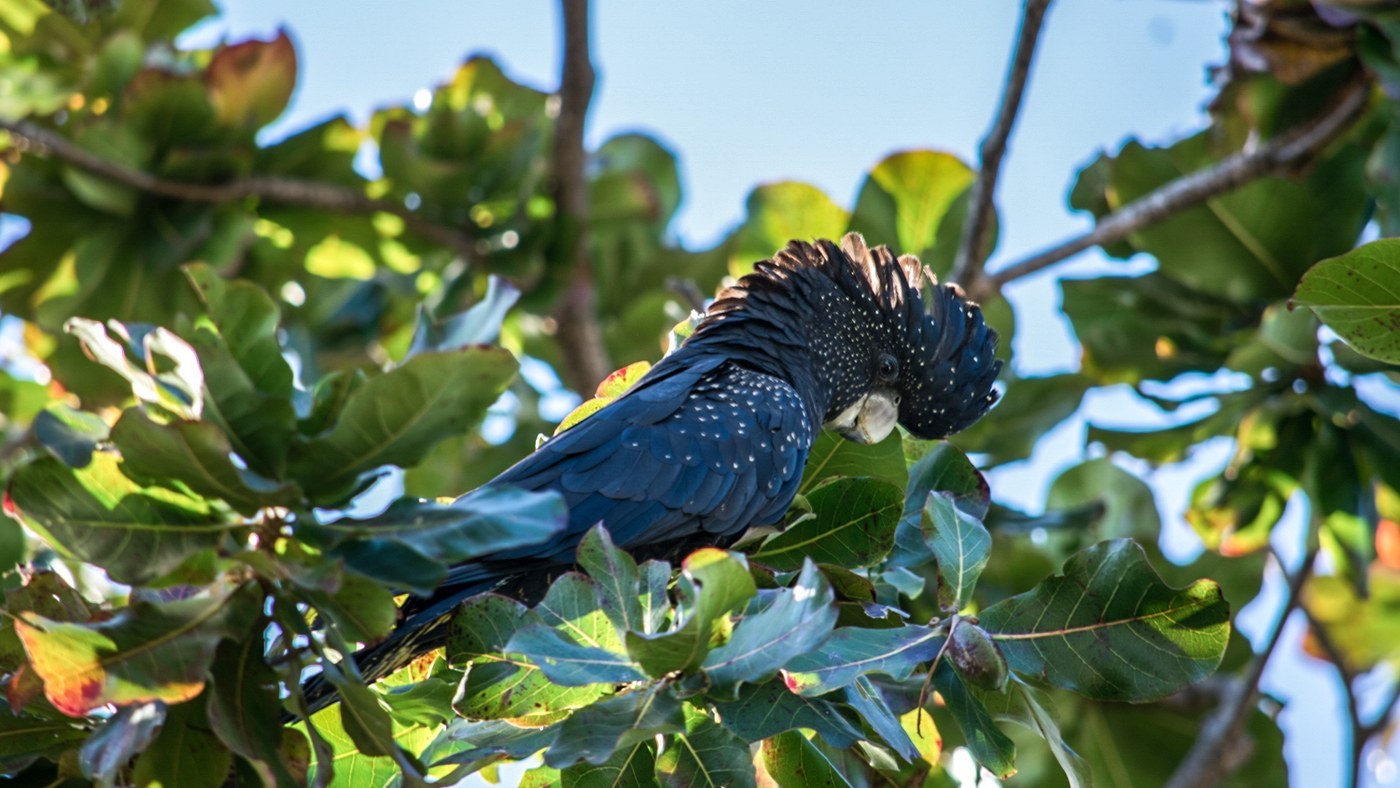
Key Field Marks
- Size & shape: Cockatoos are medium to large parrots (roughly 30-65 cm depending on species) with a stocky build, a large, strongly hooked bill adapted for cracking hard seeds and nuts, and a characteristic erectile crest that is raised when alarmed, excited, or displaying and flattened at rest.
- Plumage colors: Unlike typical parrots, cockatoos lack the bright greens and blues of many parrot families; instead most species are predominantly white, black, gray, or pink, often with colored patches on the crest, cheeks, or underwing/undertail (yellow, red, orange, or salmon-pink).
- Bare skin: Many species show a patch of bare skin around the eye, ranging from white to blue or dark, useful for species-level identification.
- Behavior: Highly social and vocal, typically seen in noisy flocks; strong, direct flight with slow wingbeats; often forages on the ground for seeds, roots, and nuts as well as in trees.
Separating It From Similar Parrots
- True parrots (e.g., lorikeets, rosellas, Amazons): Lack the erectile crest entirely and are usually more colorful, with greens, blues, and reds dominating rather than the white/black/gray/pink palette typical of cockatoos.
- Cockatiel: A small, slender, long-tailed relative of the cockatoos with the same erectile crest but at a fraction of the size and with gray-and-yellow plumage rather than the bold white, black, or pink of larger cockatoos.
- Within the group: Major recognizable types include the large white cockatoos with yellow or white crests (e.g., Sulphur-crested Cockatoo), the pink-and-gray Galah, the all-black cockatoos with red or yellow tail panels (black-cockatoos), and the dramatic all-black Palm Cockatoo with a bare red cheek patch.
Habitat, Range & Season
- Native to Australia, New Guinea, Indonesia (particularly the Wallacea/Moluccas region), and the Philippines, occupying habitats from open eucalypt woodland and farmland to rainforest, depending on species.
- Several species are highly adaptable and thrive around towns, farmland, and parks, often causing agricultural damage due to their fondness for grain and fruit crops.
- Because of extensive trade in aviculture, escaped or deliberately released cockatoos have established naturalized feral populations well outside their native range in some regions, including parts of the United States, New Zealand, Singapore, and Hong Kong.
Voice
- Cockatoos are generally very loud and raucous, with harsh screeching, screaming, and grating calls that carry long distances — often the first sign of a flock's presence before it comes into view.
Frequently asked questions
What makes a bird a 'cockatoo' rather than another type of parrot?
Cockatoos are a distinct parrot family (Cacatuidae) defined by an erectile head crest, a movable upper bill joint, and a plumage palette dominated by white, black, gray, or pink rather than the greens and blues typical of most other parrots.
Where are cockatoos native to?
Australia, New Guinea, parts of Indonesia (especially the Wallacea and Moluccas region), and the Philippines.
Why are cockatoos found in places like California or Florida?
Escaped or released pet cockatoos have established small self-sustaining feral populations in some cities outside their native range, though these are localized rather than widespread.
How do I quickly recognize a bird as a cockatoo in the field?
Look for a large, mostly white, black, gray, or pink parrot with a prominent crest that can be raised or lowered, and a heavy, strongly hooked bill — traits not shared by green or blue parrots.