Cockatiel Identification Guide
A small, slender crested parrot native to arid inland Australia, recognized by its gray body, long pointed tail, and — in males — a bright yellow face with an orange cheek patch.
Read the full Cockatiel encyclopedia entry →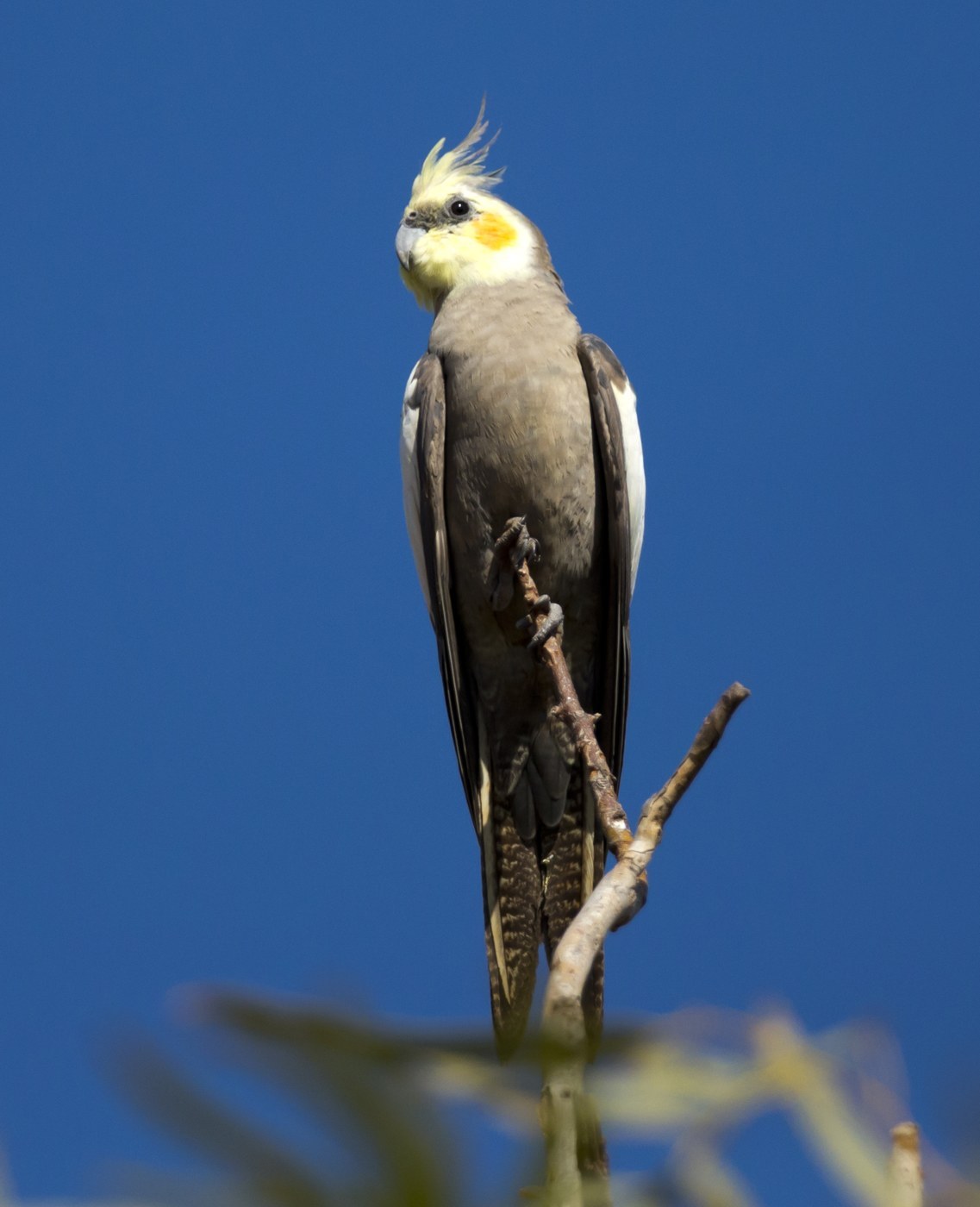
Key Field Marks
- Size & shape: A small, slim parrot (30-33 cm including a long, tapering, pointed tail that makes up nearly half the total length) with a prominent, mobile crest that is raised and lowered with mood.
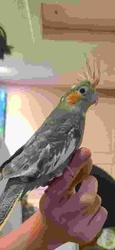
- Male plumage: Soft gray body with a bright yellow face and crest and a round orange patch on each cheek; large white wing patches are conspicuous in flight.
- Female/immature plumage: Duller overall, with a grayish face showing only muted yellow, a duller orange cheek patch, and fine gray barring on the underside of the tail — a useful mark not shown by adult males.
- Flight: Fast, direct, and undulating, with the long tail and white wing patches obvious; often travels in flocks giving contact calls.
- Behavior: Highly social and nomadic, moving in response to rainfall and seed availability; frequently seen perched on dead branches or wires near water sources.
Separating It From Similar Species
- Cockatoos: Cockatiel is essentially a small, slender, long-tailed relative of the true cockatoos, sharing the erectile crest but easily separated by its much smaller size, long pointed tail, and gray-and-yellow (not white or pink) plumage.
- Other Australian parrots: The combination of gray body, long pointed tail, and crest is unique among Australian parrots and not shared by any similarly sized species.
Habitat, Range & Season
- Native to the arid and semi-arid interior of mainland Australia, where it is nomadic, following seasonal rains and food availability across open woodland, scrubland, grassland, and farmland, usually near water.
- Avoids the wetter coastal forests and the most extreme desert interior, favoring the vast semi-arid "outback" zone in between.
- One of the most widely kept parrots in aviculture worldwide; escaped or released birds are occasionally reported outside Australia but rarely establish stable wild populations.
Voice
- Calls include a distinctive, clear, rising "queel" or "wee-ro" contact call given in flight, along with a range of whistled notes; captive-bred birds are noted for mimicking whistled tunes.
Frequently asked questions
How do I tell a male Cockatiel from a female?
Males show a bright yellow face and crest with a bold orange cheek patch, while females are duller with a grayer face, a muted orange cheek patch, and fine barring on the underside of the tail.
Where do wild Cockatiels live?
They are native to the semi-arid interior of Australia, where they roam nomadically through open woodland, scrub, and grassland in response to rainfall, usually staying near water.
What is the easiest way to recognize a Cockatiel in flight?
A small gray parrot with a long, pointed tail and bold white wing patches, flying fast and directly, often giving a rising queel call.
Are Cockatiels found in the wild outside Australia?
Escaped or released birds are occasionally seen elsewhere, but Cockatiels have not established significant self-sustaining wild populations outside their native Australian range.
Cockatiel identified by the community
Recent Cockatiel sightings identified with Bird Identifier.