
Cinereous Vulture Identification Guide
One of the largest raptors in the world, a massive, uniformly dark vulture of Eurasian mountains and steppe, told from griffon vultures by its darker plumage and pale, bare head.
Read the full Cinereous Vulture encyclopedia entry →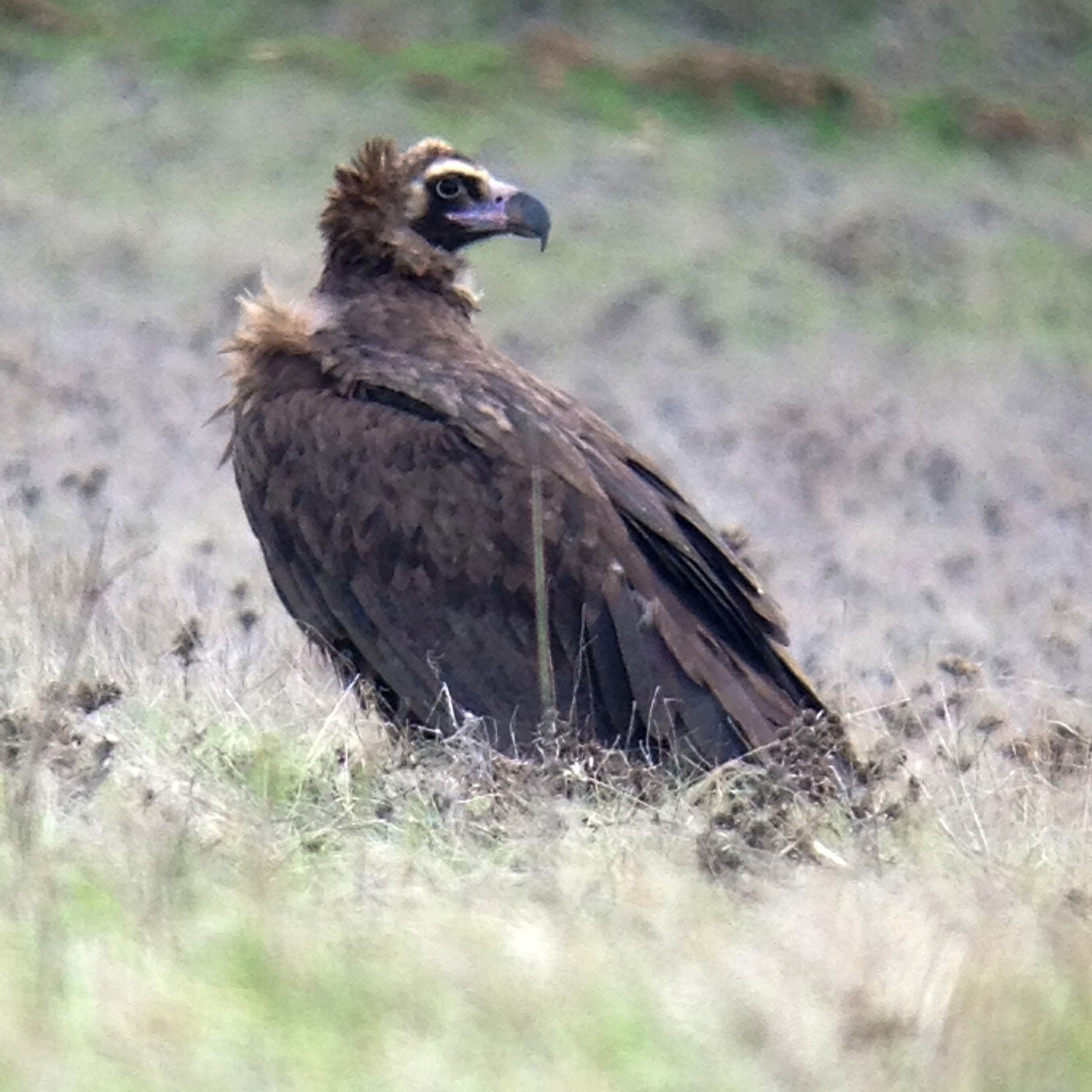
Key Field Marks
- Enormous raptor, among the largest flying birds in the world, with a wingspan that can exceed 9 feet.
- Plumage is dark blackish-brown overall, appearing far more uniformly dark than most other Old World vultures.
- Head and upper neck are bare and pale bluish-gray to flesh-colored, with a dark, shaggy ruff of feathers at the base of the neck.
- Massive, pale horn-colored bill, one of the largest and most powerful of any vulture, adapted for tearing tough hide and tendon.
- In flight, holds long, broad, rectangular ("plank-like") wings flat or with a very slight bend, and shows a somewhat wedge-shaped tail.
Separating It From Similar Species
- Eurasian Griffon Vulture: noticeably paler and more tawny-brown overall, with a whitish-down-covered head/neck and darker flight feathers/tail that contrast against the pale body — Cinereous Vulture looks far more uniformly dark from below.
- Griffon Vultures typically soar with wings held in a shallow V (dihedral), while Cinereous Vulture tends to hold its wings flatter and straighter, appearing more "plank-like."
- Cinereous Vulture is noticeably larger and bulkier than Griffon Vulture, with a proportionately larger head and bill.
- Immature Golden Eagles can appear superficially dark and large but show a shorter, more rounded tail, feathered legs down to the toes, and typically white patches at the base of the flight feathers and tail, all absent in Cinereous Vulture.
Habitat, Range & Season
- Breeds in mountainous and hilly terrain with mature forest for nesting (building enormous stick nests in large trees or occasionally on cliffs) adjacent to open steppe, grassland, or semi-desert for foraging.
- Range spans from Spain and Portugal through the Balkans, Turkey, and the Caucasus, across Central Asia to Mongolia, northern China, and the Korean Peninsula.
- Largely resident, though some populations and individual birds disperse or migrate seasonally, particularly in the eastern part of the range.
- Typically forages alone or in small numbers at carcasses, in contrast to the larger, more gregarious flocks often seen at griffon vulture feeding sites.
Voice
- Generally silent away from the nest; occasionally gives low grunts, hisses, or croaking notes when competing for food at a carcass.
Frequently asked questions
How do I tell Cinereous Vulture from Griffon Vulture?
Cinereous Vulture is larger, darker, and more uniformly blackish-brown, with a pale bare head and flatter wing profile in flight, while Griffon Vulture is paler tawny-brown with a whitish downy head/neck and typically soars with wings held in a shallow V.
How large is a Cinereous Vulture?
It is one of the largest flying birds in the world, with a wingspan that can exceed 9 feet and a body weight among the heaviest of any vulture species.
Where does Cinereous Vulture breed?
In mountainous or hilly regions with mature forest for nesting, from Spain and the Balkans across Central Asia to Mongolia and parts of East Asia.
Is Cinereous Vulture usually seen in large flocks like Griffon Vulture?
No, it tends to forage alone or in small numbers at carcasses rather than in the large, dense flocks typical of Griffon Vulture.