
Chipping Sparrow Identification Guide
A small, neat sparrow with a bright rufous cap, white eyebrow stripe, and clean gray underparts, common in open woodlands, parks, and suburban yards across North America.
Read the full Chipping Sparrow encyclopedia entry →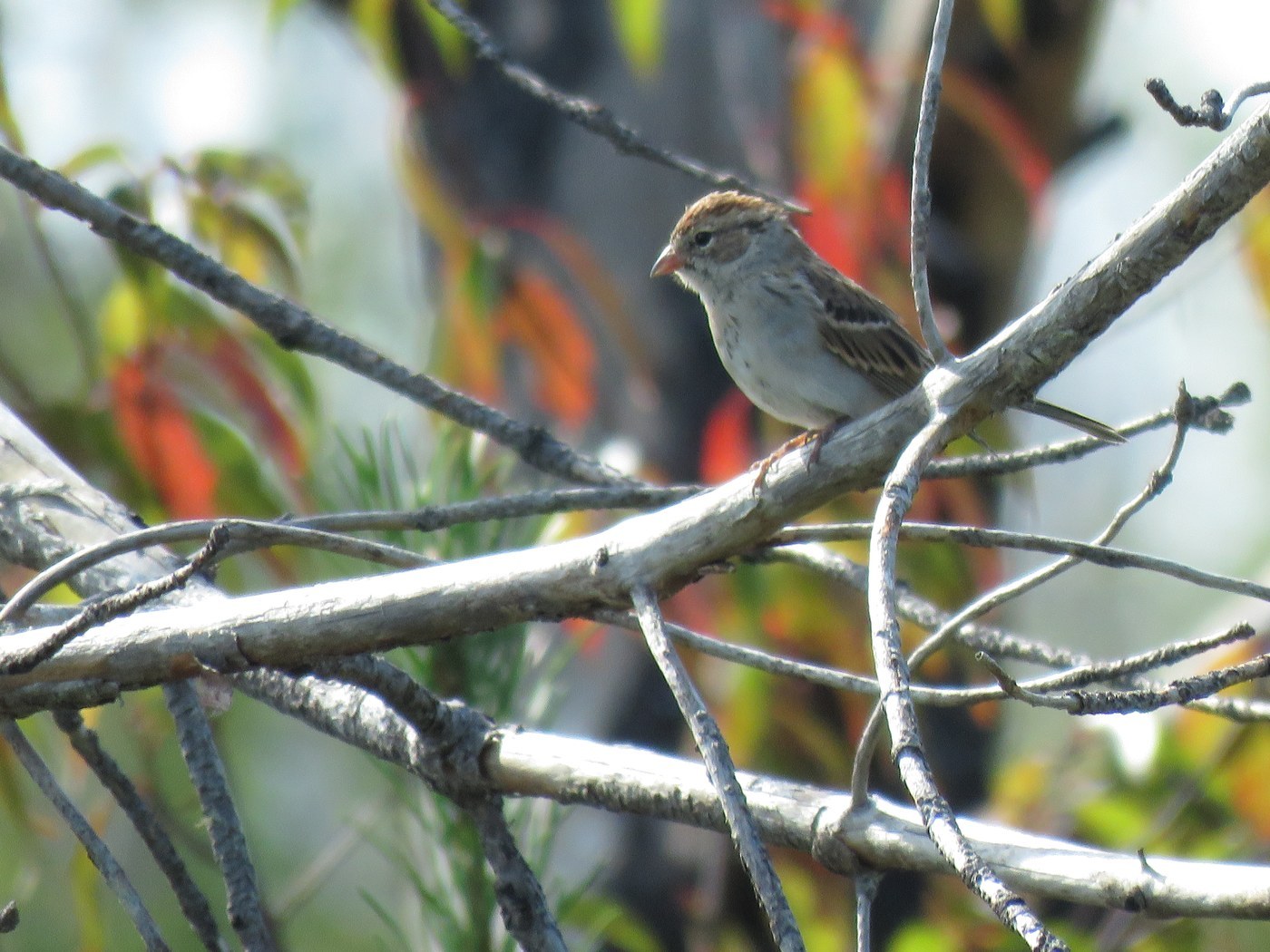
Key Field Marks
- Small, slim sparrow, about 5–5.5 inches, with a small, sharply pointed pinkish bill.
- Breeding adult: bright rufous (chestnut) crown, crisp white eyebrow stripe (supercilium), black eyeline running through the eye, gray nape and unstreaked gray underparts, and two white wingbars.
- Nonbreeding adults and immatures: duller and buffier, with a streaked rather than solid rufous crown and a less crisp face pattern, making fall birds trickier to identify.
- Overall clean, tidy appearance with a notched tail.
Separating It From Similar Species
- American Tree Sparrow: larger, with a distinct dark central breast spot, a bicolored bill (dark above, yellow below), and a more rusty eyeline; found in more open/brushy habitat and generally only present in winter across much of the U.S.
- Clay-colored Sparrow: shows a buffier face with strong dark whisker (moustachial) marks, a pale central crown stripe, and a contrasting gray nape against a streaked brown crown — Chipping Sparrow's crown is a clean solid rufous in breeding plumage.
- Field Sparrow: has a plain face lacking a dark eyeline, a bold white eyering, and an entirely pink bill, giving it a much softer, less contrasty facial expression than Chipping Sparrow's black eyeline.
- Fall immature Chipping Sparrows can resemble several streaky sparrows; look for the small size, thin pointed bill, and grayish (not heavily streaked) rump/underparts.
Habitat, Range & Season
- Common in open woodlands, forest edges, parks, orchards, and suburban yards and gardens, especially where conifers or scattered trees are present.
- Breeds across most of North America, from Canada south through the U.S. into the highlands of Mexico and Central America.
- Northern populations migrate; winters mainly in the southern U.S., Mexico, and Central America.
- Often forages on the ground, sometimes in small flocks, especially during migration and winter.
Voice
- Song is a fast, dry, mechanical trill delivered on a single pitch, often compared to a sewing machine running.
- Call note is a sharp, high chip, which gives the species its name.
Frequently asked questions
How do I tell a Chipping Sparrow from an American Tree Sparrow?
American Tree Sparrow is larger, has a dark central breast spot and a two-toned bill, and is generally seen only in winter, while Chipping Sparrow has plain gray underparts and a small, all-pink bill.
What does the Chipping Sparrow's song sound like?
A fast, dry, unbroken trill on one pitch, often likened to the whir of a sewing machine.
Why is a fall Chipping Sparrow harder to identify than a breeding one?
In fall, the bright solid rufous cap becomes streaked and duller, and the face pattern is less crisp, making it more easily confused with Clay-colored and other streaky sparrows.
Where are Chipping Sparrows commonly found?
Open woodlands, forest edges, parks, and suburban yards with scattered trees or conifers, across most of North America during the breeding season.