
Chinese Pond-Heron Identification Guide
A stocky East Asian heron that looks drab brown and streaky at rest but reveals strikingly white wings the instant it takes flight.
Read the full Chinese Pond-Heron encyclopedia entry →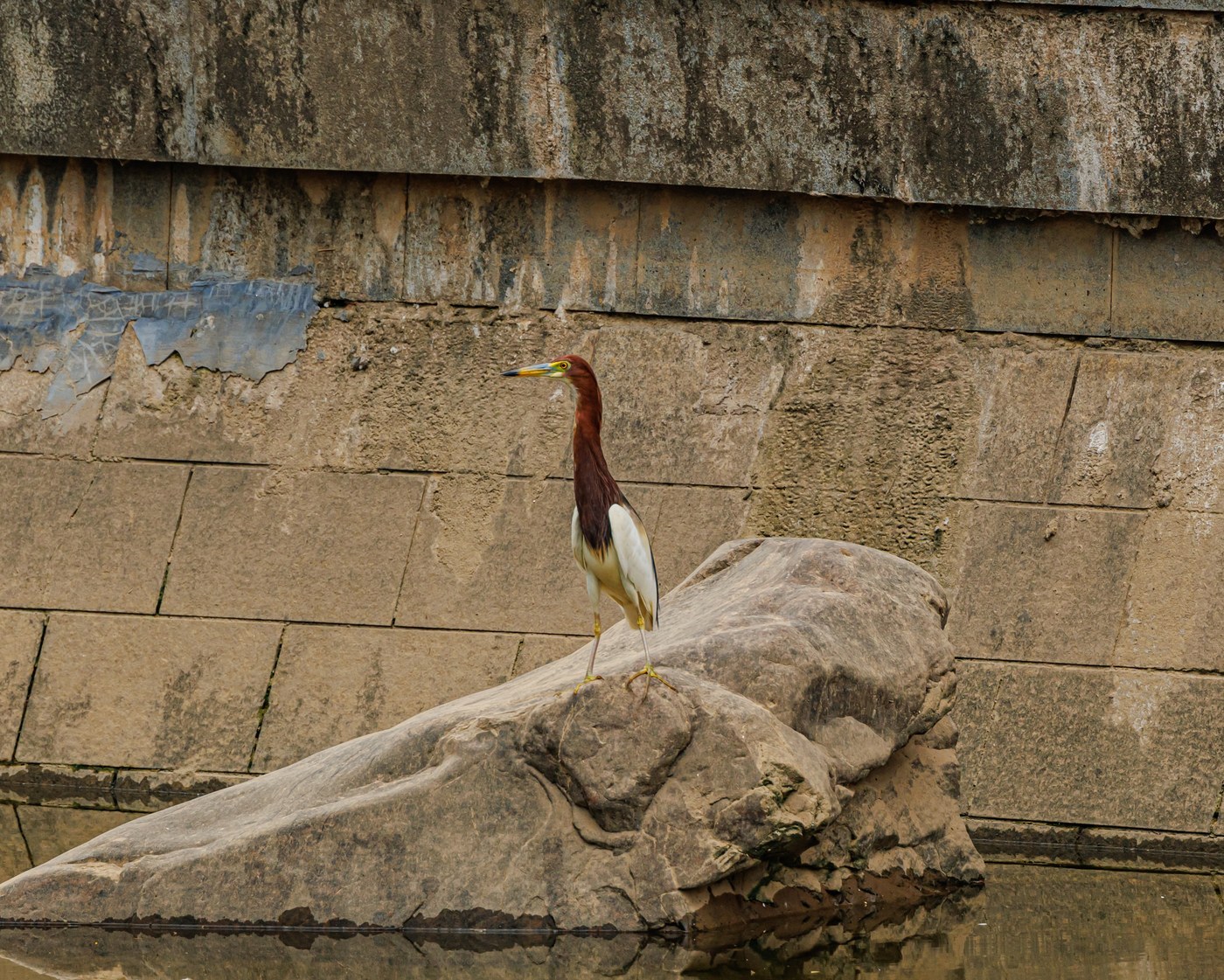
Key Field Marks
- Small, stocky heron, hunched posture, with a relatively short neck and thick bill when at rest.
- Breeding plumage: rich maroon-chestnut head and neck, slate-blue back, and white belly; the wings remain bright white, contrasting sharply with the dark body.
- Nonbreeding/immature plumage: heavily streaked brown head, neck, and breast over a brown back, making the bird look like a plain, camouflaged brown heron while standing still.
- The single best field mark in any plumage: the wings are essentially all white, hidden while the bird is standing but flashing conspicuously in flight.
- Yellowish or greenish legs and bill base, with a dark bill tip.
Separating It From Similar Species
- Indian Pond-Heron and Javan Pond-Heron: nearly identical in appearance but largely separated by range (Indian Pond-Heron occurs from the Middle East through South Asia; Javan Pond-Heron is confined to Southeast Asian islands); Chinese Pond-Heron breeds in East Asia and winters in South/Southeast Asia, with limited range overlap.
- Squacco Heron (Old World): similarly cryptic at rest with white wings in flight, but found in Africa/Europe/western Asia rather than East Asia — ranges do not normally overlap with Chinese Pond-Heron.
- Bitterns are more heavily streaked overall and lack the sharply white wings shown in flight.
- When perched and not flying, pond-herons of all these species are very difficult to separate without knowing the location; the flight view with white wings is the most useful confirming feature.
Habitat, Range & Season
- Favors shallow freshwater wetlands: rice paddies, marshes, ditches, ponds, and slow streams.
- Breeds across eastern China, Korea, and parts of Japan and Southeast Asia; northern populations are migratory.
- Winters south into Southeast Asia, including Thailand, Vietnam, Malaysia, and the Philippines.
- Usually solitary or in loose groups, standing motionless or moving with slow, deliberate steps while hunting.
Voice
- Generally quiet; gives a harsh, croaking aakh call when flushed or disturbed.
Frequently asked questions
How can I identify a Chinese Pond-Heron when it's not breeding?
In nonbreeding plumage it looks like a plain streaky brown heron at rest, but flushing it reveals strikingly white wings — the best field mark in any plumage.
What does a breeding Chinese Pond-Heron look like?
It develops a rich maroon-chestnut head and neck and a slate-blue back, while the wings remain white and the belly stays pale.
How do I tell Chinese Pond-Heron from Indian Pond-Heron?
The two are nearly identical in plumage and are best separated by range — Chinese Pond-Heron breeds in East Asia and winters in Southeast Asia, while Indian Pond-Heron occurs from the Middle East through South Asia.
What habitat should I search for a Chinese Pond-Heron?
Shallow freshwater wetlands such as rice paddies, marshes, ponds, and slow-moving streams, where it stands motionless while hunting.