
Chestnut-sided Warbler Identification Guide
A small yellow-green warbler with bold chestnut side streaks in breeding plumage and a lime-and-white look in fall, usually seen with its tail cocked in shrubby second growth.
Read the full Chestnut-sided Warbler encyclopedia entry →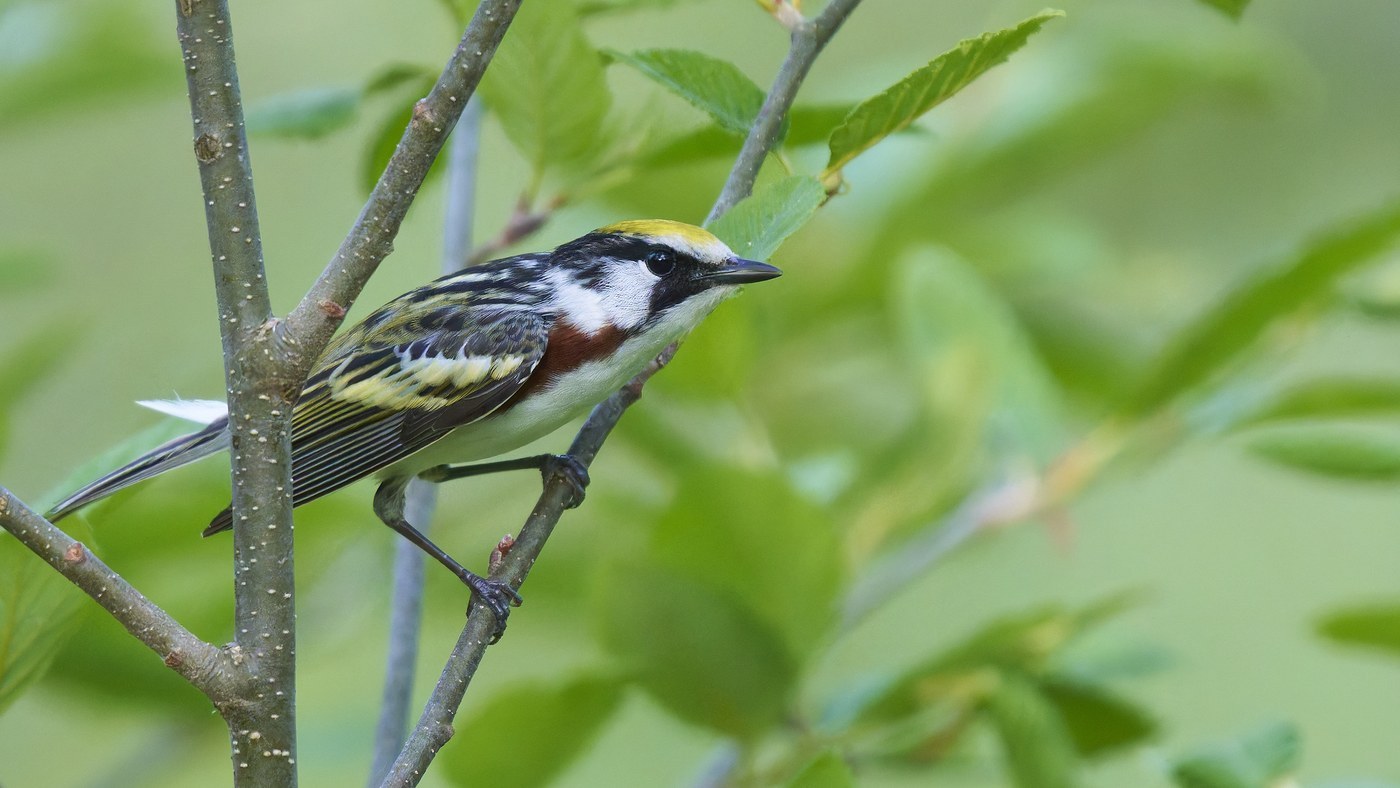
Key Field Marks
- Small warbler, about 5 inches, often seen with its tail cocked upward while foraging in low-to-mid shrubs.
- Breeding male: bright yellow-green crown, black eyeline and black malar (mustache) streaking, white face and underparts, and a broad chestnut stripe running down each side from the shoulder.
- Two pale yellow wingbars on blackish-streaked wings; back streaked black over greenish-yellow.
- Breeding female: similar pattern but softer, less extensive chestnut and less black on the face.
- Fall/nonbreeding adults and immatures: lime-green crown and back, gray face, white eyering, whitish underparts, and yellow-green wingbars; chestnut on the sides is reduced or absent, especially in young birds.
Separating It From Similar Species
- Bay-breasted Warbler (fall): also greenish above, but Bay-breasted shows a faint buffy wash on the flanks/undertail coverts and dark legs, while Chestnut-sided has clean white undertail coverts and paler legs.
- Blackpoll Warbler (fall): streakier above with yellowish legs and feet ("wears yellow socks"), and lacks the clean gray face/white eyering combination of fall Chestnut-sided.
- Cape May Warbler (fall): shows fine breast streaking and often a hint of yellow on the neck sides; Chestnut-sided is plainer below.
- No other eastern warbler combines a plain gray face, white eyering, and lime-green back in fall plumage.
Habitat, Range & Season
- Breeds in second-growth habitat: shrubby old fields, regenerating clear-cuts, brushy woodland edges, and power-line corridors across the northeastern and north-central United States and southern Canada.
- A classic species that increased historically as forests were cleared, then logged and left to regrow into scrub.
- Present on breeding grounds roughly May through August; migrates through the eastern U.S. in spring (May) and fall (August–September).
- Winters in the understory and edges of forests in Central America, from southern Mexico to Panama.
Voice
- Song is a bright, whistled series often rendered as "pleased, pleased, pleased to MEETCHA", with an emphatic downslurred ending.
- Some males give an alternate, less accented song used mainly early in the breeding season.
- Call note is a flat, sharp chip.
Frequently asked questions
How can I tell a fall Chestnut-sided Warbler from other confusing fall warblers?
Look for the combination of a lime-green back, plain gray face, bold white eyering, and whitish underparts with clean (not buffy) undertail coverts — a pattern unique among fall warblers in its range.
Do females and immatures show any chestnut on the sides?
Adult females usually show a reduced chestnut stripe, but many immature birds in fall show little or no chestnut at all, making the face pattern and back color more reliable clues.
Where is the best place to find a Chestnut-sided Warbler?
Look in shrubby, regenerating habitat such as old fields, brushy clear-cuts, and overgrown woodland edges rather than mature forest interior.
What does the Chestnut-sided Warbler's song sound like?
A cheerful whistled phrase often described as "pleased, pleased, pleased to MEETCHA," with a strong accented ending.