
Chestnut-backed Chickadee Identification Guide
A small, dark Pacific coast chickadee with a black cap and bib, white cheeks, and a warm chestnut back and flanks unlike any other North American chickadee.
Read the full Chestnut-backed Chickadee encyclopedia entry →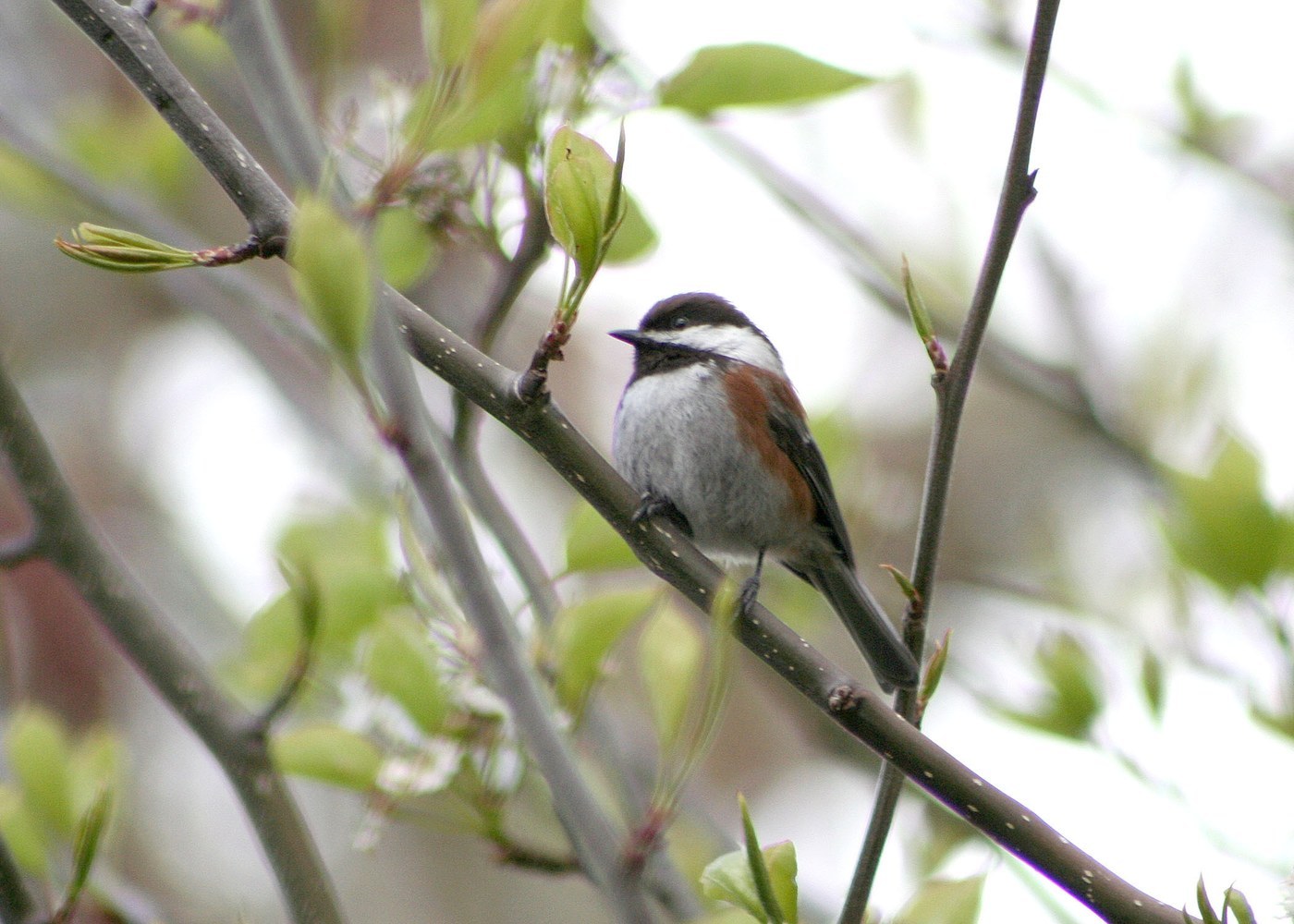
Key Field Marks
- Tiny, active songbird with a black cap and black throat/bib, and clean white cheeks — the classic chickadee face pattern.
- Rich chestnut (reddish-brown) back, distinguishing it immediately from other chickadees, which have gray backs.
- Chestnut or warm brown wash extends onto the flanks in most populations (though coastal California birds can show duller, grayer flanks).
- Overall darker and dumpier looking than other chickadee species, with a shorter tail.
Similar Species
- Black-capped Chickadee: Gray back and whitish or buffy flanks, lacking any chestnut; ranges overlap only locally, and Black-capped tends to favor more open or deciduous habitat.
- Mountain Chickadee: Gray back like Black-capped but with a bold white eyebrow stripe above the black cap, which Chestnut-backed lacks entirely.
- Boreal Chickadee: Also has brownish flanks and a brown cap (not black), but occurs in boreal forest far to the north and east, with little range overlap.
Habitat & Range
- A Pacific coast specialist, resident from southern Alaska through British Columbia and the Pacific Northwest to central coastal California.
- Favors humid coniferous and mixed forests, especially dense, moist stands near the coast, including redwood and Douglas-fir forest.
- Also uses parks, gardens, and wooded suburban areas within its range, readily visiting feeders.
Behavior
- Forages actively and acrobatically through foliage and branches, often hanging upside down while gleaning insects and seeds.
- Joins mixed-species foraging flocks with kinglets, nuthatches, and warblers, especially in winter.
- Nests in cavities, often excavating or using old woodpecker holes in soft, decaying wood.
Voice
- Calls are notably hoarser and buzzier than other chickadees' — a fast, husky "tsick-a-dee-dee" rather than the clear, whistled call of Black-capped Chickadee.
- Lacks the familiar clear whistled "fee-bee" song of Black-capped Chickadee; instead gives a rapid series of high, thin, and buzzy notes.
Frequently asked questions
What is the easiest way to identify a Chestnut-backed Chickadee?
Look for the warm chestnut-brown back — no other North American chickadee shows this color, making it a reliable, quick field mark once the bird is seen from the side or above.
Does the Chestnut-backed Chickadee sing like a Black-capped Chickadee?
No — it lacks the clear whistled "fee-bee" song of Black-capped Chickadee and instead gives fast, hoarse, buzzy chatter calls.
Where does the Chestnut-backed Chickadee live?
It is a Pacific coast resident found from southern Alaska south through British Columbia, the Pacific Northwest, and coastal central California, in humid coniferous and mixed forest.
How does it differ from a Mountain Chickadee?
Mountain Chickadee has a gray back and a bold white eyebrow stripe, while Chestnut-backed Chickadee has a chestnut back and no eyebrow stripe.