
Cassin's Finch Identification Guide
A montane finch of western conifer forests, males show a bright rosy-red crown sharply contrasting with a paler pink-brown body.
Read the full Cassin's Finch encyclopedia entry →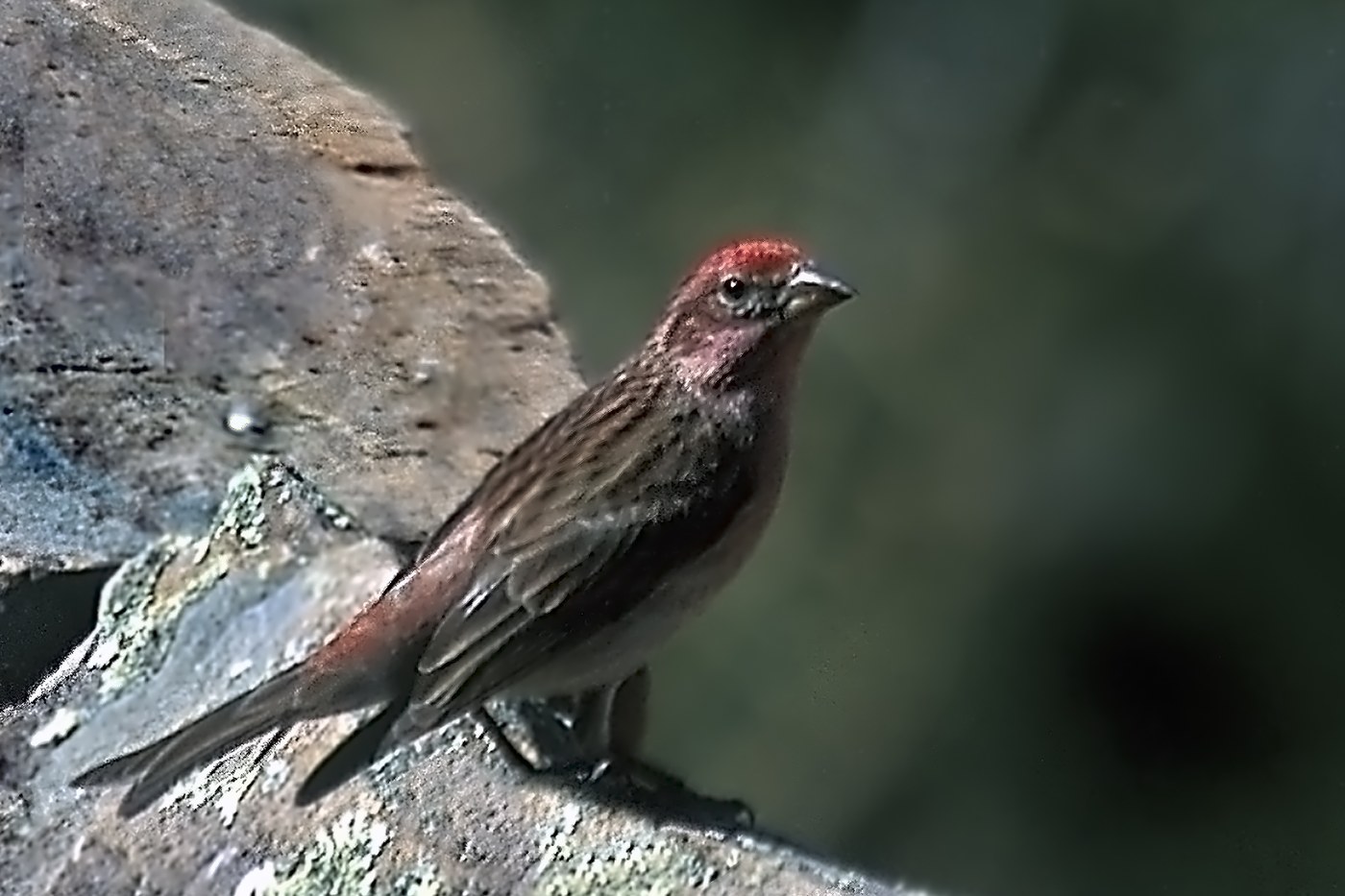
Key Field Marks
- Size & shape: A medium-sized finch, slightly larger and longer-billed than House Finch, with a somewhat more streamlined shape and a straighter, more conical bill.
- Male plumage: A bright, saturated rosy-red crown patch that contrasts sharply with a paler pinkish wash on the face, throat, and breast, and streaked brown back — the crown color looks noticeably brighter and more defined than the rest of the head.
- Female/immature plumage: Streaky grayish-brown overall with a distinct face pattern including a pale eyering and a fairly plain, unstreaked face compared to similar finches.
- Bill shape: Longer and straighter along the culmen (less curved) than House Finch or Purple Finch, giving a more pointed appearance.
- Behavior: Often forages in flocks in coniferous treetops, especially in pines, and readily visits mountain feeders; frequently detected by voice overhead before being seen.
Separating It From Similar Species
- Purple Finch males show a more diffuse raspberry-pink wash over the entire head and back without the sharp contrasting bright crown patch of Cassin's Finch; female Purple Finch has a bolder facial pattern with a strong dark cheek patch and pale eyebrow.
- House Finch males show orange-red to red confined mostly to the face, breast, and rump (not a defined crown patch), have a shorter, more curved bill, and heavier streaking on the flanks; House Finch is a lowland/urban bird versus Cassin's montane preference.
- Elevation and habitat are useful supporting clues: Cassin's Finch favors higher-elevation coniferous forest, while House Finch is common in lowlands, towns, and deserts.
Where & When to See It
- Habitat: High-elevation coniferous and mixed forests, especially open pine and fir stands in mountains, and forest edges near meadows.
- Range: Breeds through the mountains of the western United States and southwestern Canada, from the Rockies west to the Sierra Nevada and Cascades, wintering at lower elevations and somewhat farther south into Mexico.
- Season: Present at breeding elevations spring through fall; many birds descend to lower elevations or move south in winter, when flocks can appear at feeders well below typical breeding habitat.
Voice & Song Cues
- Song is a rich, warbling, varied series of notes, similar to House Finch and Purple Finch but often longer and more complex, sometimes including mimicked phrases of other species.
- Flight call is a distinctive, dry, slightly upslurred "kee-up" or "tidee-yip," often given by flocks passing overhead and useful for picking the species out before it is seen.
Frequently asked questions
How do I tell Cassin's Finch from Purple Finch?
Male Cassin's Finch shows a bright, sharply contrasting rosy-red crown patch against a paler body, while Purple Finch shows a more diffuse raspberry wash over the whole head without sharp contrast.
What is the easiest way to separate Cassin's Finch from House Finch?
Cassin's Finch has a straighter, more pointed bill, a defined bright red crown patch, and prefers high-elevation conifer forest, while House Finch has a shorter curved bill, red concentrated on the face and breast, and favors lowland and urban habitats.
What habitat is best for finding Cassin's Finch?
Open, high-elevation pine and fir forests in western mountains, especially the Rockies, Sierra Nevada, and Cascades, are the most reliable habitats.
Does Cassin's Finch migrate?
It makes elevational and some latitudinal movements, descending from high breeding elevations to lower areas or moving farther south in winter.