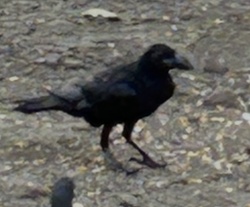
Carrion Crow Identification Guide
An all-black, adaptable Eurasian crow distinguished from its relatives by its straight bill, smooth head, and squared tail.
Read the full Carrion Crow encyclopedia entry →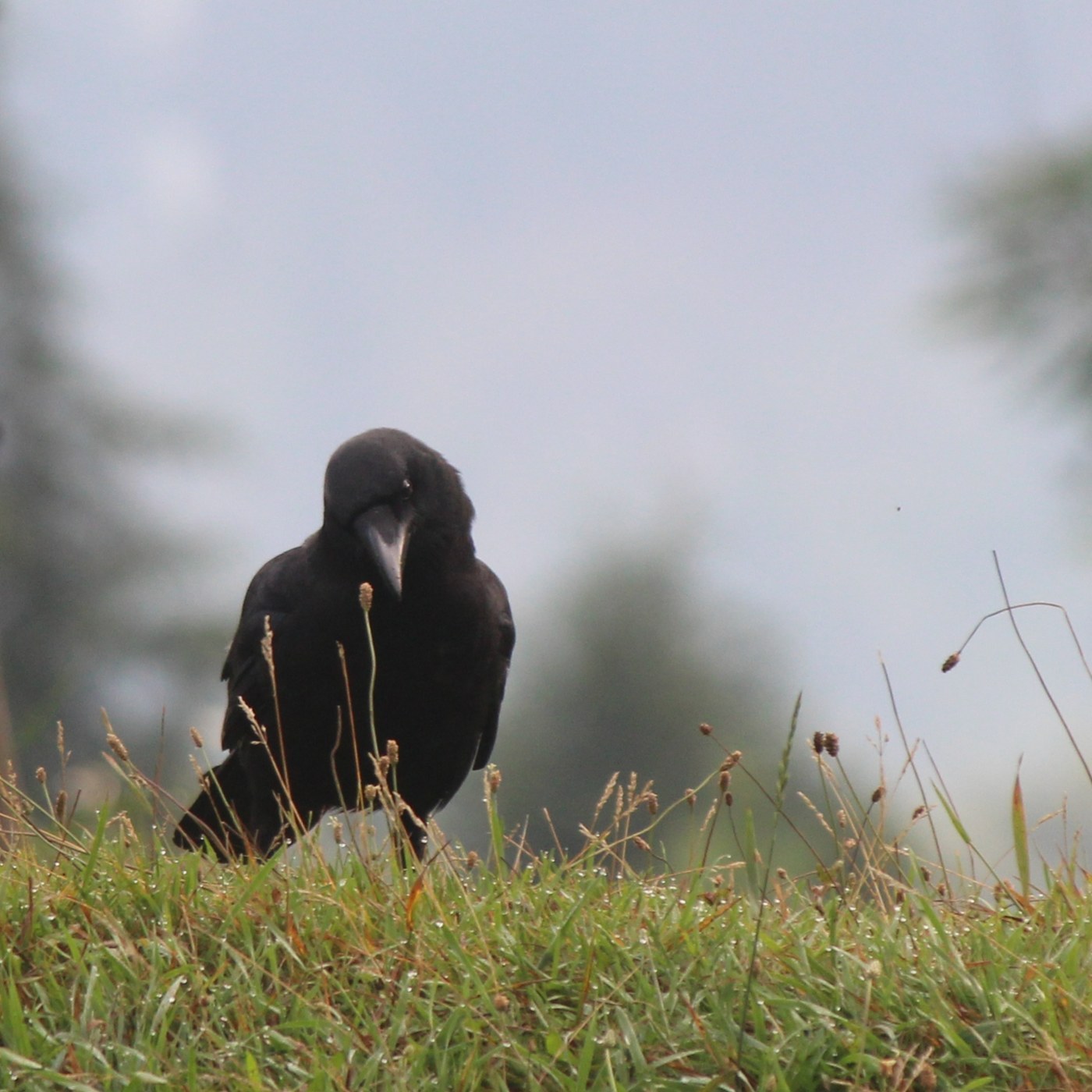
Key Field Marks
- Size & shape: A medium-large, all-black corvid roughly 45–47 cm long, with a straight, heavy bill and a fairly flat crown that lacks a shaggy throat or peaked forehead.
- Plumage: Entirely glossy black with a slight sheen in good light; no gray or pale areas anywhere on the body (distinguishing it from the closely related Hooded Crow).
- Bill: Stout and straight-edged, entirely black, with feathering that does not extend far down the bill.
- Tail: Squared or slightly rounded tip in flight, shorter and less wedge-shaped than a raven's.
- Behavior: Highly adaptable and intelligent, often seen alone or in pairs (unlike the more gregarious Rook), foraging on the ground in fields, parks, and urban areas; known for using tools and problem-solving.
Separating It From Similar Species
- Rook shows a bare, grayish-white patch of skin at the base of the bill in adults, a more peaked crown, and shaggy "trousered" leg feathers; Rooks are also far more social, typically seen in large flocks and colonial rookeries.
- Hooded Crow (a separate species/form in much of northern and eastern Europe) has the same shape as Carrion Crow but shows contrasting gray on the body with black head, wings, and tail — ranges meet in a hybrid zone across parts of Scotland, Northern Europe, and elsewhere.
- Common Raven is noticeably larger with a heavier bill, shaggy throat feathers, a wedge-shaped tail in flight, and a deeper, croaking call.
- Rook and Jackdaw are both smaller-billed or paler-eyed respectively; Jackdaw has a pale grayish nape and pale eye, quickly ruling out confusion.
Where & When to See It
- Habitat: Extremely adaptable, found in farmland, woodland edge, coastal cliffs, urban parks, and city centers.
- Range: Widespread across the United Kingdom, Ireland, and much of western and southern Europe, extending east into parts of Asia; largely replaced by Hooded Crow in northern Scotland, Scandinavia, and eastern Europe.
- Season: A non-migratory resident throughout its range, present year-round.
Voice & Song Cues
- Gives a harsh, flat, evenly pitched "caw-caw-caw," usually repeated three to four times, lower and less musical than a Rook's call.
- Lacks the varied, gurgling vocabulary of ravens; the flat, repetitive caw combined with solitary or paired behavior helps confirm identification by ear.
Frequently asked questions
How do you tell a Carrion Crow from a Rook?
Rooks have a bare grayish-white patch of skin at the base of the bill and shaggy leg feathers, and are usually seen in large flocks, while Carrion Crows have an all-feathered black bill and are typically solitary or in pairs.
What is the difference between a Carrion Crow and a Hooded Crow?
Carrion Crow is entirely black, while Hooded Crow has a contrasting pale gray body with a black head, wings, and tail; their ranges meet in a hybrid zone in parts of Europe.
Is a Carrion Crow the same as a Common Raven?
No, ravens are considerably larger with heavier bills, shaggy throat feathers, wedge-shaped tails, and deeper croaking calls compared to the smaller, squarer-tailed Carrion Crow.
Are Carrion Crows social birds?
They are typically seen alone, in pairs, or in small family groups rather than the large flocks characteristic of Rooks, though non-breeding birds can gather at communal roosts.
Carrion Crow identified by the community
Recent Carrion Crow sightings identified with Bird Identifier.