
Cape Petrel Identification Guide
A boldly checkered black-and-white seabird of the Southern Ocean, easily recognized in flight by its piebald wing pattern.
Read the full Cape Petrel encyclopedia entry →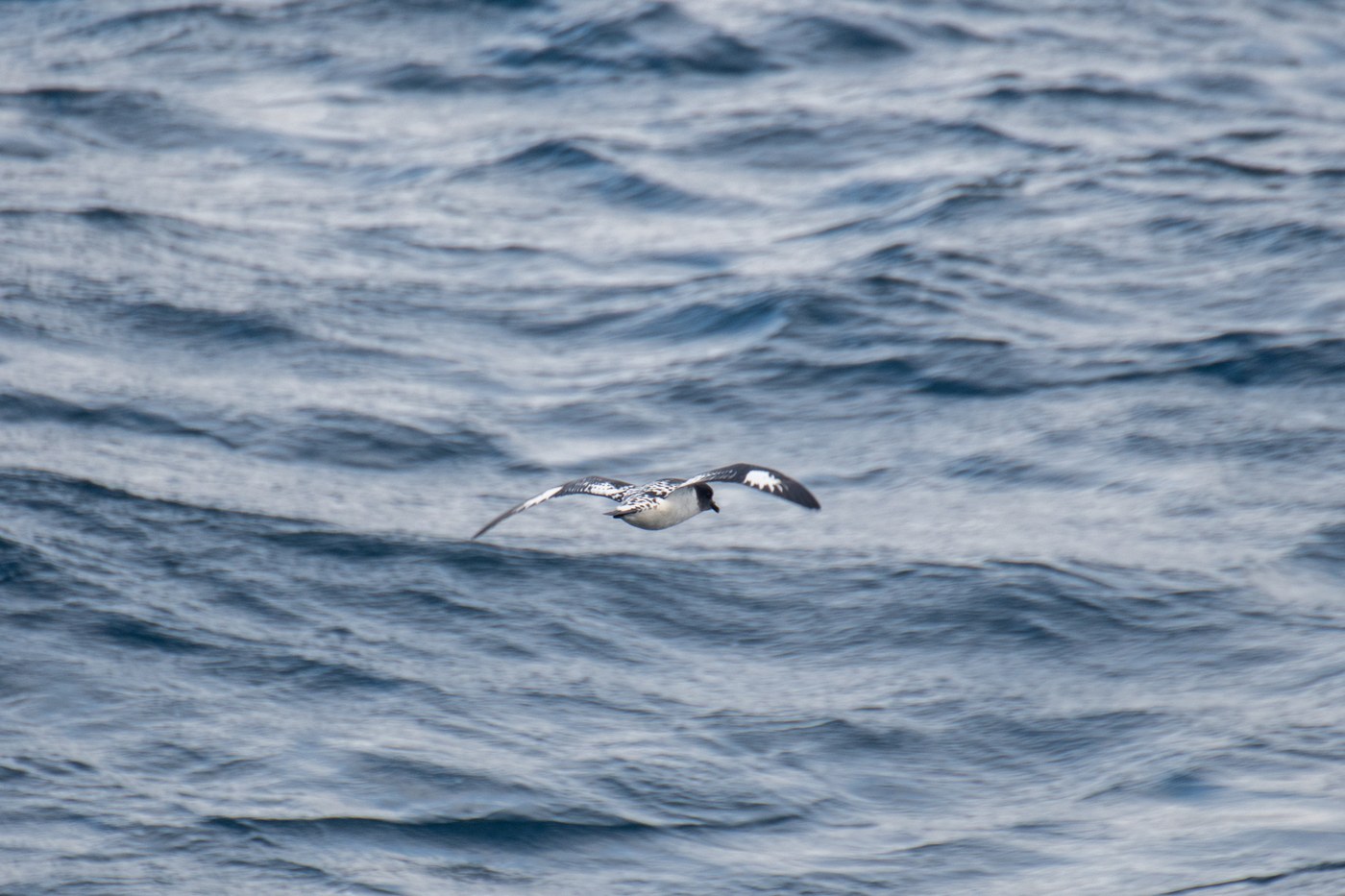
Key Field Marks
- Size & shape: A medium-sized tubenose (petrel) with a stocky body, broad wings, and typical stiff-winged, gliding flight of the petrel family.
- Plumage: Unmistakable bold black-and-white checkerboard/piebald pattern on the upperwings and back, with a black head and a white underbody; in flight the striking mottled black-and-white upperwing pattern is diagnostic and visible from a great distance.
- Bill: Black, stubby, hooked tip typical of petrels, with the characteristic tubed nostrils on top (hard to see at sea but diagnostic of the group).
- Behavior: Follows ships readily, often in large numbers, gliding low over waves on stiff wings and occasionally pattering on the surface to feed; frequently seen scavenging around fishing vessels and ship wakes.
Similar Species
- Pintado Petrel is simply another name for the same species (Cape Petrel), so no separate identification is needed.
- Antarctic Petrel: Similar checkered pattern but has a more solidly brown-black head/upperparts with less intricate white mottling and a different wing pattern, mostly found further south near pack ice.
- No other Southern Ocean seabird shares the same bold black-and-white checkerboard wing pattern, making this species relatively easy to identify once seen well.
Where & When to See
A true Southern Ocean species, breeding on subantarctic and Antarctic islands and dispersing widely across cold southern seas outside the breeding season. Frequently encountered on pelagic boat trips off South Africa, South America, Australia, and New Zealand, as well as ship crossings of the Southern Ocean and Drake Passage. Present year-round at sea within its range, with numbers highest away from breeding colonies outside the summer breeding season.
Voice
Mostly silent at sea outside of feeding scrums, where it gives harsh cackling and chattering calls when competing for food around boats; more vocal at breeding colonies with various croaking and chattering notes.
Frequently asked questions
How do you identify a Cape Petrel?
Look for the bold black-and-white checkerboard pattern across the upperwings and back combined with a black head and white underparts — unmistakable among Southern Ocean seabirds.
Is the Pintado Petrel the same as the Cape Petrel?
Yes, 'Pintado Petrel' is an alternate common name for the same species, Daption capense.
Where can you see Cape Petrels?
On pelagic trips and ship crossings across the Southern Ocean, including waters off South Africa, South America, Australia, and New Zealand, and near their subantarctic breeding islands.
Do Cape Petrels follow ships?
Yes, they readily follow boats and ships, often gathering in numbers to scavenge food, which makes them one of the more easily observed tubenoses.