Cape Glossy Starling Identification Guide
A dazzling, iridescent blue-green starling of southern Africa with bright orange-yellow eyes, common in gardens, savanna, and bush.
Read the full Cape Glossy Starling encyclopedia entry →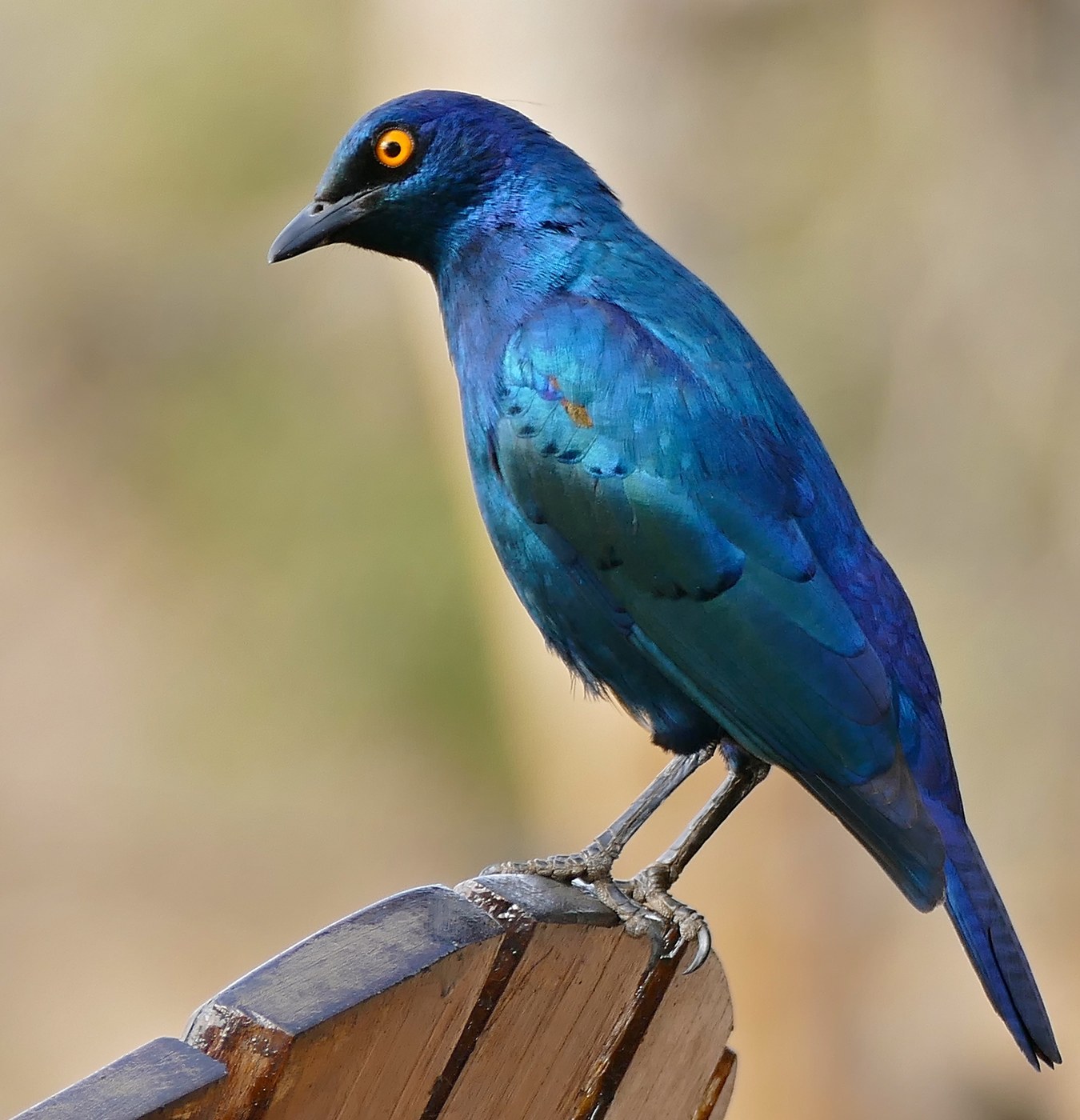
Key Field Marks
- Size & shape: A medium-sized starling with a fairly short tail and stocky build typical of glossy starlings.
- Plumage: Brilliant, highly iridescent blue-green to violet-blue plumage over the entire body that shimmers and shifts color with the light; wing coverts often show a distinct spangled or scaled pattern of darker blue-black spots, especially in fresh plumage.
- Eye: Bright orange to yellow-orange eye, a key mark for separating it from similar glossy starlings.
- Behavior: Gregarious and bold, often in small noisy flocks; forages on the ground and in trees for insects and fruit; frequently found around picnic sites, campgrounds, and gardens where it can become quite tame.
Similar Species
- Greater Blue-eared Starling: Very similar iridescent plumage but has a dark eye (not orange) and typically a small dark ear patch; ranges overlap broadly, so eye color is the most reliable separator.
- Miombo Blue-eared Starling / Lesser Blue-eared Starling: Also dark-eyed and found in different, often more northerly range zones; eye color again the key distinguishing feature from Cape Glossy Starling.
- Burchell's Starling: Larger, longer-tailed, with a duller, less spangled sheen and a dark eye.
Where & When to See
A common, widespread resident of savanna, woodland edge, farmland, and suburban gardens across southern Africa, including South Africa, Namibia, Botswana, and Zimbabwe. Non-migratory and conspicuous year-round, often visiting bird feeders and outdoor seating areas at lodges and reserves.
Voice
A varied medley of whistles, chattering notes, and warbles, often including mimicry of other bird calls; frequently vocal in flocks with chattering contact calls, giving away its presence before it is seen.
Frequently asked questions
What is the best way to identify a Cape Glossy Starling?
Look for an all-over iridescent blue-green sheen combined with a bright orange-yellow eye — the eye color is the key mark separating it from similar blue-eared starlings.
How do you tell a Cape Glossy Starling from a Greater Blue-eared Starling?
Cape Glossy Starling has an orange-yellow eye, while Greater Blue-eared Starling has a dark eye and a small dark ear patch; both share similar iridescent plumage.
Where do Cape Glossy Starlings live?
Across southern Africa in savanna, woodland edges, farmland, and gardens, where they are common and often quite tame around people.
Are Cape Glossy Starlings noisy?
Yes, they are vocal and gregarious, giving a mix of whistles, chatters, and warbles, often in small flocks.
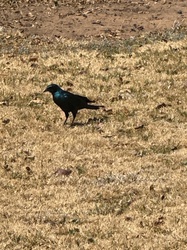
Cape Glossy Starling identified by the community
Recent Cape Glossy Starling sightings identified with Bird Identifier.