
Cape Gannet Identification Guide
A large, brilliant white seabird with black wingtips and a golden-yellow head, famous for spectacular plunge-diving off southern Africa.
Read the full Cape Gannet encyclopedia entry →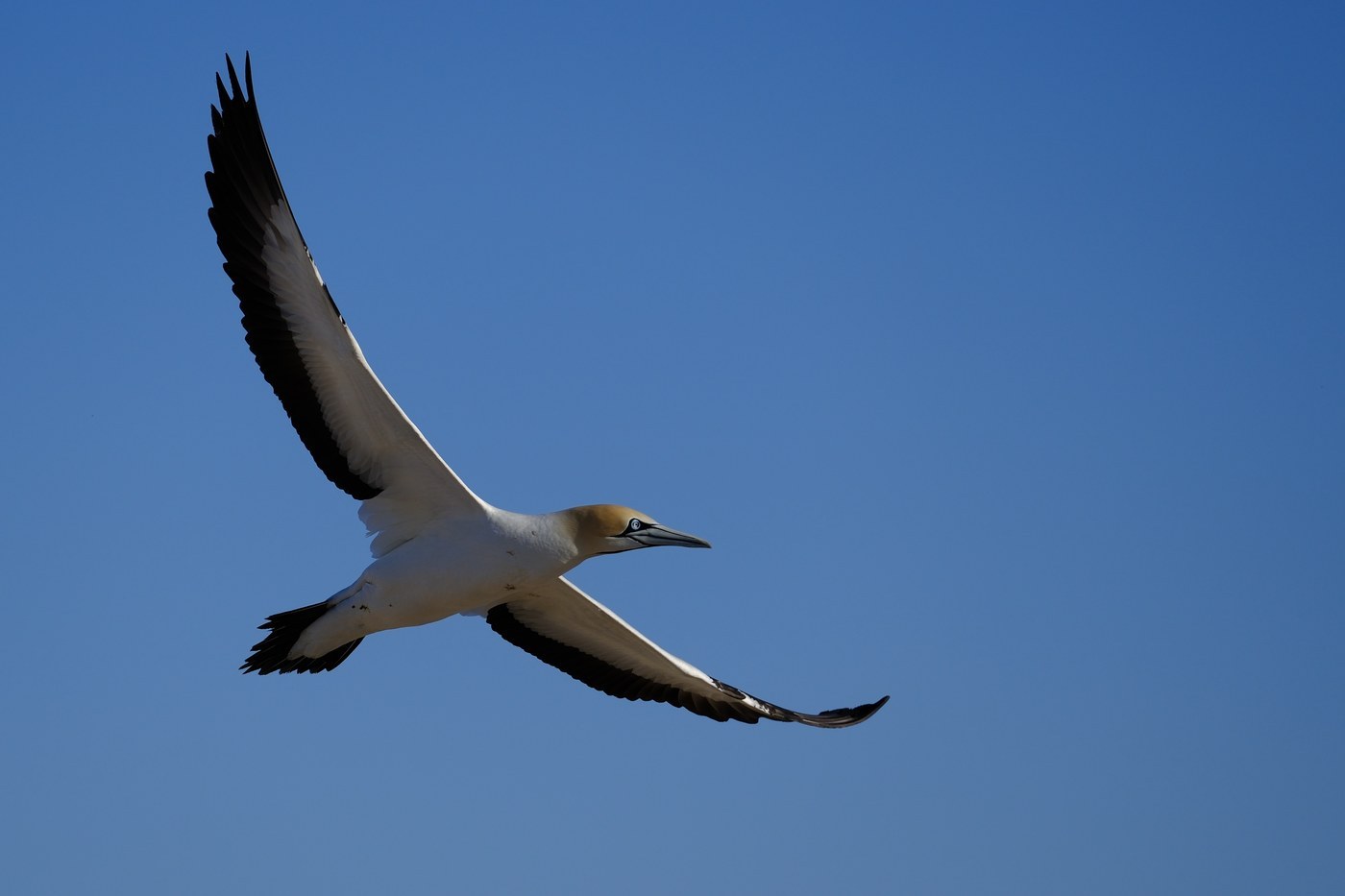
Key Field Marks
- Size & shape: A large, cigar-shaped seabird with long, pointed wings, a long dagger-like bill, and a streamlined body built for high-speed plunge-diving.
- Plumage: Adults are brilliant white overall with crisp black flight feathers along the trailing edge and tips of the wings, and a black central tail stripe; the head and nape show a warm golden-yellow wash, brightest on the crown.
- Bill and face: Pale bluish-gray bill with black facial skin lines running from the base of the bill through the eye, giving a masked look.
- Behavior: Spectacular high plunge-diver, folding wings back and dropping from considerable height into the sea to catch fish; often seen in large feeding flocks following baitfish shoals, and nests in dense colonies on a few offshore islands.
Similar Species
- Australasian Gannet: Very similar but geographically separate (Australia/New Zealand); has slightly less black on the tail and a shorter black gular stripe.
- Northern Gannet: Also similar in shape and plunge-diving behavior but occurs in the North Atlantic, not overlapping in range with Cape Gannet; adults have a paler yellow head wash and different tail pattern (mostly white tail vs. black central stripe).
- Juvenile Cape Gannet: Mottled dark brown overall, gradually acquiring white plumage over several years — can be confused with juvenile gannets/boobies of other species, best separated by range and structure.
Where & When to See
Breeds on a small number of islands off South Africa and Namibia, and forages widely over the cold Benguela and Agulhas current waters year-round. Frequently seen from coastal viewpoints and boat trips, especially where sardine or anchovy shoals attract large mixed feeding flocks with dolphins, seabirds, and seals (as in the famous "sardine run").
Voice
Mostly silent at sea; at breeding colonies gives loud, harsh, repeated "arrah-arrah" or croaking calls during greeting and territorial displays, typical of gannets.
Frequently asked questions
How do you identify a Cape Gannet?
Look for a large, brilliant white seabird with black wingtips, a black central tail stripe, and a golden-yellow wash on the head, typically seen plunge-diving for fish.
Where can you see Cape Gannets?
Along the coasts of South Africa and Namibia, especially near their breeding islands and during large baitfish feeding events such as the sardine run.
How do Cape Gannets differ from Northern Gannets?
Cape Gannet has a black central tail stripe and darker head wash, while Northern Gannet (found in the North Atlantic) has a mostly white tail; the two do not overlap in range.
What does a juvenile Cape Gannet look like?
Juveniles are mottled dark brown overall and gradually molt into the white adult plumage over a few years.