
Cape Cormorant Identification Guide
A slender, all-dark seabird of southern African coasts, notable for forming enormous, densely packed breeding and roosting colonies.
Read the full Cape Cormorant encyclopedia entry →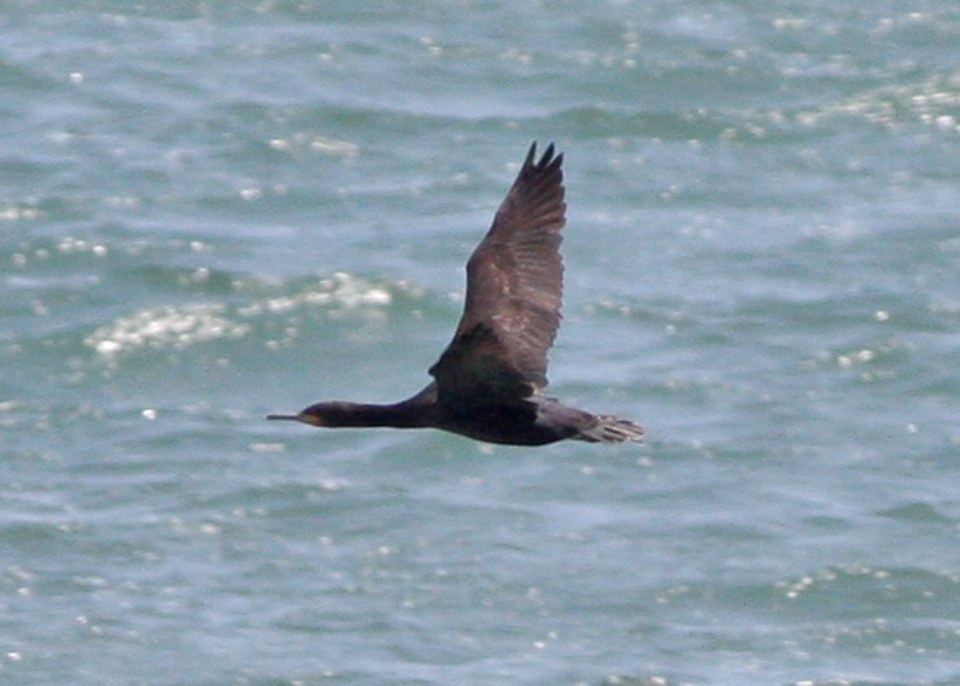
Key Field Marks
- Size & shape: A medium-sized, slim cormorant with a long thin neck, small head, and a slender, hook-tipped bill.
- Plumage: Glossy black overall with a bronzy-green sheen in good light; breeding adults show a small orange-yellow patch of bare skin at the base of the bill and throat, brightening in the breeding season.
- Eye: Green to turquoise eye, visible at close range.
- Behavior: Highly gregarious, forming dense flocks that fly low over the sea in long skeins, and nesting in massive, crowded colonies on offshore islands and guano platforms; dives from the surface to catch shoaling fish such as anchovy and sardine.
Similar Species
- Bank Cormorant: Stockier, all-dark with no bright bare-skin patch, and has a more hunched posture; far less numerous and colonial than Cape Cormorant.
- Crowned Cormorant: Smaller, with a tufted crest on the forehead and a shorter bill; found more in kelp and rocky shore habitats rather than large open colonies.
- White-breasted Cormorant (Great Cormorant): Much larger with a white breast/throat patch, easily separated by size and plumage.
Where & When to See
Endemic to the cold, productive waters of the Benguela and Agulhas currents along the coasts of Namibia and South Africa. Found year-round along rocky and sandy coastlines, offshore islands, and harbors, often in huge numbers where baitfish are abundant. Breeding colonies are most active in spring and summer, and this species is a hallmark sight of Cape coastal boat trips.
Voice
Generally silent at sea; at breeding colonies gives low guttural croaks and grunting notes typical of cormorants, mostly during social interactions at the nest.
Frequently asked questions
How do you identify a Cape Cormorant?
Look for an all-glossy-black, slender cormorant with a small orange-yellow throat patch and a habit of forming very large, dense flocks and colonies along the southern African coast.
Where do Cape Cormorants live?
They are endemic to the coasts of Namibia and South Africa, associated with the cold, nutrient-rich Benguela current.
How is a Cape Cormorant different from a Bank Cormorant?
Cape Cormorant is slimmer with a small orange facial patch and forms huge flocks, while Bank Cormorant is stockier, lacks bright facial skin, and is far less numerous.
Are Cape Cormorants endangered?
They are considered a species of conservation concern due to fluctuating fish stocks affecting their large breeding colonies, though identification-wise they remain common and conspicuous along the coast.