Canada Goose Identification Guide
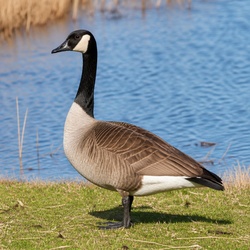
North America's most familiar goose, easily known by its black head and neck with a bold white chinstrap patch, brown body, and loud honking calls in V-shaped flocks.
Read the full Canada Goose encyclopedia entry →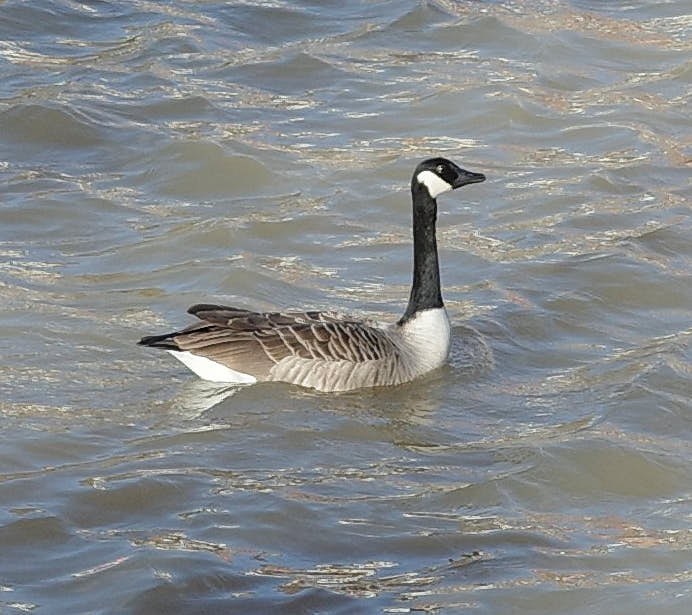
Key Field Marks
- Size & shape: Large waterfowl with a long black neck, though size varies considerably among subspecies, from small "cackling" forms to very large birds; overall a heavy-bodied goose with a long neck and webbed feet.
- Head and neck: Black head and neck ("stocking") broken by a bold white cheek patch or chinstrap running from ear to ear under the chin - the single most diagnostic feature.
- Body: Brown-gray back and wings, paler grayish-brown breast, and a white undertail with a black tail.
- Bill and legs: Black bill and black legs/feet.
- Flight: Flies in classic V-formation or diagonal lines with slow, powerful wingbeats, neck extended straight out.
Separating from Similar Species
- Cackling Goose: Very similar pattern but much smaller overall with a shorter neck and a stubbier, more triangular bill; best separated by size comparison alongside other geese or by call pitch (higher, more yelping in Cackling Goose).
- Barnacle Goose (rare vagrant): Shows a white face (not just a chinstrap) with a black crown, and a gray-and-black barred body, quite different from the brown body of Canada Goose.
- Brant: Smaller, with a stubby bill, dark breast, and only a small white neck mark (not a full chinstrap), and is more strictly coastal/marine in habitat.
- Overall: Among common geese, the combination of black head/neck with a distinct white chinstrap and brown body is unmistakable; subspecies size variation is the main identification challenge within the species itself.
Where & When to See It
- Habitat: Extremely adaptable - found on lakes, ponds, rivers, marshes, golf courses, parks, and agricultural fields; equally at home in wild wetlands and urban green spaces.
- Range: Breeds across most of Canada and the northern U.S.; many populations have become non-migratory residents in urban and suburban areas throughout the U.S., while northern-breeding populations migrate south for winter.
- Season: Present year-round across much of its range due to resident populations; migratory flocks are most visible in fall and spring as northern breeders move between breeding and wintering grounds.
Voice & Song Cues
- The classic loud, resonant honking call (ah-honk) is one of the most recognizable bird sounds in North America, given both in flight and on the ground.
- Flocks maintain near-constant vocal contact in flight, especially when traveling in V-formation, helping to keep the group coordinated.
Frequently asked questions
What is the easiest way to identify a Canada Goose?
Look for a large goose with a black head and neck broken by a bold white chinstrap patch, a brown body, and black bill and legs - a combination unique among common North American geese.
How do you tell a Canada Goose from a Cackling Goose?
Cackling Goose shares the same head pattern but is much smaller with a shorter neck and a stubbier bill; size comparison and a higher-pitched call are the best clues since plumage pattern is nearly identical.
Do all Canada Geese migrate?
No - many populations, especially in urban and suburban areas, have become non-migratory residents that stay put year-round, while more northerly breeding populations still migrate seasonally.
What does a Canada Goose sound like?
Its loud, resonant honking call, often rendered as ah-honk, is one of the most familiar bird sounds in North America and is given both on the ground and in flight.
Why do Canada Geese fly in a V formation?
Flying in a V reduces air resistance for trailing birds and helps the flock maintain visual and vocal contact, an efficient strategy for long-distance migratory flight.
Canada Goose identified by the community
Recent Canada Goose sightings identified with Bird Identifier.