
California Gull Identification Guide
A medium-sized, yellow-legged gull of interior lakes and Pacific coasts, best told from similar gulls by leg color, bill pattern, and dark eye.
Read the full California Gull encyclopedia entry →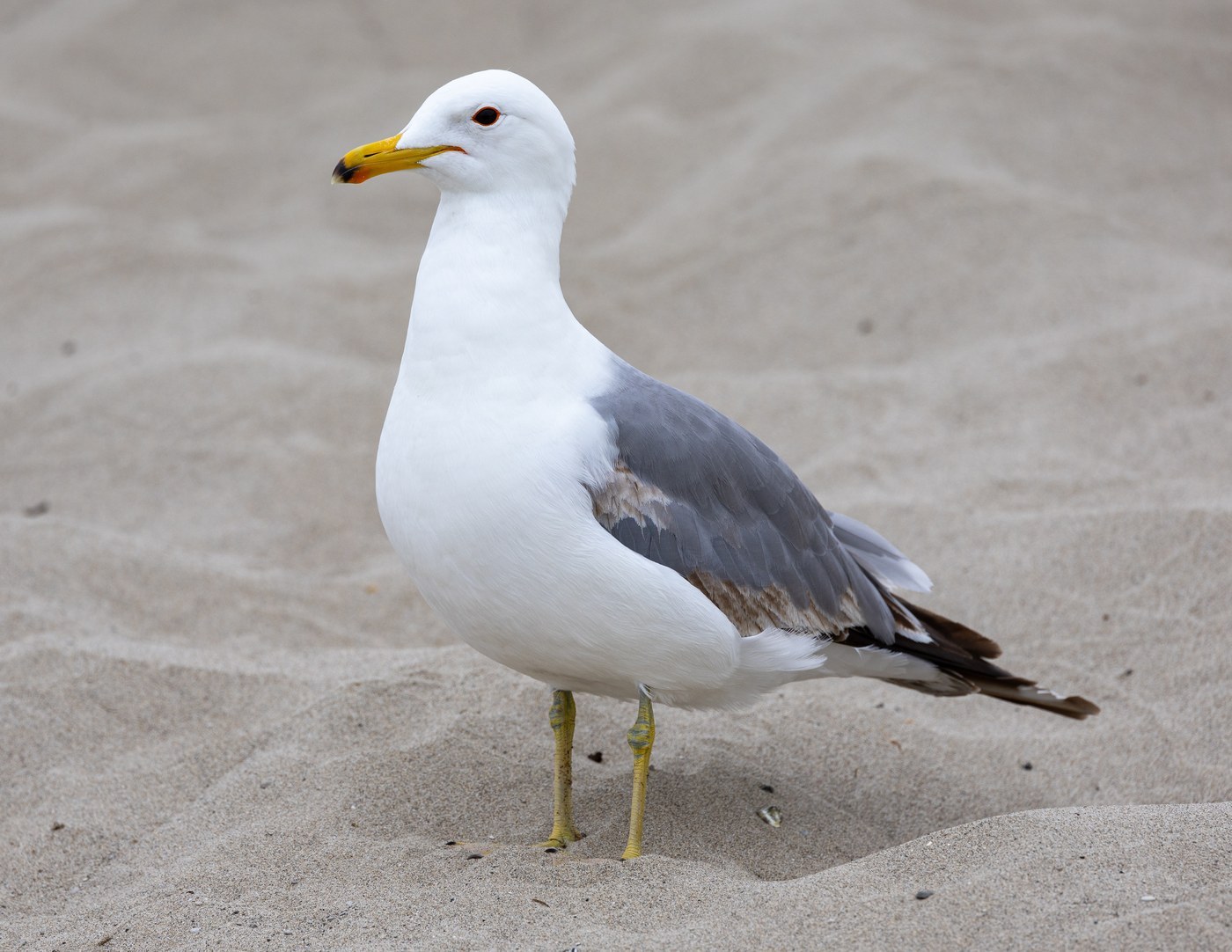
Key Field Marks
- Size & shape: Medium-large gull, distinctly smaller and more slender-billed than a Herring Gull but larger than a Ring-billed Gull, with a fairly rounded head and moderate-length bill.
- Adult plumage: Medium gray back and upperwings, white head and underparts (streaked with brown in nonbreeding/winter plumage), black wingtips with white spots.
- Bill: Yellow bill with both a black spot and a red spot near the tip of the lower mandible - a key mark separating it from Ring-billed Gull, which shows only a black ring/spot.
- Legs: Greenish-yellow to yellow legs, duller and less bright than the legs of a Ring-billed Gull.
- Eye: Dark eye with a fairly obvious dark red-orange orbital ring in breeding adults.
- Immatures: Multi-year plumage progression through mottled brown first-winter birds to gray-backed subadults, typical of large gulls; leg and bill pattern combined with structure help narrow down age classes.
Separating from Similar Species
- Ring-billed Gull: Smaller and daintier, with a pale eye and a bill showing only a single black ring (no red spot), and brighter yellow legs.
- Herring Gull: Larger and bulkier, with pink (not yellow) legs and a heavier bill, plus a paler gray back.
- Mew Gull: Smaller still, with a shorter, more delicate unmarked yellow-green bill and rounder head.
- Structure tip: California Gull's bill looks proportionally longer and more slender than Ring-billed Gull's, an important supporting clue alongside the leg and bill-spot differences.
Where & When to See It
- Habitat: Breeds colonially on islands in large interior lakes, alkaline lakes, and reservoirs of the western interior; winters along the Pacific Coast on beaches, bays, estuaries, and parking lots/landfills.
- Range: Breeding range spans the Great Basin and northern Great Plains (e.g., Great Salt Lake, Mono Lake); winters from British Columbia south to Mexico along the Pacific coast.
- Season: Present at interior breeding colonies spring through late summer; most common along the coast in fall, winter, and early spring.
Voice & Behavior Cues
- Calls include a range of typical large-gull notes - a bugling, laughing kee-ow and shorter barking calls given in flight and at colonies.
- Highly social; forms large nesting colonies on islands and mixes readily with other gull species at coastal roosts and foraging areas, making direct side-by-side comparison useful for identification.
Frequently asked questions
What is the best field mark for a California Gull?
Look for yellow-green legs and a yellow bill with both a black spot and a red spot near the tip - the combination of both spots separates it from the similar Ring-billed Gull.
How do you tell a California Gull from a Ring-billed Gull?
California Gull is larger with duller yellow-green legs, a dark eye, and a bill showing both a black and red spot, while Ring-billed Gull is smaller, brighter-legged, pale-eyed, and shows only a single black ring on the bill.
Where do California Gulls breed?
They nest colonially on islands in interior alkaline lakes and reservoirs of the western United States, such as Great Salt Lake and Mono Lake, then move to the Pacific coast for winter.
Are California Gulls found year-round in California?
Not exactly - despite the name, most California Gulls breed in the interior West and are primarily winter visitors along the California coast rather than year-round coastal residents.
How do California Gulls differ from Herring Gulls?
California Gulls are smaller with yellow legs, while Herring Gulls are larger and bulkier with pink legs and a heavier bill.