
Bushtit Identification Guide
A tiny, plain gray-brown bird of the western US with a long tail and stubby bill, almost always seen twittering through the trees in busy little flocks.
Read the full Bushtit encyclopedia entry →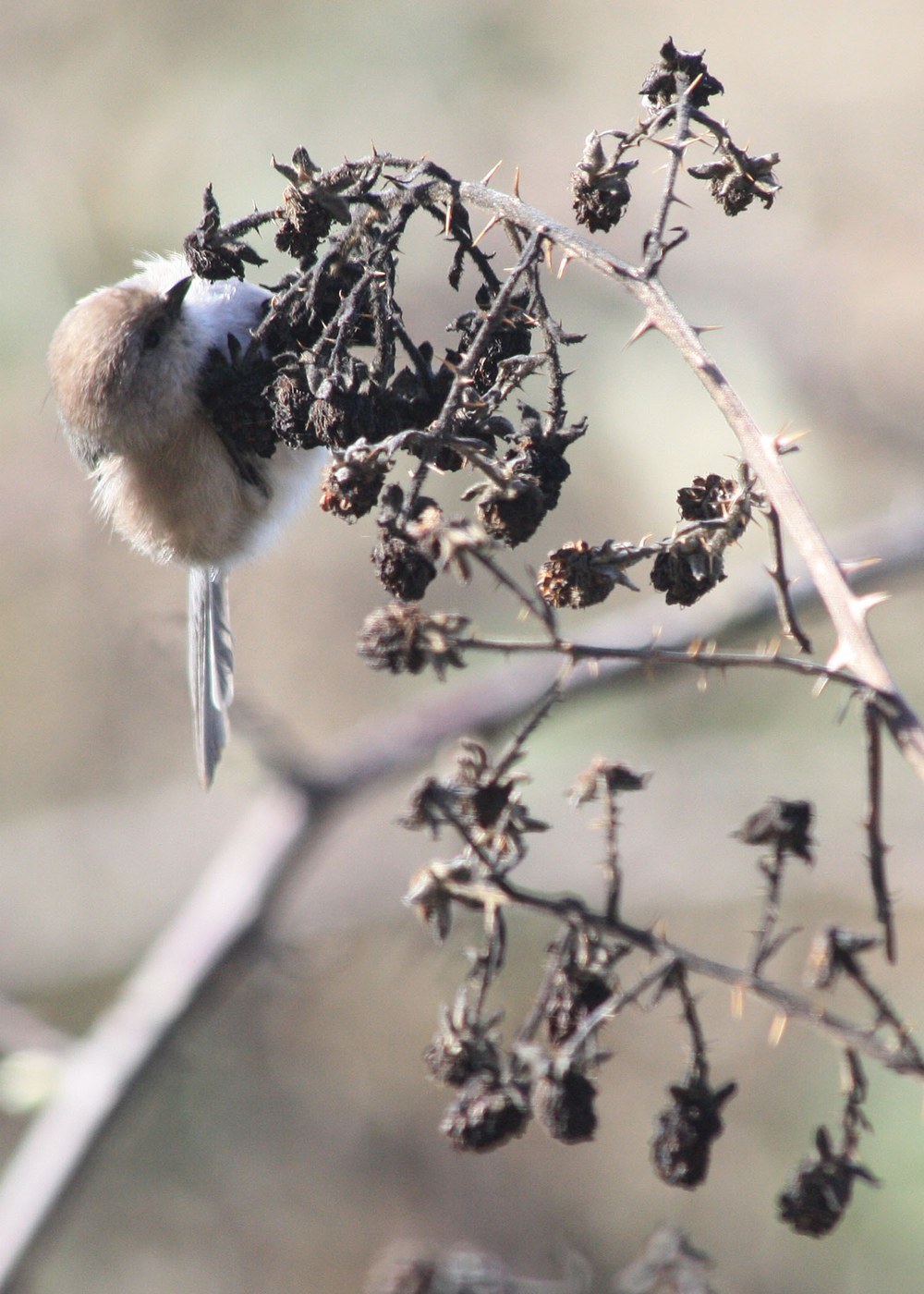
Key Field Marks
- Very small songbird, about 10–11 cm (4 in) long, with a round, plump body, a long thin tail, and a tiny, stubby bill.
- Overall plumage is plain gray to grayish-brown, with a slightly browner cap in some populations (especially interior birds) and paler underparts.
- Sexes look almost identical in plumage, but eye color differs in adults: males have dark brown/black eyes, while females have pale yellow to whitish eyes — often the easiest way to sex individuals in the field.
- Coastal Pacific populations show a browner "brown-cheeked" look in some regions, part of known geographic variation within the species.
- Constant motion — flitting, hanging upside down, and gleaning insects from foliage — combined with its tiny size and plain coloring is a strong first impression.
Separating It From Similar Species
- Chickadees: larger, with a distinct black cap and bib contrasting against white cheeks; Bushtit lacks any bold head pattern.
- Bewick's Wren / kinglets: wrens have a longer, more slender bill and a cocked tail; kinglets show wing bars and often a colored crown patch, while Bushtit is plainer and grayer overall with a stubbier bill.
- The tiny stub bill, long thin tail, plain gray-brown coloring, and habit of moving in noisy, tight flocks together separate Bushtit from nearly everything else in its range.
Habitat, Range & Season
- Resident across much of the western United States and Mexico, from the Pacific coast through the interior West and Southwest.
- Found in oak woodlands, chaparral, mixed scrub, riparian areas, and suburban gardens and parks with trees and shrubs.
- Highly social year-round, typically moving through habitat in flocks of 10 to 40+ birds that forage together and keep in constant contact with soft calls.
- Builds a distinctive hanging, sock-shaped nest woven from spiderweb, moss, and lichen, suspended from a branch — a helpful clue to the species even when the birds themselves aren't visible.
Voice
- Continuous soft, high-pitched contact calls — short "tsit" or "chip" notes — given constantly by flock members to stay in touch while foraging.
- No loud or complex song; the steady twittering chatter of a moving flock is often the first sign of Bushtits in an area.
Frequently asked questions
How can you tell a male from a female Bushtit?
Eye color is the key: adult male Bushtits have dark brown/black eyes, while adult females have pale yellow to whitish eyes.
Why are Bushtits often heard before they're seen?
They move through trees and shrubs in noisy, tight flocks of a dozen or more birds, giving constant soft twittering contact calls that usually announce the flock before individual birds are spotted.
What kind of nest does a Bushtit build?
A distinctive hanging, sock-shaped nest woven from spiderweb, moss, and lichen, suspended from a branch — quite different from typical cup nests.
Where do Bushtits live?
They are year-round residents across the western United States and Mexico, in oak woodland, chaparral, riparian scrub, and suburban gardens with trees and shrubs.