
Bush Stone-curlew Identification Guide
A large, cryptically patterned Australian ground bird with huge yellow eyes and long legs, best known for its eerie wailing call after dark.
Read the full Bush Stone-curlew encyclopedia entry →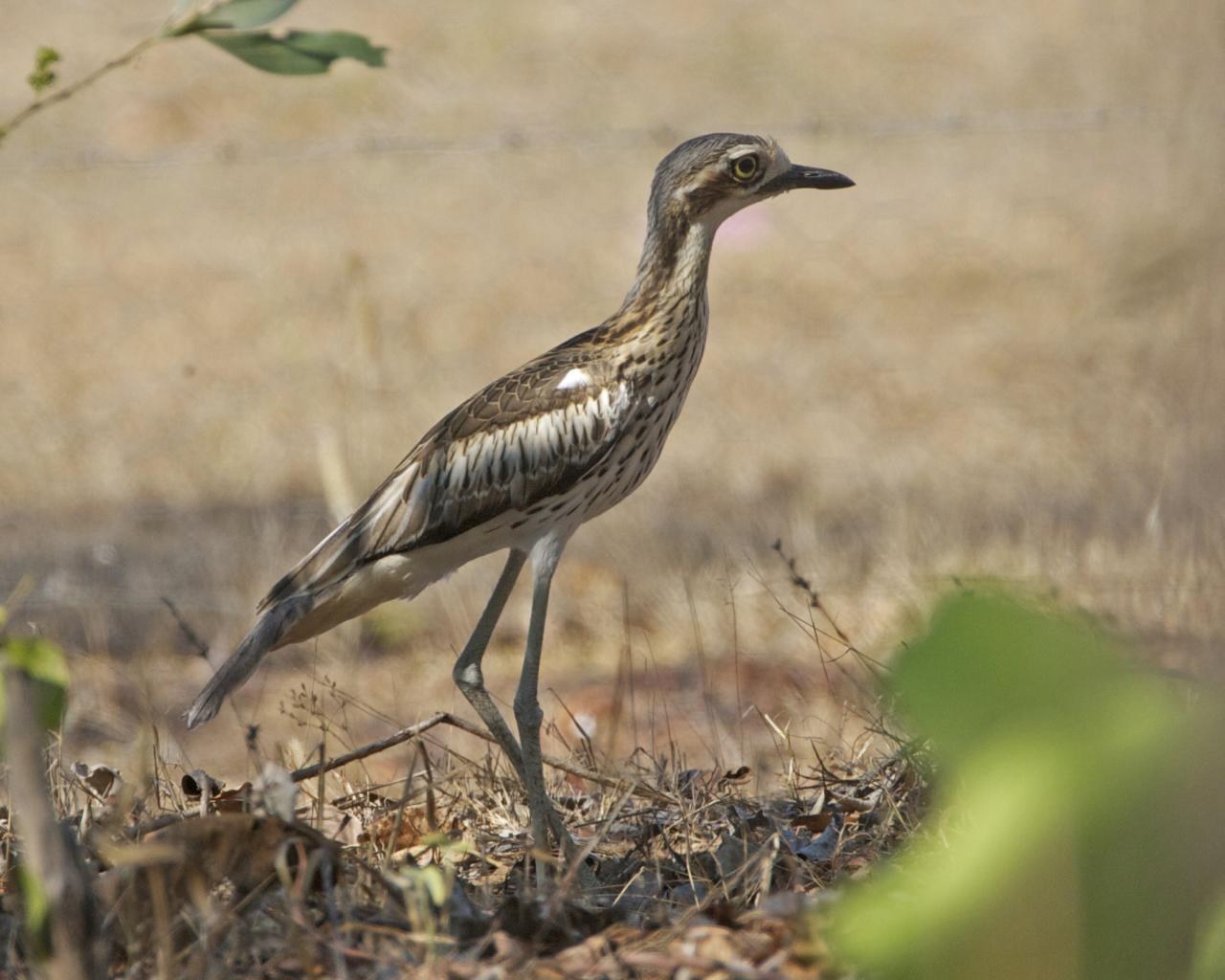
Key Field Marks
- Large, long-legged ground bird, about 55–59 cm (22–23 in) tall, with a slender, upright stance.
- Cryptic grayish-brown plumage finely streaked with black and buff, providing excellent camouflage against leaf litter and dry grass.
- Very large, staring yellow eyes, an adaptation for nocturnal activity.
- Long, pale gray-green legs and a relatively short, straight bill.
- A pale wing stripe and dark shoulder markings can be visible in flight or at rest.
- By day it often stands motionless or crouches low with neck outstretched flat along the ground when alarmed, relying on camouflage rather than flight.
Separating It From Similar Species
- Beach Stone-curlew: notably larger and bulkier, with a heavier black-and-yellow bill and a preference for coastal mudflats, mangroves, and beaches rather than inland woodland; Bush Stone-curlew's bill is comparatively slim and pale.
- No other Australian bird combines the tall, long-legged stance, huge yellow eyes, and cryptic brown streaked plumage in open woodland habitat, making it distinctive once seen well.
- Often first detected by its call after dark rather than by sight, since it is cryptic and largely inactive by day.
Habitat, Range & Season
- Found across northern and eastern Australia, including open eucalypt woodlands, grassy plains with scattered trees, and increasingly parks and golf courses in some towns and suburbs.
- Largely resident where found, though it has declined and disappeared from parts of southern Australia due to habitat clearing and introduced predators.
- Most active at night (crepuscular/nocturnal), foraging on the ground for insects and other small invertebrates; roosts quietly in shade or leaf litter by day.
Voice
- A far-carrying, mournful, wailing "weer-loo" call given mainly at night, often rising and falling and sometimes performed as a duet or chorus among several birds — an iconic and somewhat eerie sound of the Australian bush after dark.
- Calls can carry a long distance and are often the first clue to the bird's presence, well before it is seen.
Frequently asked questions
What does the Bush Stone-curlew's call sound like?
It gives a long, mournful, wailing \"weer-loo\" call mainly after dark, often repeated and sometimes performed by several birds together — a distinctive and eerie sound of the Australian night.
How do you tell Bush Stone-curlew from Beach Stone-curlew?
Beach Stone-curlew is larger and bulkier with a heavy black-and-yellow bill and sticks to coasts and mudflats, while Bush Stone-curlew has a slimmer pale bill and favors inland open woodland and grassland.
Why is the Bush Stone-curlew hard to spot during the day?
Its cryptic gray-brown streaked plumage camouflages it against leaf litter and dry grass, and when alarmed it often freezes with its neck stretched flat along the ground rather than flying.
Where does the Bush Stone-curlew live?
It occurs across northern and eastern Australia in open eucalypt woodland and grassy plains with scattered trees, and has adapted to some parks and golf courses in certain towns.