
Burrowing Owl Identification Guide
A small, long-legged owl of open grasslands and deserts that nests underground and is often seen standing bolt upright at its burrow entrance in daylight.
Read the full Burrowing Owl encyclopedia entry →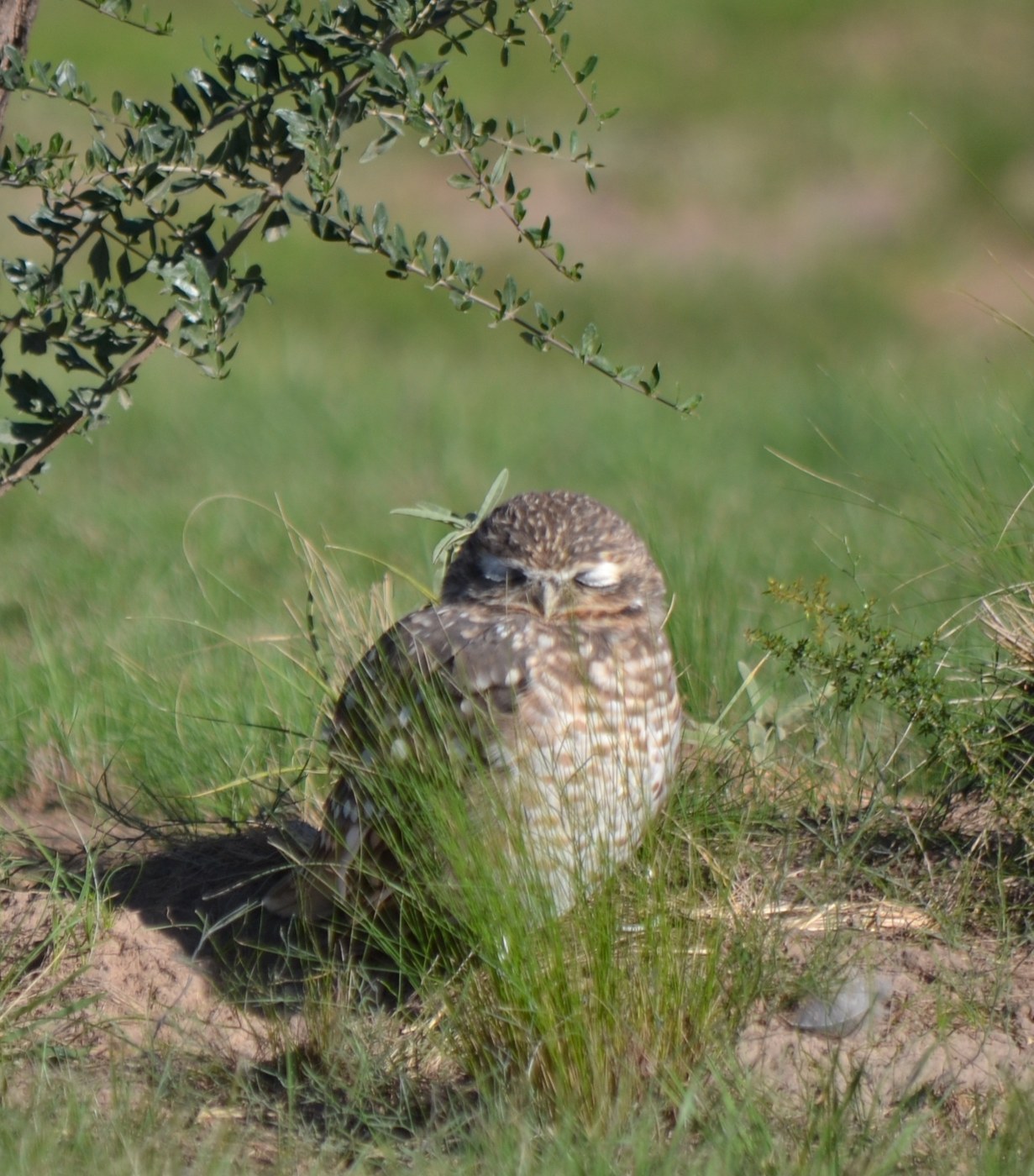
Key Field Marks
- Small owl, about 19–25 cm (7.5–10 in) tall, with notably long legs relative to body size and no ear tufts.
- Sandy brown overall, heavily marked with white spotting above and barring below.
- Round head with bright yellow eyes and a pale, unmarked facial disc bordered by a thin dark rim.
- Short tail; stands very upright, often on the ground or on a low perch such as a fence post or burrow mound.
- Bobs its head and bobs/bows its whole body up and down when alert or agitated, a characteristic behavior.
Separating It From Similar Species
- Short-eared Owl: larger, with obvious dark patches around the eyes, streaked underparts, and a more buoyant, moth-like flight; typically seen flying low over fields at dusk rather than standing at a burrow.
- Screech-owls: have visible ear tufts and much shorter legs, and are strictly nocturnal and usually hidden in tree cavities rather than standing in the open on the ground.
- The Burrowing Owl's combination of very long legs, ground-dwelling habits, and daytime activity at a burrow entrance makes it essentially unmistakable within its range.
Habitat, Range & Season
- Found in open, treeless habitats: prairies, grasslands, deserts, agricultural fields, airports, and even vacant urban lots — anywhere with short vegetation and available burrows.
- Nests underground in abandoned burrows dug by mammals such as prairie dogs, ground squirrels, or tortoises (in Florida, some populations dig their own burrows).
- Breeds across the western United States and parts of Florida; northern populations migrate south for winter, while southern populations (including Florida) are largely resident.
- Unlike most owls, it is active by day as well as at dawn, dusk, and night, and is frequently seen standing at or near the burrow entrance during daylight hours.
Voice
- Primary call is a soft, two-noted "coo-coo," somewhat dove-like, given mainly by males.
- When threatened at the nest, especially by young birds, it can produce a rattling call that mimics a rattlesnake — a defensive adaptation tied to its underground nesting habit.
Frequently asked questions
Why is the Burrowing Owl seen during the day when most owls are nocturnal?
Burrowing Owl is unusual among owls in being active by day as well as at night, and it's commonly seen standing upright at its burrow entrance in daylight, especially near dawn and dusk.
What is the easiest way to identify a Burrowing Owl?
Look for a small, sandy-brown owl with unusually long legs, no ear tufts, and bright yellow eyes, typically standing on the ground near a burrow in open, treeless habitat.
Do Burrowing Owls dig their own burrows?
Usually not — most populations use burrows abandoned by mammals like prairie dogs or ground squirrels, though some Florida birds excavate their own burrows.
Where do Burrowing Owls live?
They occur in open grasslands, deserts, and agricultural areas across the western United States, with additional resident populations in Florida; northern breeders migrate south for winter.