
Bull-headed Shrike Identification Guide
An East Asian shrike with a rich rufous-brown crown and nape, a black mask, and a stout hooked bill, often seen perched conspicuously scanning for prey.
Read the full Bull-headed Shrike encyclopedia entry →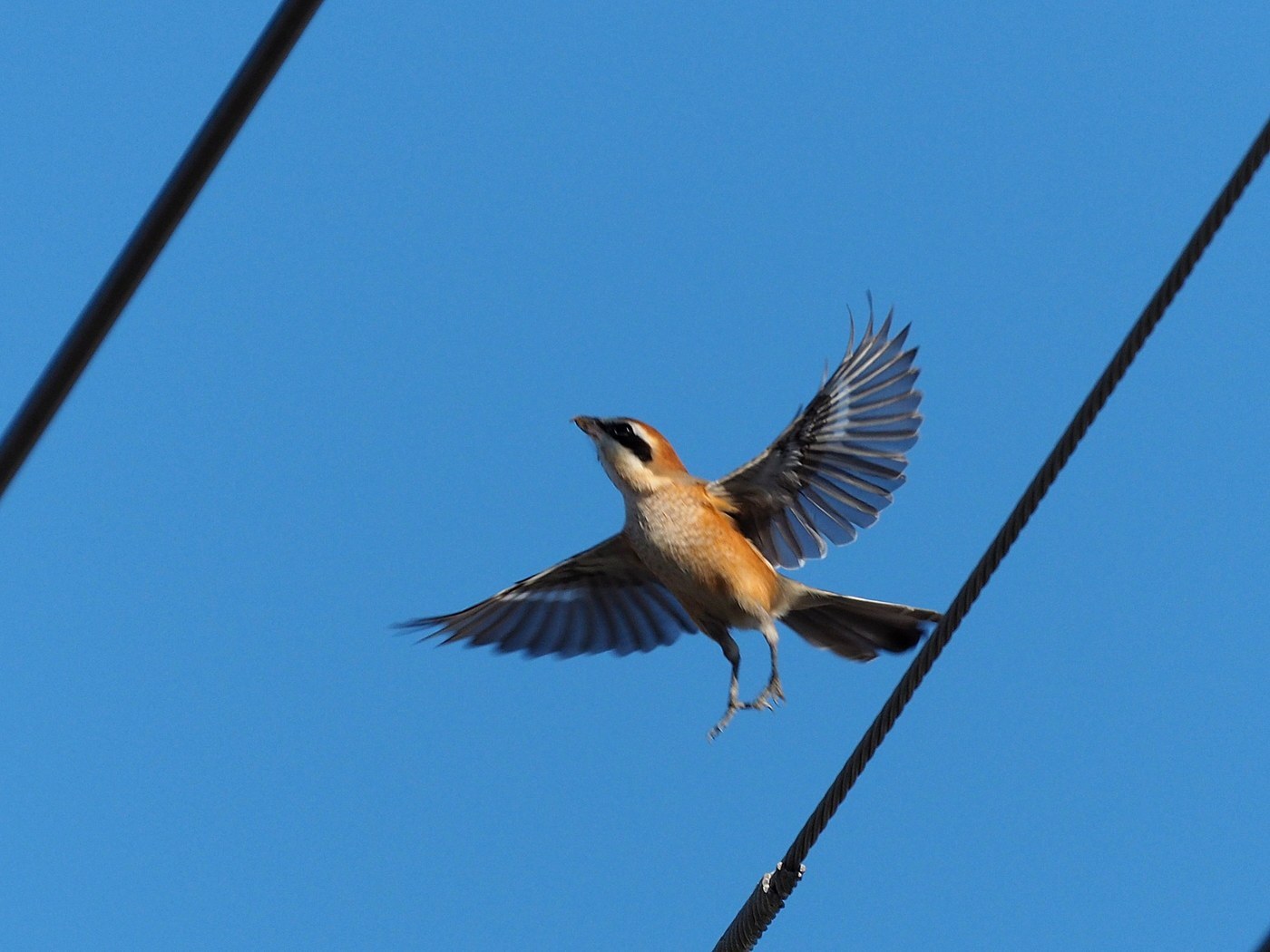
Key Field Marks
- Medium-sized shrike, about 19–20 cm (7.5–8 in), with a large head, stout hooked bill, and upright perching posture typical of shrikes.
- Adult male: warm rufous-chestnut crown and nape contrasting with a gray back, black facial mask, whitish underparts, and a rufous-tinged rump and tail base.
- Adult female: duller and browner overall, with fine dark barring or scalloping on the underparts (especially flanks) and a less contrastingly dark mask than the male.
- Juveniles show heavy brownish barring across the underparts and a scaly-looking back.
- Long tail is often pumped or flicked while perched.
Separating It From Similar Species
- Brown Shrike: paler, more uniformly warm-brown crown blending with the back (rather than a sharply contrasting rufous cap), and a different, often less bold mask; ranges and habitats overlap in migration.
- Tiger Shrike: shows heavier black barring across the back in adults and a different head pattern; overall more strongly patterned above.
- The Bull-headed Shrike's combination of a bright rufous cap sharply set off from a gray back, plus a bold black mask, is the key to separating it from other regional shrikes.
Habitat, Range & Season
- Breeds across Japan, the Korean Peninsula, and parts of northeastern China and far eastern Russia.
- Found in open country: farmland, woodland edges, orchards, parks, and scrubby fields with scattered trees, wires, and fence posts for perching.
- Largely resident in the milder parts of its range, with more northerly populations moving south for winter.
- Like other shrikes, it hunts from an exposed perch, watching for insects and other small prey below, and is well known for impaling prey items on thorns or barbed wire as a food cache — a distinctive natural history trait that aids in confirming the presence of shrikes in an area even when the bird itself isn't visible.
Voice
- A harsh, scratchy "gee-gee-gee" or chattering call, often given as an alarm or contact note.
- Capable of mimicking other birds' calls within a more complex, variable song used mainly in the breeding season.
Frequently asked questions
What is the key field mark for Bull-headed Shrike?
Look for a bright rufous-chestnut crown and nape that contrasts sharply with a gray back, combined with a bold black facial mask and a stout hooked bill.
How do you separate Bull-headed Shrike from Brown Shrike?
Bull-headed Shrike shows a rufous cap that contrasts clearly with a gray back, while Brown Shrike's crown blends more uniformly with its warm brown back and shows a less bold mask.
Where does the Bull-headed Shrike live?
It breeds in Japan, the Korean Peninsula, and parts of northeastern China and the Russian Far East, favoring open farmland and woodland edges with exposed perches.
Why do shrikes impale prey on thorns?
Shrikes lack the strong grasping feet of raptors, so they wedge or impale prey on thorns or barbed wire to hold it steady while feeding, and to cache food for later — a well-documented natural history behavior in this family.