
Brolga Identification Guide
Australia's tall gray crane, distinguished from the similar Sarus Crane by its dark legs and the extent of red bare skin on its head and neck.
Read the full Brolga encyclopedia entry →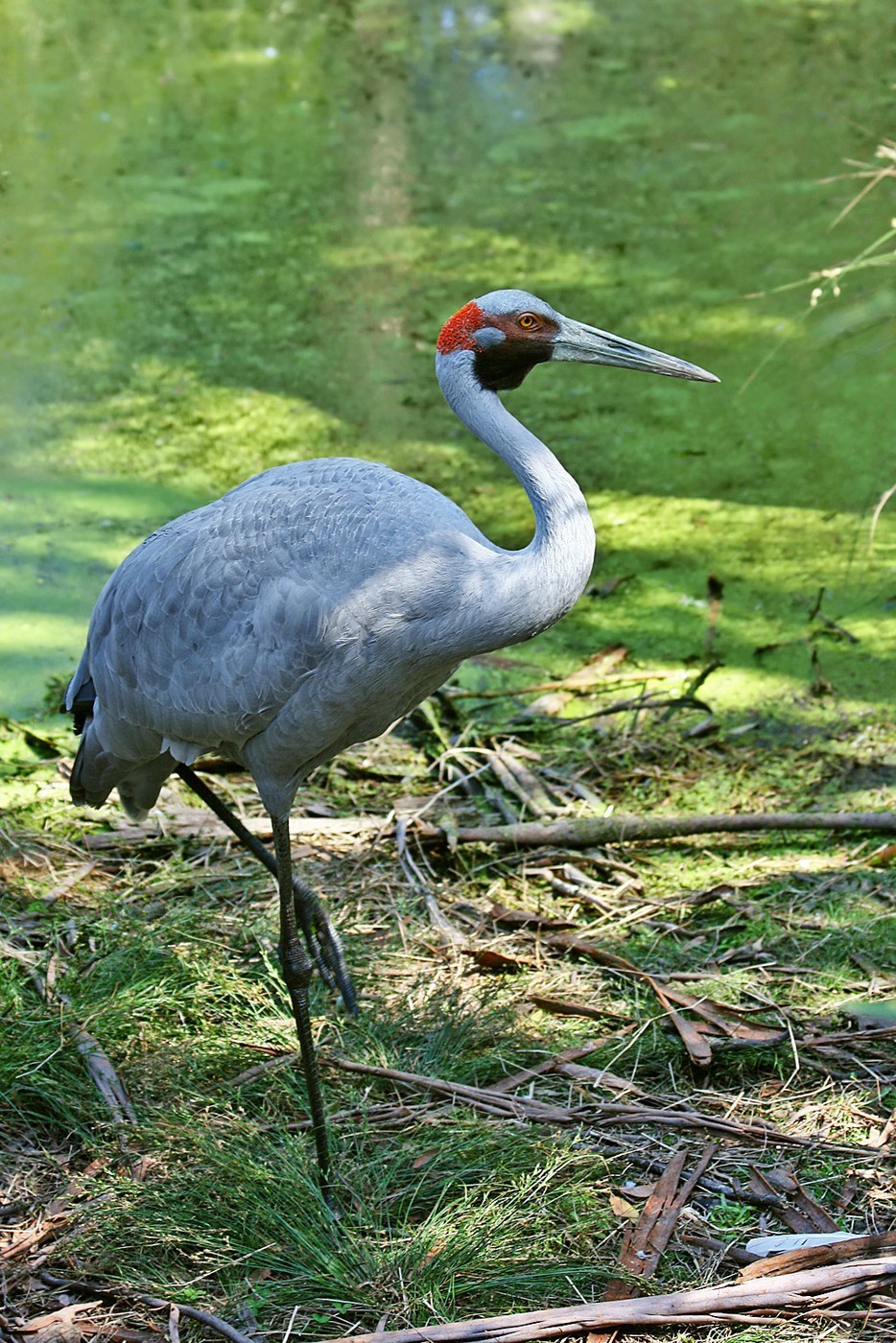
Key Field Marks
- A very large, long-legged, long-necked gray crane, standing roughly 1.7–2 meters tall.
- Bare red skin covers the head and extends down the neck, with a small dewlap of skin under the chin and an olive-gray crown patch.
- Legs and feet are gray to blackish — an important field mark.
- Overall plumage is pale bluish-gray with darker gray flight feathers visible in flight.
Separating It From Similar Species
- Sarus Crane (the main confusion species where ranges overlap in northern Australia): Sarus Crane is slightly taller, has pink to reddish legs (not gray/black), and the red bare skin extends further down the neck; Sarus also lacks the pale crown patch that Brolga shows.
- Australian White Ibis and other large white/gray waterbirds: much smaller-bodied and lack the crane's long bugling neck posture and red head.
- In flight, Brolgas fly with neck and legs fully extended, distinguishing them from herons, which fly with the neck retracted in an S-curve.
Habitat, Range & Season
- Found in wetlands, floodplains, grasslands, and shallow swamps across northern and eastern Australia, plus southern New Guinea.
- Breeds in the wet season, building large nest mounds in shallow water or on floodplains.
- Outside the breeding season, Brolgas gather into large non-breeding flocks that forage together on grasslands and wetlands, especially in the dry season.
Voice & Behavior
- Known for loud, far-carrying trumpeting calls, often rendered as a rolling "gar-oo-oo," produced with the help of a coiled trachea that amplifies the sound.
- Famous for elaborate courtship dances involving bowing, wing-flapping, jumping, and tossing of grass or sticks into the air, performed by pairs and sometimes whole flocks.
Frequently asked questions
How do you tell a Brolga from a Sarus Crane?
Brolgas have gray to black legs and a pale olive crown patch, while Sarus Cranes have pink to reddish legs and red skin extending further down the neck, with no pale crown patch.
Where can I see wild Brolgas?
Brolgas live in wetlands, floodplains, and grasslands across northern and eastern Australia and southern New Guinea, often in large flocks outside the breeding season.
Why is the Brolga's call so loud?
Brolgas have an unusually long, coiled trachea that acts like a horn, amplifying their trumpeting calls so they carry over long distances.
What is the Brolga's famous dance?
Brolgas perform elaborate courtship dances that include bowing, wing-flapping, leaping, and tossing vegetation into the air, sometimes involving entire flocks.