
Bridled Tern Identification Guide
A dark-backed, pelagic tern of warm tropical seas, distinguished from the similar Sooty Tern by its grayer-brown back and longer white eyebrow.
Read the full Bridled Tern encyclopedia entry →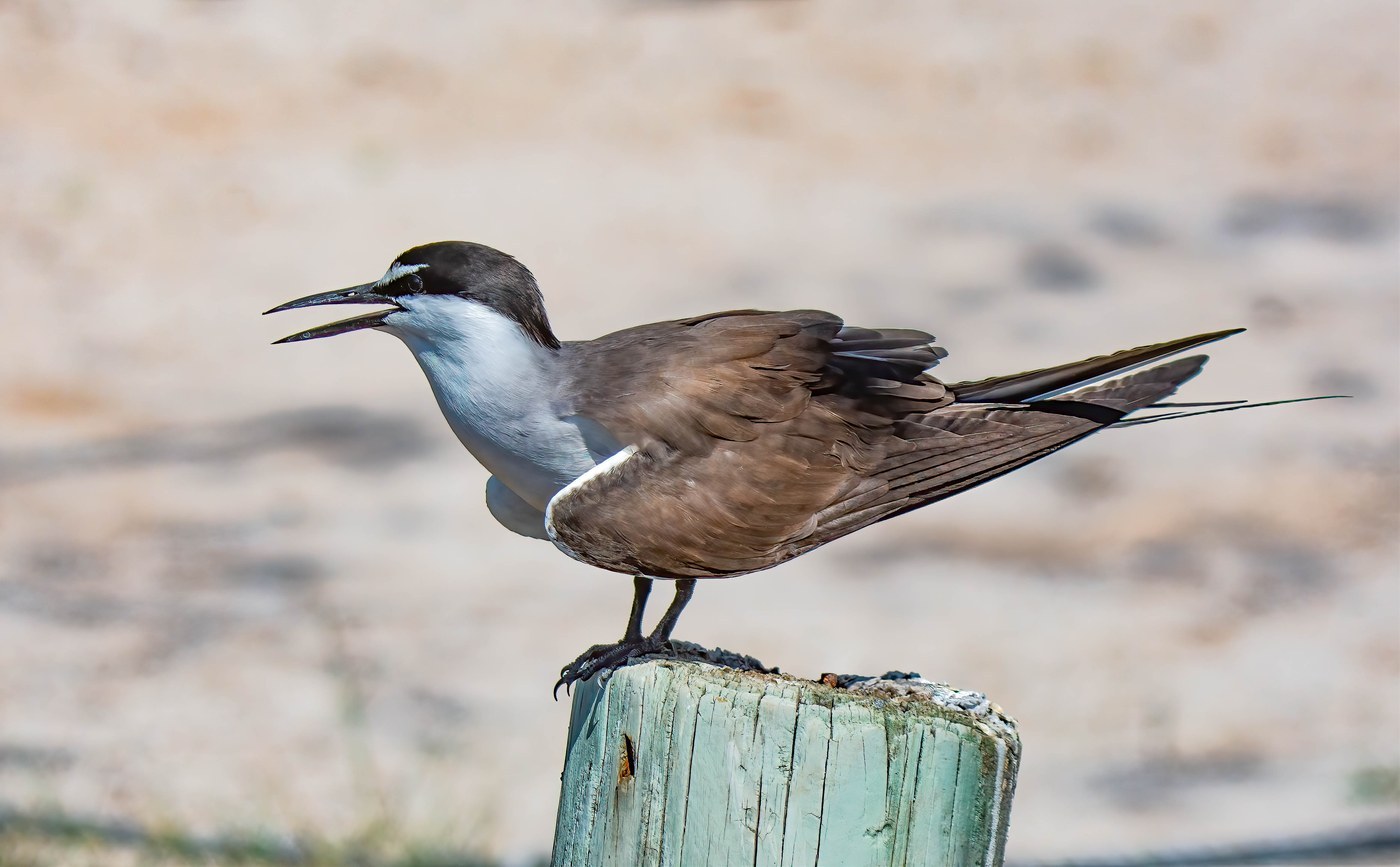
Key Field Marks
- Size & shape: A medium-sized tern with a slim body, long forked tail with white outer edges, and a slender, pointed bill.
- Upperparts: Grayish-brown to sooty-brown (not blackish), giving a softer, paler-backed look than its closest relative.
- Head pattern: White forehead patch extends back as a long, thin white supercilium ("bridle") that reaches behind and above the eye — the feature giving the species its name.
- Underparts: Clean white below, contrasting with the darker upperparts; a thin pale collar separates the dark cap from the back.
Separating from Similar Species
- Sooty Tern: The primary confusion species. Sooty Tern has a blacker, more uniform back, and its white forehead patch is shorter, not extending behind the eye as a supercilium the way Bridled Tern's does.
- Bridled Tern also tends to look slightly paler and browner overall in flight compared to the crisper black-and-white contrast of Sooty Tern.
- Juveniles of both species are dark and mottled; careful attention to back tone and head pattern remains the best approach even in immature plumages.
Habitat, Range & Season
- A highly pelagic species of warm tropical and subtropical oceans worldwide, rarely seen from shore except after storms.
- Breeds colonially on remote, often rocky or sparsely vegetated tropical islands.
- Spends most of the year far out at sea away from breeding colonies, making sightings from land or nearshore waters unusual and often storm-driven.
Voice
- Gives a distinctive barking or yapping "wep" or "wep-wep" call, mainly heard at breeding colonies.
- Largely silent while foraging over open ocean far from land.
Frequently asked questions
What is the main difference between Bridled Tern and Sooty Tern?
Bridled Tern has a grayer-brown (not black) back and a longer white supercilium extending behind the eye, while Sooty Tern is blacker above with a shorter white forehead patch.
Where is the best chance to see a Bridled Tern?
Far out over warm tropical and subtropical oceans, typically only encountered on pelagic boat trips or occasionally near shore after tropical storms push birds inland.
Does the Bridled Tern nest on the mainland?
No, it breeds colonially on remote tropical islands, often with sparse vegetation or rocky terrain, and spends the rest of the year far out at sea.
What does a Bridled Tern sound like?
A barking, yapping "wep" call, mostly heard around breeding colonies rather than while foraging at sea.