
Bourke's Parrot Identification Guide
A small, soft pastel-pink and blue parrot of Australia's arid interior, most active at dawn and dusk and easily overlooked against dry scrubland.
Read the full Bourke's Parrot encyclopedia entry →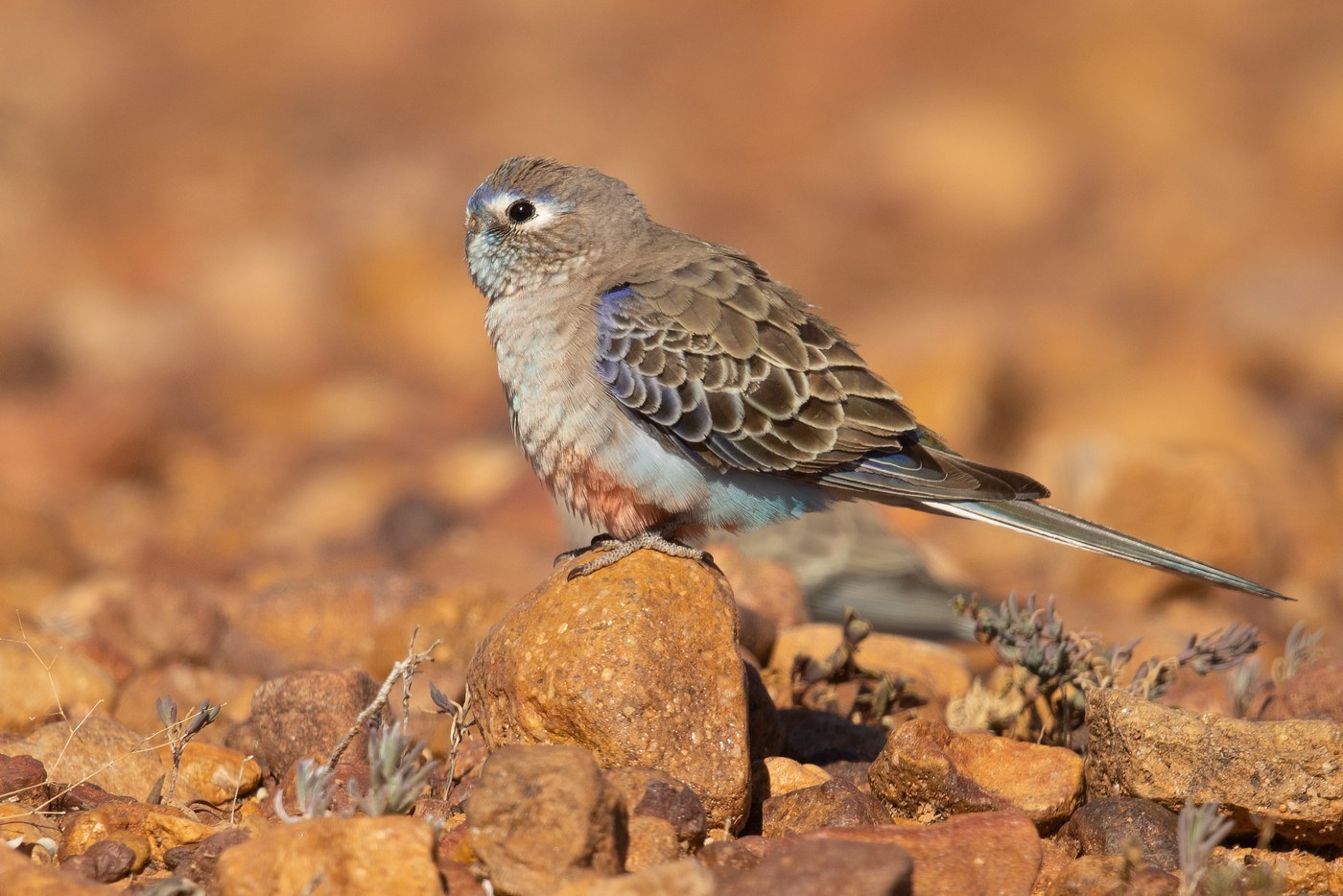
Key Field Marks
- Size & shape: Small parrot, about 19–23 cm long, with a slim body and long tail typical of grass parrots.
- Plumage: Overall soft grayish-brown above with a delicate scalloped pattern on the back and wing coverts; underparts and face washed with dusky pink, brightest on the belly.
- Wings & tail: Blue on the outer flight feathers and rump, most visible in flight; blue tail edges.
- Sex differences: Males show a thin blue band across the forehead (browline); females are duller with little or no blue on the forehead and softer pink tones overall.
Separating from Similar Species
- Its pastel pink-brown coloring combined with a blue rump is distinctive among Australian grass parrots and not closely matched by other species sharing its arid range.
- Elegant Parrot and other blue-and-yellow grass parrots show much more green/yellow plumage and lack the pinkish wash, making confusion unlikely with a good look.
- In poor light or brief views, its quiet, unobtrusive nature and cryptic brown tones can make it resemble a drab sparrow-sized bird until it flushes and shows the blue rump.
Habitat, Range & Season
- Found across the arid and semi-arid interior of Australia, favoring mulga and other acacia woodlands, dry scrub, and adjacent grassy clearings.
- Nomadic in response to rainfall and seed availability, so local occurrence can vary year to year.
- Present year-round within its range but often concentrated near reliable water sources during dry periods.
Behavior & Voice
- Notably crepuscular: most active feeding on the ground for fallen seed at dawn and dusk, and can be active on moonlit nights.
- Quiet and unobtrusive during the heat of the day, often perching motionless in dense foliage.
- Voice is a soft, musical, twittering contact call given in flight, quieter and less harsh than many other parrots.
Frequently asked questions
What color is a wild Bourke's Parrot?
A soft grayish-brown above with a scalloped pattern, pinkish wash below, and blue on the rump and outer flight feathers — overall a muted, pastel look rather than bright colors.
How can you tell a male from a female Bourke's Parrot?
Males show a thin blue band across the forehead; females typically lack this blue browline and appear slightly duller overall.
When is the best time of day to see Bourke's Parrot in the wild?
Dawn and dusk, when the species feeds on the ground for seeds; it is quiet and hard to detect during the heat of the day.
What habitat should I search for Bourke's Parrot?
Arid and semi-arid mulga and acacia woodland in inland Australia, especially near water sources during dry spells.