
Boreal Chickadee Identification Guide
A brown-capped chickadee of the northern spruce-fir forest, distinguished from the familiar Black-capped Chickadee by its warm brown crown and flanks.
Read the full Boreal Chickadee encyclopedia entry →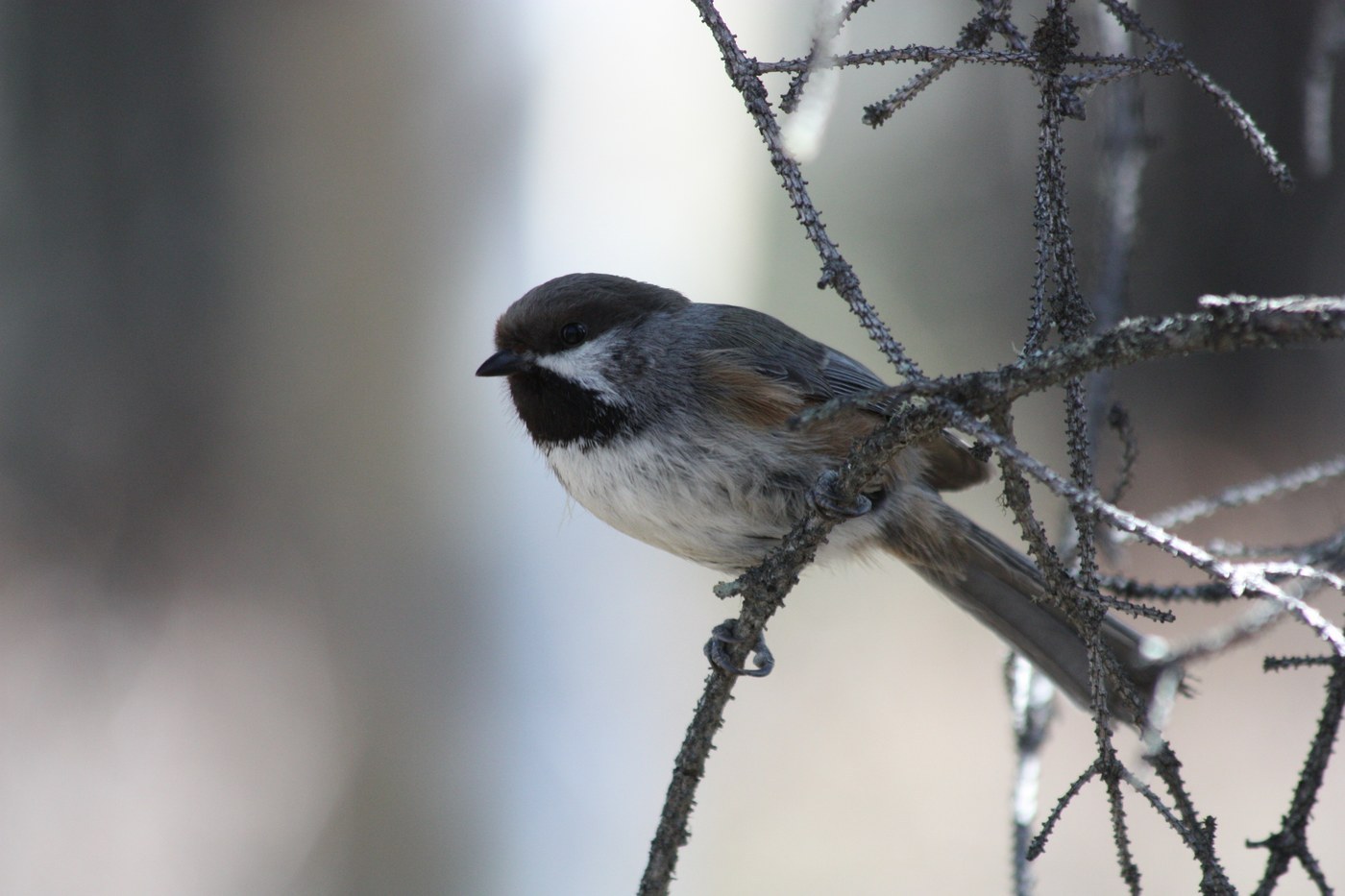
Key Field Marks
- Size & shape: A small, plump chickadee, similarly proportioned to Black-capped Chickadee with a short bill, round head, and active, acrobatic foraging style.
- Cap color: A warm brown (not black) cap covering the crown, the most immediate difference from the more familiar Black-capped Chickadee.
- Underparts and flanks: Grayish-buff underparts with rusty-brown wash on the flanks, contrasting with a whitish belly and cheek patch.
- Face: White cheek patch below the brown cap, with a black throat/bib similar in shape to other chickadees.
- Behavior: Forages actively in conifers, often in mixed flocks with kinglets and other boreal species; generally tame and approachable, but can be inconspicuous within dense spruce/fir cover.
Separating It From Similar Species
- Black-capped Chickadee: Has a crisp black cap (not brown) and cleaner gray back/flanks without the rusty wash; ranges overlap at the southern edge of Boreal Chickadee's range, so cap color and flank color are the key checks.
- Gray-headed Chickadee (rare, found in parts of Alaska and northwestern Canada): Has a grayer, less warm-brown cap and paler flanks with less rust tone; ranges overlap only in limited areas of Alaska/Yukon, and Gray-headed is notably rarer and more local.
- Chestnut-backed Chickadee: Ranges do not typically overlap much, but Chestnut-backed also has a dark cap (not brown) and a bright chestnut back, unlike Boreal's browner overall tone.
Where & When to See One
- Habitat: Dense, mature spruce-fir and other boreal coniferous or mixed forest, including muskeg edges.
- Range: Resident across the boreal forest belt of Canada and Alaska, extending marginally into the extreme northern continental United States (e.g., northern New England, Minnesota, and similar border regions).
- Season: Present year-round; largely non-migratory, though some winters see limited southward wandering (irruptions), less pronounced than in some other boreal finches.
Voice
- Call is a slow, nasal, wheezy "chick-a-dee-dee" or "tsick-a-day-day," notably huskier, slower, and more nasal-sounding than the crisp, clear call of Black-capped Chickadee.
Frequently asked questions
How do you tell Boreal Chickadee from Black-capped Chickadee?
Look at the cap color — Boreal Chickadee has a warm brown cap versus Black-capped's crisp black cap — and check the flanks, which show a rusty-brown wash on Boreal Chickadee but are cleaner gray on Black-capped.
What does the Boreal Chickadee sound like?
Its call is a slow, husky, nasal 'chick-a-dee-dee,' noticeably raspier and slower-paced than the clear, quick call of the Black-capped Chickadee.
Where should I look for Boreal Chickadees?
Search dense, mature spruce-fir and other boreal conifer forest across Canada and Alaska, including muskeg edges; they only marginally reach the northernmost continental US.
Does Boreal Chickadee migrate south in winter like some finches?
It is mostly resident year-round on its boreal territory; while occasional southward wandering occurs in some winters, large-scale irruptions are less pronounced than in irruptive finches like redpolls or crossbills.