
Bohemian Waxwing Identification Guide
A crested, gray boreal-forest fruit-eater that irrupts south in winter flocks, distinguished from Cedar Waxwing by its rufous undertail and bold wing pattern.
Read the full Bohemian Waxwing encyclopedia entry →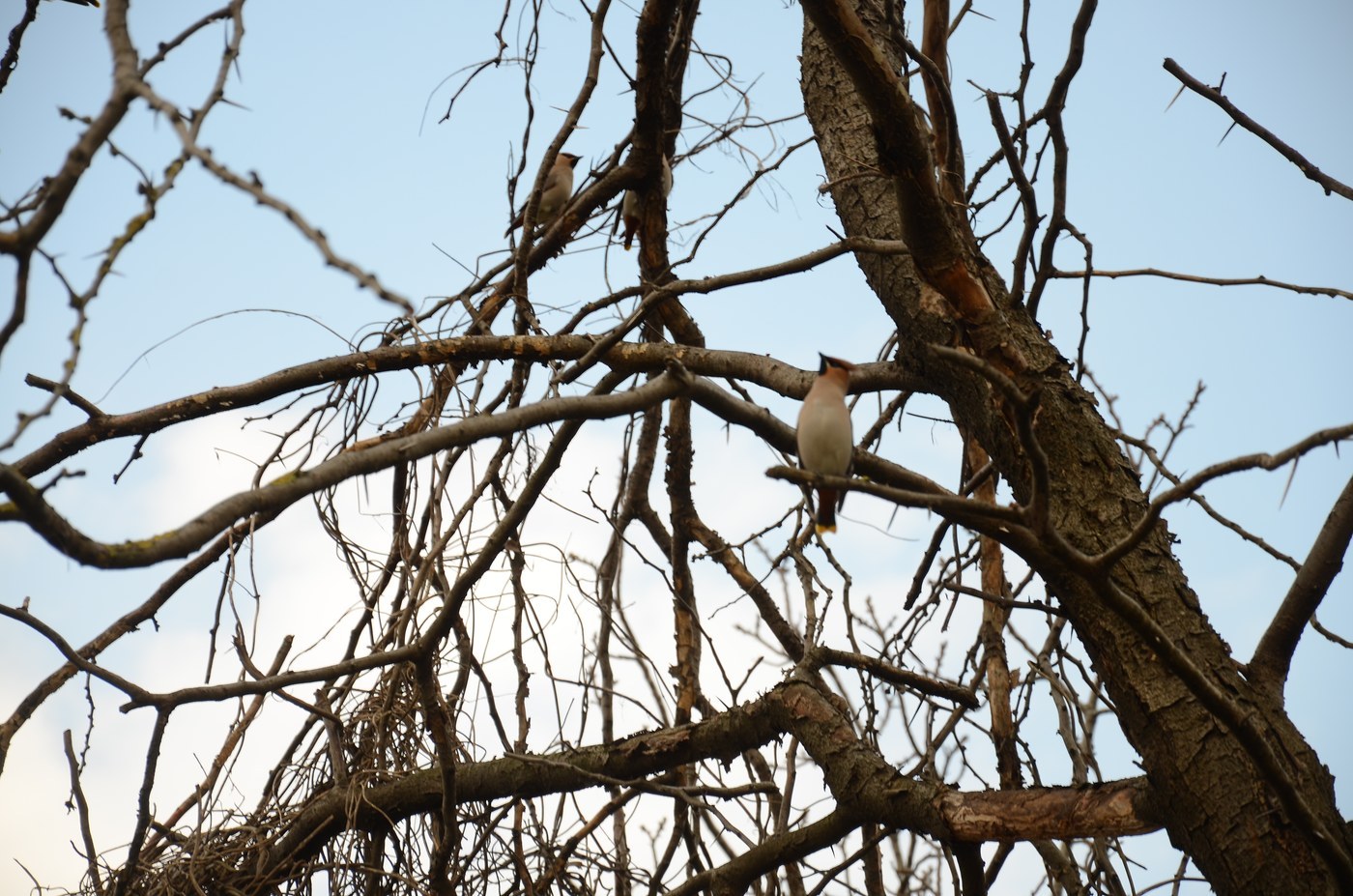
Key Field Marks
- Size & shape: A sleek, crested songbird, noticeably larger and stockier than Cedar Waxwing, with a short tail and short black bill.
- Plumage: Overall soft gray body (grayer and less brownish than Cedar Waxwing), black mask bordered narrowly in white, black chin, and a prominent crest.
- Undertail coverts: Rich rufous-chestnut — the single most useful mark separating it from Cedar Waxwing, which has whitish to pale yellow undertail coverts.
- Wings: Bold black-and-white-and-yellow pattern on the flight feathers, with white and yellow edging plus the classic red, waxy tips to the secondaries.
- Behavior: Highly gregarious, moving in large, tight flocks that descend suddenly on fruiting trees (mountain ash, crabapple, hawthorn) and strip them quickly before moving on.
Separating It From Similar Species
- Cedar Waxwing: Smaller, browner overall, with pale yellow (not gray) belly, white or pale yellowish (not rufous) undertail coverts, and a plainer wing pattern lacking the bold white/yellow flash Bohemian shows. Voice also differs (see below).
- Mixed flocks of both species do occur in winter, so checking undertail covert color on multiple birds in a flock is the most reliable way to confirm Bohemians are present.
Where & When to See One
- Habitat: Breeds in open boreal coniferous and mixed forest, often near clearings, muskeg, or forest edge; in winter found wherever fruiting trees and shrubs attract flocks, including suburban plantings.
- Range: Breeds across northern Canada, Alaska, and Eurasia (Scandinavia to Siberia); winters somewhat south of the breeding range, with periodic large irruptions bringing flocks well into the northern and sometimes central United States when northern fruit crops fail.
- Season: Irruptive and unpredictable in winter — some years bring large flocks far south, other years very few appear outside the core range; typically present from late fall through early spring in irruption years.
Voice
- Call is a buzzy, trilled "sreeee" or rattling trill, distinctly harsher, buzzier, and lower than the high, thin, pure whistled "seee" of Cedar Waxwing.
Frequently asked questions
What is the best field mark to separate Bohemian Waxwing from Cedar Waxwing?
Check the undertail coverts: Bohemian Waxwing has rich rufous-chestnut undertail coverts, while Cedar Waxwing's are whitish to pale yellow. Bohemian is also larger, grayer overall, and shows a bolder white-and-yellow wing pattern.
Why do Bohemian Waxwings sometimes appear far south of their normal range in winter?
They are irruptive migrants — when fruit crops fail in their boreal breeding and wintering areas, large flocks wander south in search of food, sometimes reaching the northern and central United States in big irruption years.
How can I tell Bohemian and Cedar Waxwing apart by sound?
Bohemian Waxwing gives a buzzy, rattling trill, while Cedar Waxwing's call is a much higher, thinner, pure whistled note — the Bohemian's call is noticeably harsher and lower-pitched.
What kind of food attracts winter flocks of Bohemian Waxwings?
Fruiting trees and shrubs such as mountain ash, crabapple, hawthorn, and juniper draw large, fast-moving flocks that can strip a tree of fruit within minutes before moving on.