
Bobolink Identification Guide
A grassland songbird whose breeding male wears a striking black-and-white 'backwards tuxedo' with a buffy-yellow nape.
Read the full Bobolink encyclopedia entry →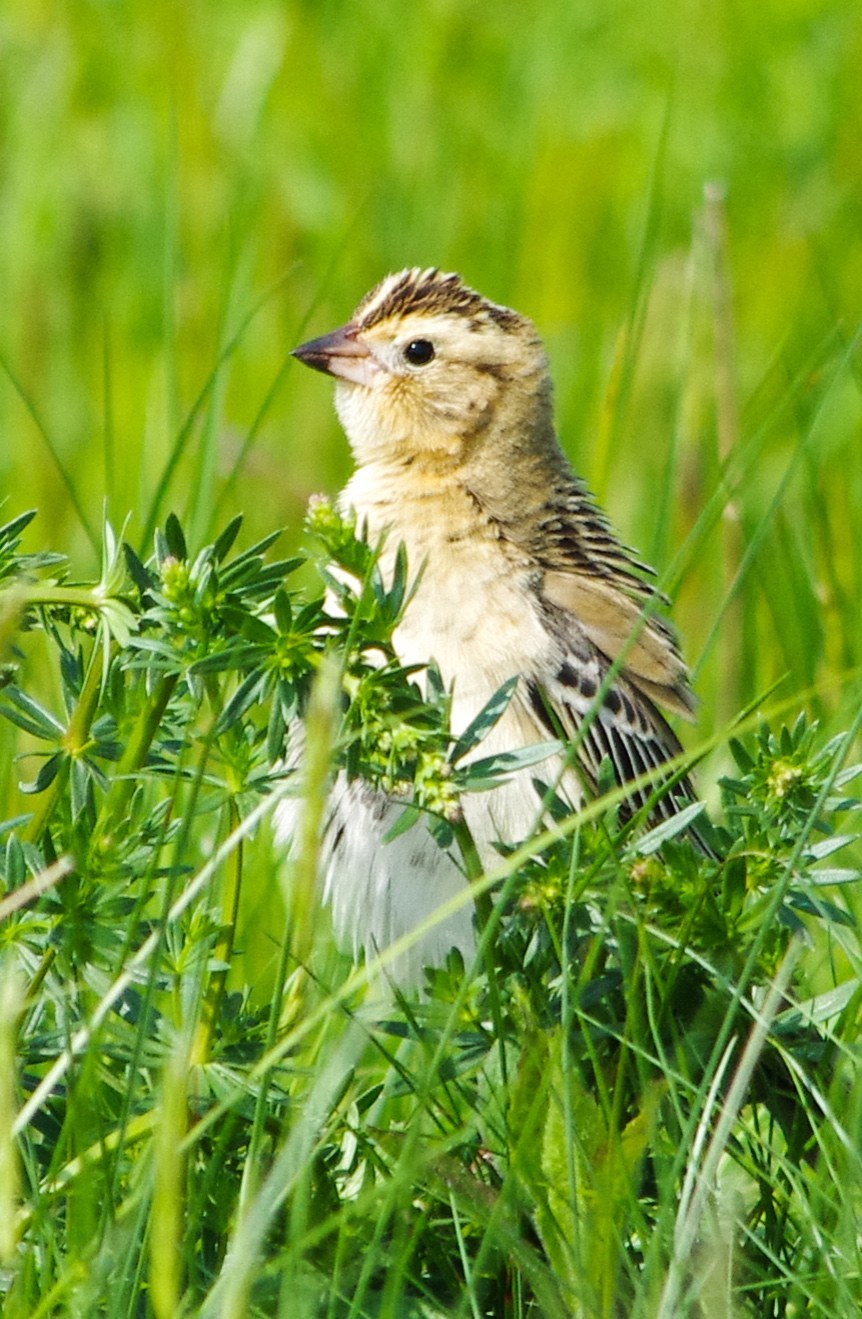
Key Field Marks
- Size & shape: A stocky, sparrow-sized songbird with a short, conical, finch-like bill and pointed tail feathers with spiky tips, often noticeable at close range.
- Breeding male: Unmistakable — solid black underparts and face, a buffy-yellow patch on the nape, and white scapulars, back, and rump, giving a reversed "tuxedo" pattern found in no other North American bird.
- Female and nonbreeding/fall male: Sparrow-like and buffy-yellow overall, with dark stripes on the crown separated by a pale central stripe, dark eyeline, streaked back and flanks, and that same pointed tail-feather shape.
- Behavior: Forages on the ground and low in grass/grain; breeding males sing conspicuously from perches or in a fluttering song-flight over open fields.
Separating It From Similar Species
- Grasshopper Sparrow / Savannah Sparrow / other grassland sparrows: Fall/female Bobolinks are larger and bulkier than these sparrows, with a distinctly pointed (not notched or rounded) tail and a bigger, more conical bill; the pale central crown stripe bordered by dark lateral stripes is a good supporting mark.
- Dickcissel: Female/nonbreeding Dickcissel shows a yellowish wash on the breast and a chestnut shoulder patch, features Bobolink lacks; Bobolink's overall buffier, more streaked look and pointed tail feathers help separate them.
- Breeding male: Essentially unmistakable due to the reversed black-and-white pattern with no other North American songbird sharing it.
Where & When to See One
- Habitat: Hayfields, tallgrass prairie remnants, weedy meadows, and lightly grazed pastures with dense grass cover for nesting.
- Range: Breeds across the northern United States and southern Canada, concentrated in the Great Lakes region, Northeast, and northern Great Plains; undertakes one of the longest songbird migrations in the Americas to winter in the grasslands of southern South America (notably Argentina).
- Season: On breeding grounds from May through July/August; migrates in loose flocks through the Americas in spring and fall.
Voice
- Song is a bubbly, rollicking, banjo-like jumble of notes, often delivered during a fluttering display flight over the field — one of the most distinctive songs of North American grasslands.
- Flight call is a clear, metallic "pink" or "bink" note, often heard from migrating flocks overhead.
Frequently asked questions
Why is the breeding male Bobolink called a 'backwards tuxedo' bird?
Most black-and-white birds are dark above and pale below, but the breeding male Bobolink reverses this — solid black underparts and face with a pale/white back and scapulars, plus a buffy-yellow nape patch, unlike any other North American songbird.
How do you identify a female or fall Bobolink that looks like a sparrow?
Look for a buffy-yellow, heavily streaked bird with a pale central crown stripe bordered by dark stripes, a conical bill, and distinctly pointed (spiky-tipped) tail feathers — larger and bulkier than most grassland sparrows.
Where should I look for Bobolinks?
Search hayfields, tallgrass prairie, and weedy meadows across the northern US and southern Canada during the breeding season; listen for the bubbly song given from perches or in low display flights over the grass.
How far do Bobolinks migrate?
They make one of the longest migrations of any North American songbird, traveling from breeding grounds in the northern US/southern Canada all the way to wintering grounds in the grasslands of southern South America, especially Argentina.