
Boat-tailed Grackle Identification Guide
A large, glossy blackbird of southeastern coastal marshes, best known for the male's long, keel-shaped tail.
Read the full Boat-tailed Grackle encyclopedia entry →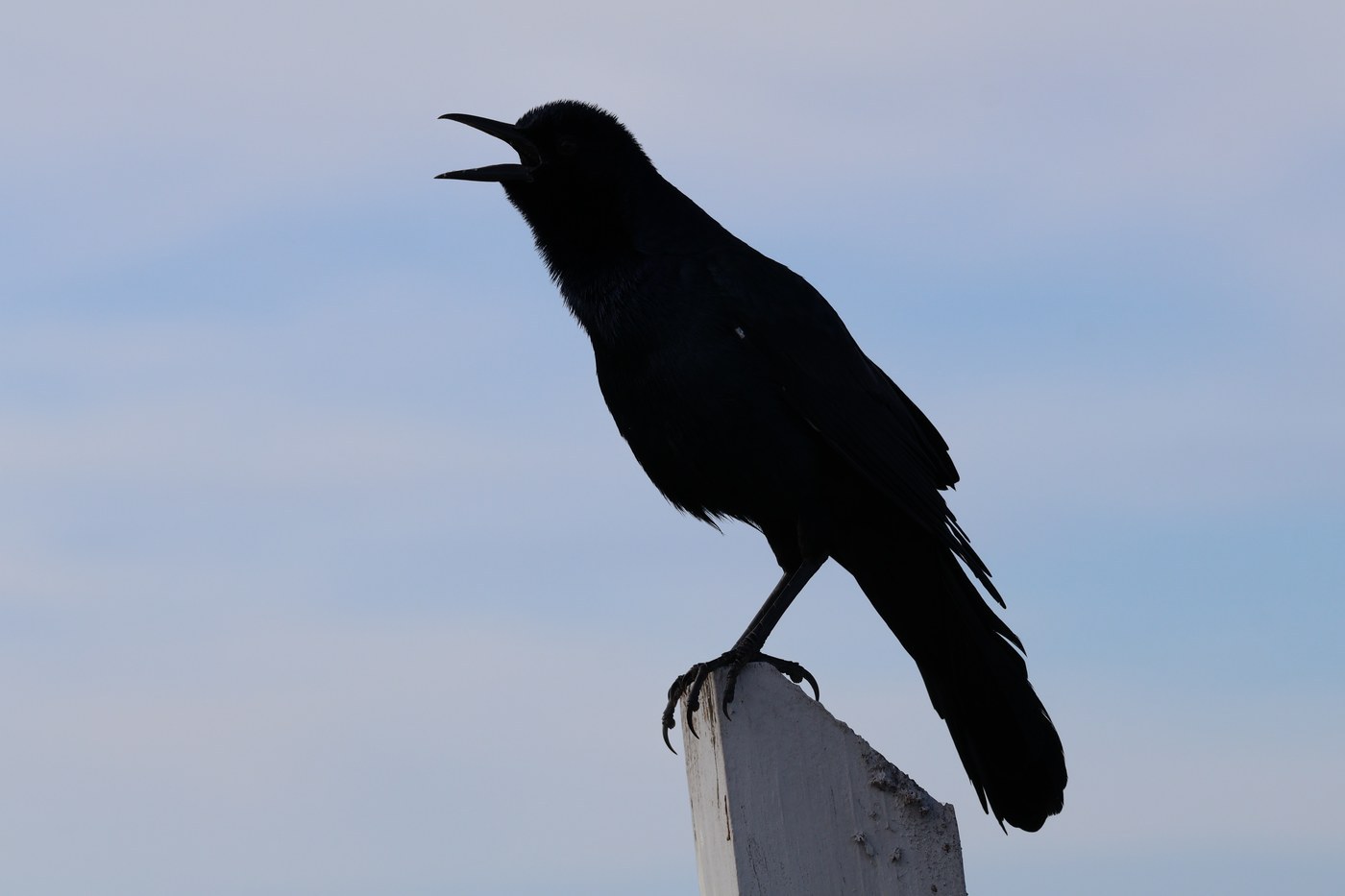
Key Field Marks
- Size & shape: A large grackle with a long tail folded into a deep V or keel shape (like the hull of a boat) in flight and often at rest, especially in males.
- Male plumage: Glossy iridescent black overall, with a rounded head profile (less peaked than Common Grackle) and a fairly heavy, slightly downcurved bill.
- Female plumage: Much smaller than the male, warm brown above with buffy-tan underparts and a shorter tail — a striking size and color difference between the sexes.
- Eye color: Variable by region — pale yellow-white eyes in Atlantic coast populations, dark brown eyes in Gulf coast (especially Florida) populations, which is a useful regional identification clue.
- Behavior: Highly social, often seen walking on open ground, marsh edges, beaches, and parking lots near the coast; males perform tail-spreading, wing-drooping displays.
Separating It From Similar Species
- Great-tailed Grackle: Very similar and overlaps in the Gulf Coast (Texas/Louisiana). Great-tailed is larger overall with an even longer, more deeply keeled tail, a flatter head profile, and typically a purple-blue (not just black) gloss; females are grayer-brown rather than warm tan-brown. Voice also differs — Great-tailed gives louder, more varied, harsher notes.
- Common Grackle: Smaller and slimmer with a shorter tail, a distinctly peaked/keeled head shape, and (in most populations) bright yellow eyes; found broadly across the continent, not tied to salt marsh/coastal habitat the way Boat-tailed is.
- Habitat clue: Boat-tailed Grackle is almost exclusively found near saltwater and brackish coastal marshes, while Great-tailed and Common Grackles range more broadly inland.
Where & When to See One
- Habitat: Coastal salt marshes, mangroves, beaches, and adjacent open areas including parking lots, lawns, and marinas near the immediate coast.
- Range: Resident along the Atlantic and Gulf coasts of the southeastern United States, from New York/New Jersey south through Florida and west to Texas.
- Season: Present year-round; non-migratory.
Voice
- A wide variety of harsh, guttural notes, whistles, and rattles; males give loud, varied calls during display, often described as less harsh and less varied than Great-tailed Grackle's repertoire.
Frequently asked questions
How do you tell Boat-tailed Grackle from Great-tailed Grackle where their ranges overlap?
Boat-tailed has a rounder head profile, a somewhat shorter and less deeply keeled tail, warmer brown females, and is almost always found right along the coast in salt marsh habitat, while Great-tailed Grackle ranges more broadly inland and has a flatter head and more purplish gloss.
Why do some Boat-tailed Grackles have pale eyes and others dark eyes?
Eye color varies geographically: birds along the Atlantic coast tend to have pale yellowish-white eyes, while Gulf coast populations, especially in Florida, typically have dark brown eyes.
Why do male and female Boat-tailed Grackles look so different?
The species shows strong sexual dimorphism — males are much larger with a longer keeled tail and glossy black plumage, while females are notably smaller, shorter-tailed, and warm brown with buffy underparts.
What habitat is most reliable for finding Boat-tailed Grackles?
Stick close to the immediate coast — salt marshes, mangroves, beaches, and nearby open ground such as parking lots or lawns within sight of saltwater are the most dependable spots.