
Boat-billed Heron Identification Guide
A nocturnal Central and South American heron unmistakable for its huge, broad, scoop-shaped bill and oversized dark eyes.
Read the full Boat-billed Heron encyclopedia entry →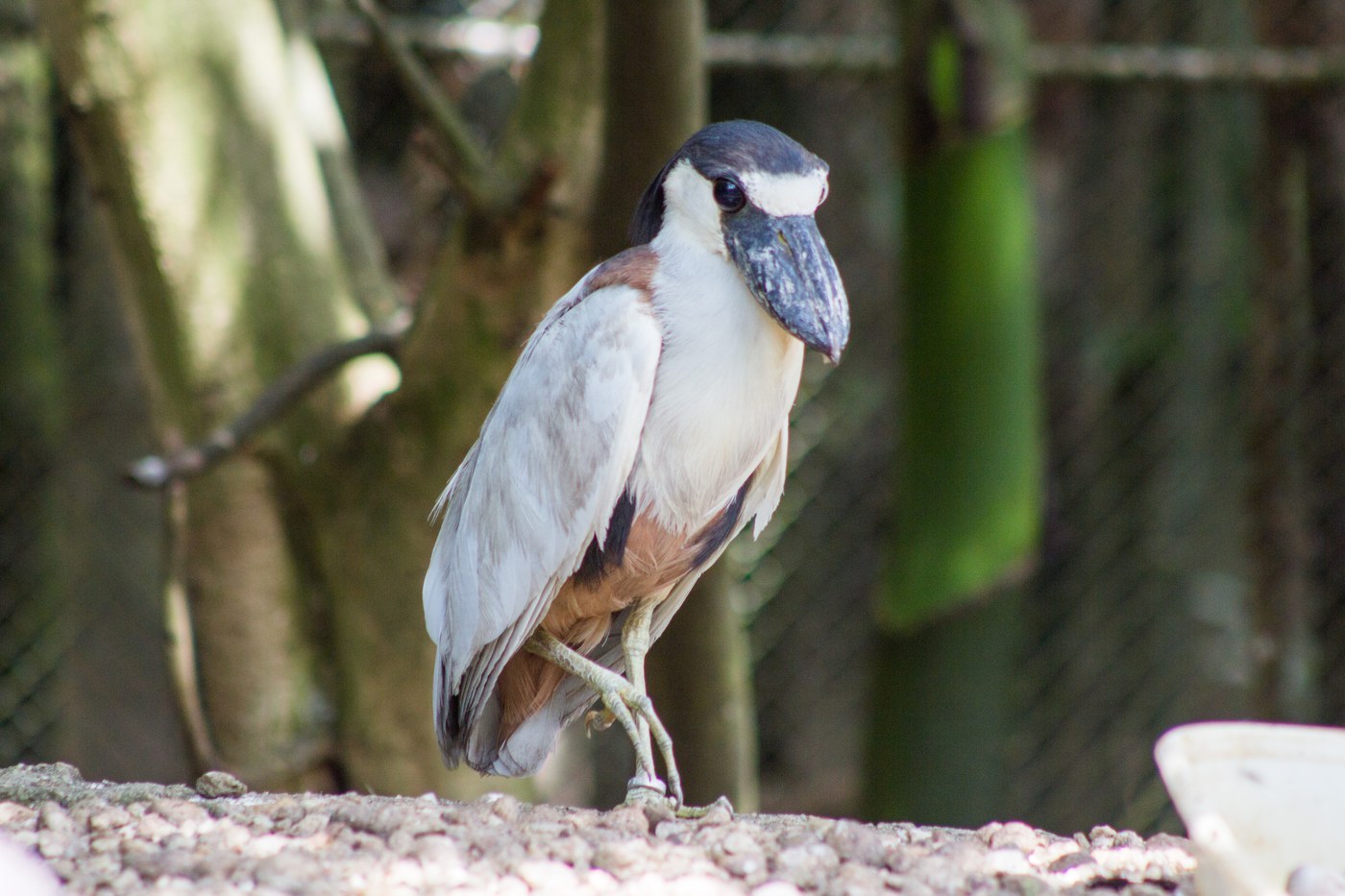
Key Field Marks
- Bill: The defining feature — an enormous, wide, flattened bill shaped like an upturned boat or scoop, unlike any other heron.
- Eyes: Very large, dark eyes adapted for nocturnal foraging, giving the bird a wide-eyed, almost owl-like expression.
- Size & shape: A stocky, medium-large heron with a thick neck often held hunched, similar in build to a night-heron.
- Plumage: Black cap with long, drooping plumes trailing off the back of the head; pale gray body; chestnut-buff flanks and belly; whitish throat and foreneck.
- Legs: Relatively short, yellowish to dull greenish legs.
- Behavior: Strictly nocturnal and crepuscular; spends daylight hours roosting quietly, hunched and motionless, in dense mangrove or swamp-forest cover, becoming active at dusk to hunt fish, crustaceans, and small aquatic prey by touch and sight in low light.
Separating It From Similar Species
- Night-herons (Black-crowned, Yellow-crowned): Similar nocturnal habits and stocky build, but both have normal straight, pointed heron bills — nothing like the Boat-billed Heron's massive scoop bill, which makes confusion essentially impossible with a clear view.
- Silhouette alone (large head, thick neck, hunched daytime roosting posture) can suggest a night-heron at a distance, but the bill shape is diagnostic the moment it's visible.
Where & When to See One
- Habitat: Mangrove swamps, freshwater and brackish marshes, swamp forest, and slow-moving wooded rivers and lagoons.
- Range: Resident from Mexico south through Central America into much of South America, generally in lowland tropical and subtropical wetlands.
- Season: Present year-round throughout its range (non-migratory); most reliably located at daytime roosts, since it is largely inactive and silent during daylight.
Voice
- Generally quiet during the day; at dusk and at nest colonies gives low, harsh croaks, clacks, and bill-snapping sounds, along with grunting notes during social/breeding displays.
Frequently asked questions
What is the single best field mark for Boat-billed Heron?
Its bill — an unusually broad, flattened, scoop- or boat-shaped bill unlike any other heron species, visible even in poor light or silhouette.
Why is the Boat-billed Heron hard to see during the day?
It is strictly nocturnal/crepuscular and spends daylight hours roosting motionless and hunched in dense mangrove or swamp-forest cover, only becoming active to forage after dusk.
Where does the Boat-billed Heron live?
It is a resident of lowland tropical wetlands, mangroves, and swamp forests from Mexico south through Central America and much of South America; it does not migrate.
Could a night-heron be mistaken for a Boat-billed Heron?
At a distance the hunched daytime posture and large head can look similar to a night-heron, but night-herons have normal pointed bills, while the Boat-billed Heron's oversized scoop bill is unmistakable once seen clearly.