Blue Tit Identification Guide
A small, energetic European garden bird with a blue cap, yellow underparts, and white cheeks, a familiar visitor to feeders and nest boxes.
Read the full Blue Tit encyclopedia entry →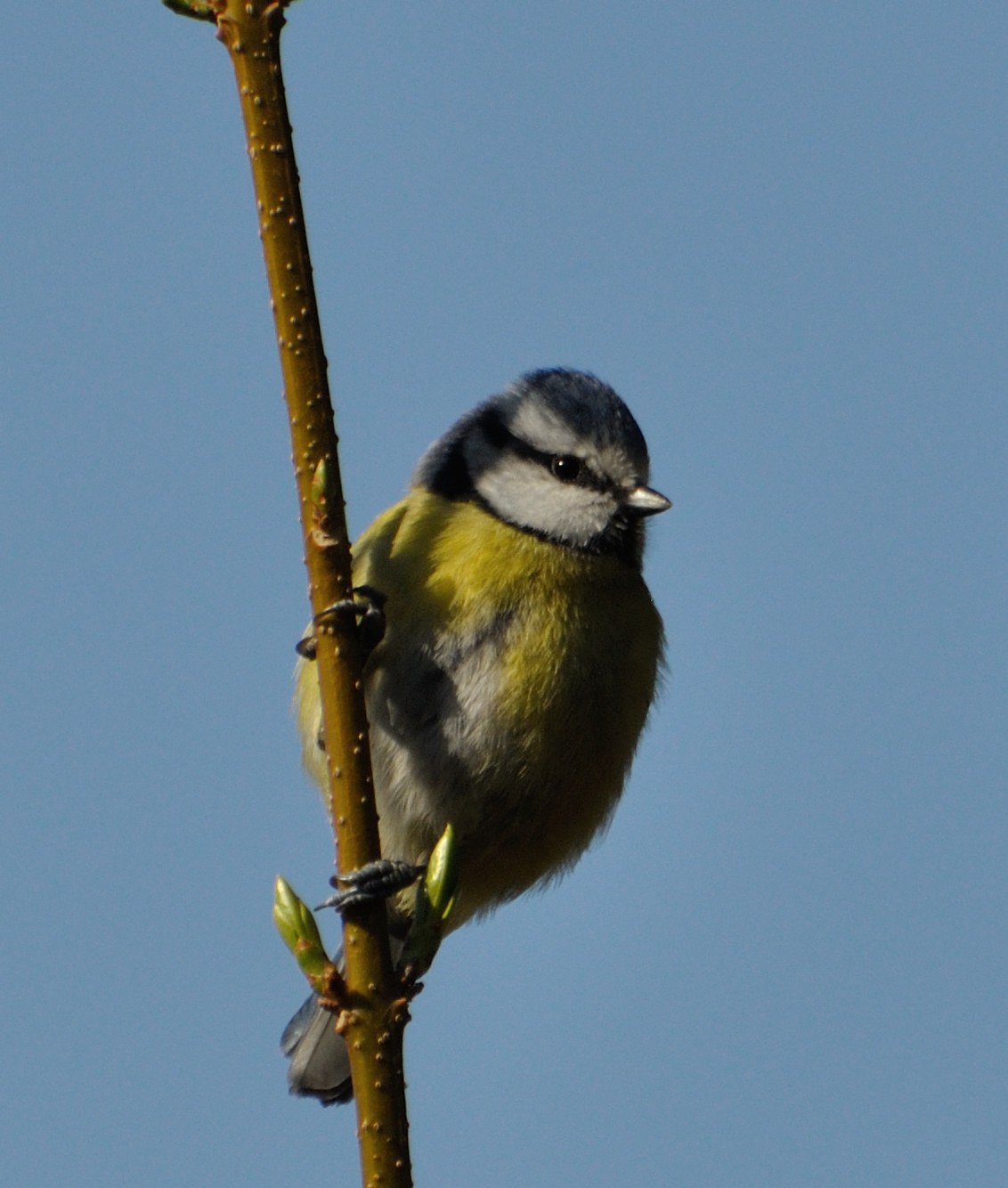
Key Field Marks
- Size & shape: A very small, compact tit about 10.5-12 cm (4-4.7 in), with a short, stubby bill and a short tail relative to body size.
- Plumage: Bright blue crown and nape, white face with a dark blue-black line through the eye, blue wings and tail, yellow underparts with a thin dark central belly line, and a yellowish-green back.
- Bare parts: Small, dark, pointed bill suited to gleaning insects and cracking small seeds; dark legs.
- Sexes: Similar, though males tend to have a slightly brighter, more UV-saturated blue crown than females (a difference visible to birds but harder for humans to detect); juveniles are duller, more yellow-washed on the face.
- Behavior: Highly acrobatic, frequently hanging upside down from twigs and feeders while foraging; often joins mixed-species foraging flocks with other tits, and readily uses nest boxes and garden feeders.
Similar Species
- Great Tit: Larger, with a black head, white cheeks, and a bold black central stripe down bright yellow underparts, quite different from the all-blue cap of Blue Tit.
- Coal Tit: Lacks yellow underparts and blue coloring, showing a black cap with white cheek patches and a white nape spot instead.
- Azure Tit: Much whiter overall with a paler blue back and mostly white underparts, largely restricted to parts of eastern Europe and Asia with limited range overlap.
- The combination of a blue (not black) cap and bright yellow underparts readily separates Blue Tit from all other common European tits.
Where & When to See It
- Range: Widespread and common resident across most of Europe, extending into North Africa and western Asia.
- Habitat: Deciduous and mixed woodland, hedgerows, parks, and gardens; one of the most frequent visitors to garden bird feeders and nest boxes across its range.
- Season: Resident year-round; often forms loose flocks with other tits in fall and winter, becoming more territorial and pair-focused during the spring breeding season.
Voice & Song Cues
- A thin, scolding tsee-tsee-tsee-tsit call, along with a range of high, sharp chattering and scolding notes given in alarm or contact with flock mates.
- The song is a bright, cheerful series of clear notes followed by a trilled or churring phrase, often rendered as "tsee-tsee-tsee-tsi-tsi-tsi-choo-choo."
- Vocal year-round but most actively singing in late winter and spring as pairs establish nesting territories.
Frequently asked questions
How do I tell a Blue Tit from a Great Tit?
Blue Tit has a blue (not black) cap and lacks the bold black central stripe on the belly that Great Tit shows; Great Tit is also noticeably larger.
Do Blue Tits migrate?
No, Blue Tits are largely resident year-round across their European range, though some may wander locally or join mixed winter flocks.
Why do Blue Tits hang upside down?
This acrobatic foraging behavior lets them access insects, seeds, and suet on the undersides of twigs, feeders, and hanging food, a foraging style shared with other tits.
Do Blue Tits use nest boxes?
Yes, they are one of the most common users of garden nest boxes in Europe, especially those with a small entrance hole suited to their compact size.
Blue Tit identified by the community
Recent Blue Tit sightings identified with Bird Identifier.