
Blue Rock Thrush Identification Guide
A stocky, long-billed thrush of cliffs and rocky terrain, males an overall slaty or deep blue and females finely barred gray-brown.
Read the full Blue Rock Thrush encyclopedia entry →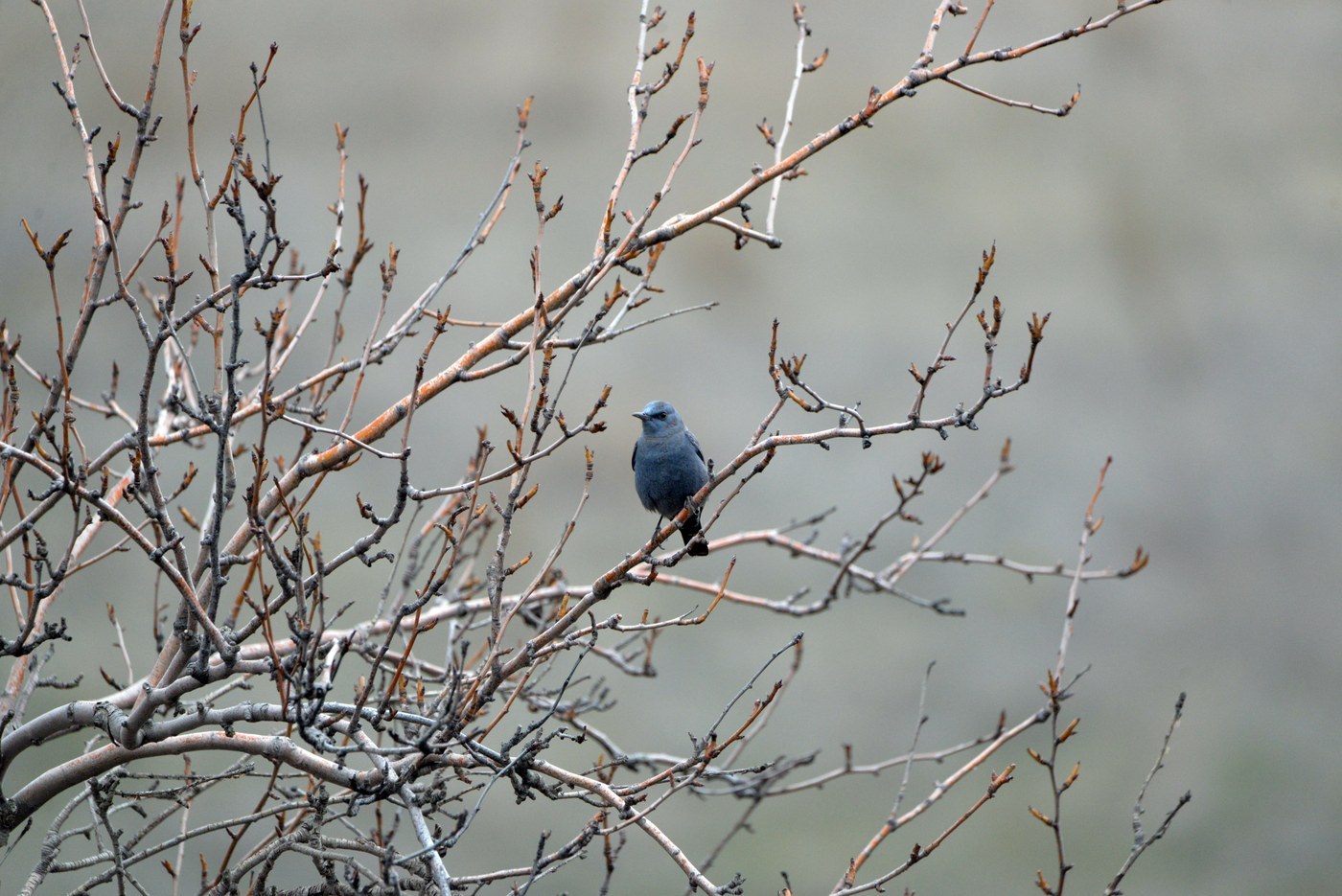
Key Field Marks
- Size & shape: A medium-sized, thrush-like bird about 20-23 cm (8-9 in), with a fairly long, slender bill, a relatively long tail, and an upright, alert posture when perched on rocks.
- Plumage (male): Overall slaty to deep blue plumage, varying by subspecies from dull grayish-blue to a richer, more saturated blue, generally darker on the wings and tail; some eastern subspecies show a chestnut belly and undertail.
- Plumage (female): Grayish-brown overall with fine dark barring and scaling below, and a scaly-looking back, providing excellent camouflage against rock.
- Bill & legs: Slim, straight, blackish bill; dark legs.
- Behavior: Typically solitary, perching prominently on rocks, cliff ledges, walls, or rooftops with an upright stance, often bobbing or flicking its tail; forages by dropping to the ground or making short sallies to catch insects and small prey.
Similar Species
- Blue Whistling-Thrush: Larger, darker, more purplish-blue overall with fine spangling, and typically found near streams in forest rather than open rocky habitat.
- Common Rock Thrush (Rufous-tailed Rock Thrush): Male shows a blue-gray head/back contrasting with an orange-rufous belly and tail, unlike the more uniformly blue male Blue Rock Thrush.
- Female European Starling or other brownish birds: Lack the fine barred/scaled pattern and thrush-like bill shape and posture of female Blue Rock Thrush.
- Habitat (rocky, open terrain) combined with the male's largely blue plumage is usually diagnostic; females require more care but the scaly barred pattern and upright rock-perching behavior are distinctive.
Where & When to See It
- Range: Breeds from southern Europe and North Africa east through the Middle East, Central Asia, and the Himalayas to China and Southeast Asia; northern and high-altitude populations migrate south to winter in Africa, the Indian Subcontinent, and Southeast Asia, while some populations are resident.
- Habitat: Rocky cliffs, quarries, coastal bluffs, ruins, and increasingly urban settings with rocky or masonry structures (buildings, walls, temples) that mimic natural cliff habitat.
- Season: Migratory populations are present on breeding grounds in spring/summer and move to lower elevations or wintering grounds outside the breeding season; resident populations can be seen year-round.
Voice & Song Cues
- Song is a clear, rich, melodious series of fluty whistles, often delivered from a high, exposed perch such as a cliff top or rooftop.
- Call is a short, hard chack or tac-tac, often given when alarmed.
- The song's clear, thrush-like quality carries well across open rocky terrain and is frequently the first indication of a territorial male.
Frequently asked questions
How do I tell a male Blue Rock Thrush from a Blue Whistling-Thrush?
Blue Rock Thrush is smaller, favors open rocky and cliff habitat rather than forest streams, and lacks the fine pale spangling and larger size of the Blue Whistling-Thrush.
What does a female Blue Rock Thrush look like?
Females are grayish-brown with fine dark barring and scaling on the underparts and back, quite different from the blue male, and rely on camouflage against rock.
Where is the best habitat to find a Blue Rock Thrush?
Open rocky terrain such as cliffs, quarries, coastal bluffs, and old stone buildings or ruins that resemble natural cliff faces.
Is the Blue Rock Thrush migratory?
It varies by population — northern and high-elevation breeders migrate to lower latitudes or elevations in winter, while some southern populations are resident year-round.