
Blue Grosbeak Identification Guide
A chunky, deep-blue finch-like bird of shrubby fields with a massive silvery bill and warm chestnut wing bars.
Read the full Blue Grosbeak encyclopedia entry →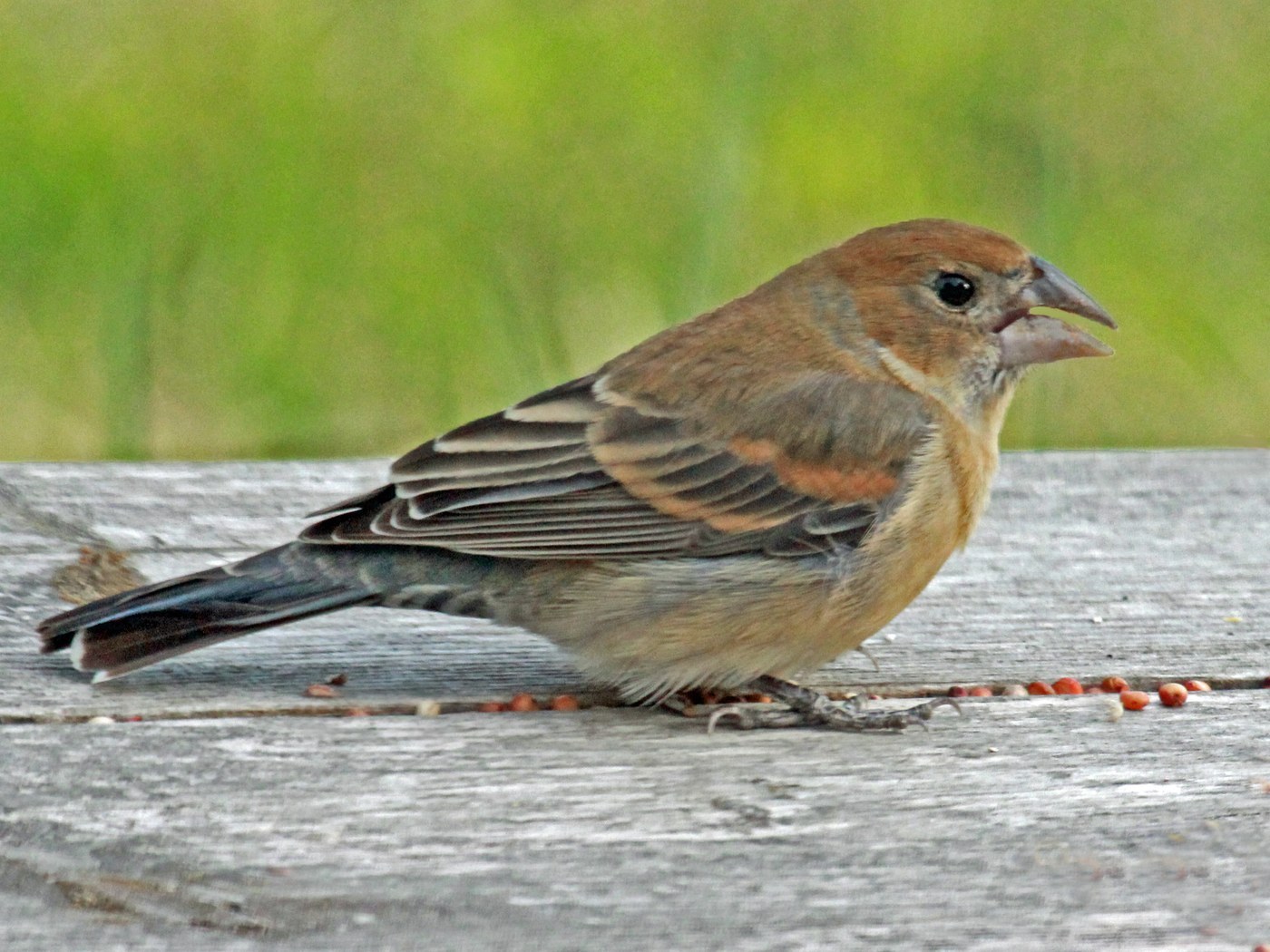
Key Field Marks
- Size & shape: A stocky, big-headed songbird about 15-17 cm (6-6.5 in), noticeably larger and heavier-billed than an Indigo Bunting, with a large, thick, conical bill.
- Plumage (male): Deep, rich blue overall, appearing almost black in poor light, with two contrasting chestnut-brown wing bars.
- Plumage (female): Warm cinnamon-brown overall with a hint of blue on the rump, shoulders, or tail, and buffy wing bars.
- Bill: Large, silvery-gray, heavy conical bill is a key structural difference from similar species.
- Behavior: Often flicks and spreads its tail while perched; forages low in dense brush and weedy fields for insects and seeds; typically shy and stays low in cover, singing from an exposed perch.
Similar Species
- Indigo Bunting: Smaller, more slender, with a smaller bill and no obvious wing bars; male Indigo is a more uniform, brighter blue without chestnut wing bars.
- Blue Bunting: Darker, more uniformly deep blue without contrasting wing bars, and has a smaller bill; range barely overlaps in southern Texas.
- Female/immature Brown-headed Cowbird: Superficially similar brownish females lack wing bars and the heavy conical bill of Blue Grosbeak.
- Bill size and shape are the most reliable mark separating Blue Grosbeak from buntings at any distance.
Where & When to See It
- Range: Breeds across the southern and central United States, from California and the Southwest east through the Great Plains and Mid-Atlantic, south into Mexico and northern Central America; winters mainly in Mexico and Central America.
- Habitat: Shrubby old fields, hedgerows, brushy roadsides, riparian thickets, and edges of agricultural land; favors semi-open habitat with scattered shrubs rather than dense forest or wide-open grassland.
- Season: Present on breeding grounds roughly April/May through September; a short-to-medium distance migrant wintering south of the U.S.
Voice & Song Cues
- A sharp, metallic chink or pink call note, often the best clue when the bird is hidden in brush.
- The song is a rich, warbling series of rising and falling phrases, somewhat similar to a Purple Finch or House Finch but more measured and less hurried, often delivered from a wire or shrub top.
- Both call note and song carry well and are useful for locating this often-secretive species.
Frequently asked questions
How do I tell a Blue Grosbeak from an Indigo Bunting?
Look at the bill and wing bars: Blue Grosbeak has a much larger, heavier silvery bill and two chestnut wing bars, while Indigo Bunting is smaller-billed and lacks wing bars.
What does a female Blue Grosbeak look like?
Females are warm cinnamon-brown overall with buffy wing bars and often a touch of blue on the rump or shoulders, quite different from the deep blue male.
Where does the Blue Grosbeak like to live?
It favors brushy, shrubby habitat such as old fields, hedgerows, and thicket edges rather than deep forest or bare open grassland.
When can I see Blue Grosbeaks in the U.S.?
They are present on breeding grounds from about April/May through September, then migrate to Mexico and Central America for the winter.