
Blue-faced Honeyeater Identification Guide
A large, boldly patterned Australian honeyeater instantly recognizable by the patch of bright blue bare skin around its eye.
Read the full Blue-faced Honeyeater encyclopedia entry →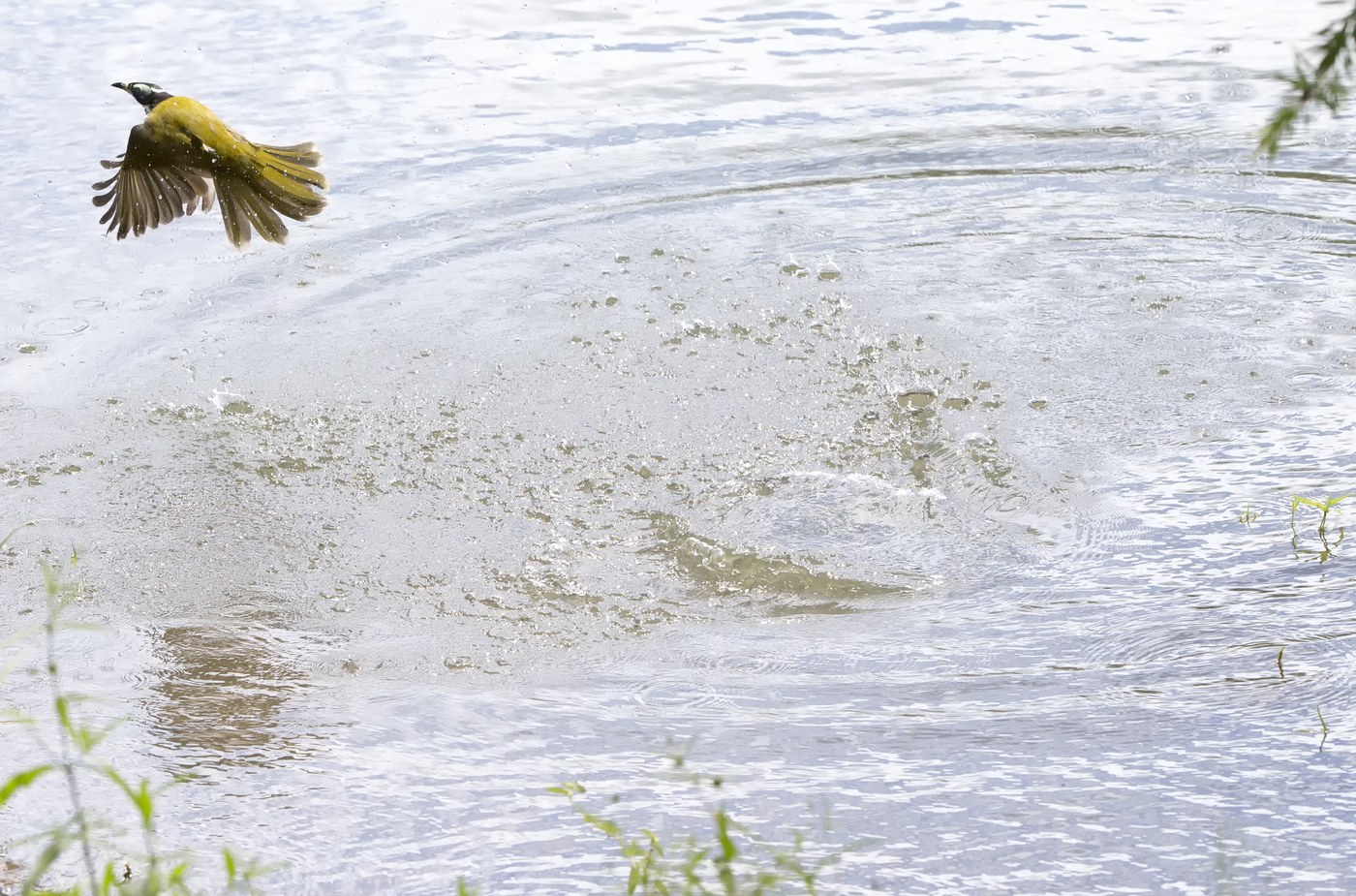
Key Field Marks
- Size & shape: A large honeyeater, about 26–32 cm, with a fairly long, downcurved black bill and a strong, direct flight.
- Plumage: Olive-green upperparts and clean white underparts; a black crown and black bib/throat patch that borders the white breast; a crisp white band across the nape separating the black crown from the olive back.
- Face: The standout feature is a patch of bare skin around the eye — bright blue in adults, giving the species its name.
- Juvenile: Shows the same overall pattern but with the bare facial skin greenish-yellow rather than blue; it changes to blue as the bird matures.
Separating It from Similar Species
- No other Australian honeyeater has bare blue facial skin, making adults essentially unmistakable once the face is seen clearly.
- Noisy Friarbird also has bare head skin (though black, not blue) and a very different silhouette — a bare gray-black head without feathering and a distinctive knobbed bill — quite different in overall impression from the Blue-faced Honeyeater's feathered black crown.
- Juveniles with greenish facial skin are best identified by overall shape, white nape band, and black bib pattern, which already match the adult template aside from face color.
Where & When to See It
- Range: Northern and eastern Australia, plus southern New Guinea.
- Habitat: Open woodlands, forest edges, parks, gardens, and mangroves; highly adaptable and common in many human-modified landscapes including suburban gardens with flowering trees.
- Season: Largely resident, though some populations show local nomadic movements tracking flowering trees and food availability.
Behavior & Voice
- Often encountered in small, noisy groups; can be aggressive toward other birds at flowering trees or feeding sites.
- Feeds on nectar, insects, and fruit, and readily visits gardens with flowering native plants or fruit.
- Voice: loud, ringing "queek-queek" calls and harsh chattering notes, frequently given in flight or while foraging in groups.
Frequently asked questions
What is the most distinctive feature of the Blue-faced Honeyeater?
A patch of bright blue bare skin around the eye in adults — a feature no other Australian honeyeater shares.
How do juvenile Blue-faced Honeyeaters differ from adults?
Juveniles show the same overall black-and-white and olive pattern but have greenish-yellow bare facial skin instead of blue, which changes to blue as the bird matures.
Where is the Blue-faced Honeyeater found?
Across northern and eastern Australia and in southern New Guinea, in open woodlands, forest edges, parks, gardens, and mangroves.
What does the Blue-faced Honeyeater eat?
A mix of nectar, insects, and fruit, and it readily visits gardens with flowering plants or fruit trees.