
Blue Crane Identification Guide
South Africa's elegant national bird, a pale blue-gray crane known for its rounded head and trailing wing plumes.
Read the full Blue Crane encyclopedia entry →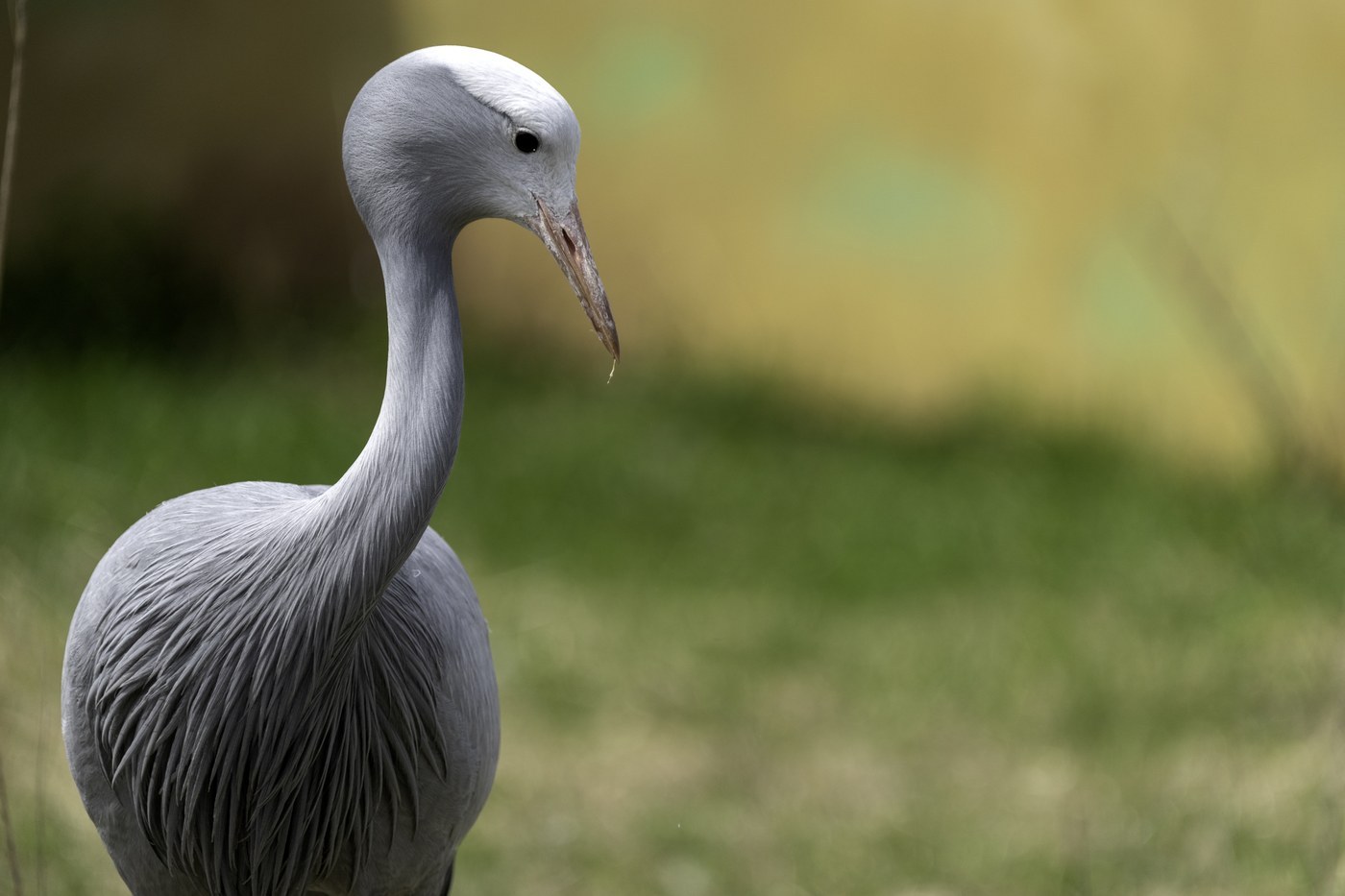
Key Field Marks
- Size & shape: A tall, slender crane, about 100–120 cm in height, with the long legs and long neck typical of cranes, but a distinctively rounded, oversized-looking head.
- Plumage: Overall pale blue-gray body plumage, giving the species its name.
- Head: Short, straight, pale bill; red eyes; rounded crown without the bare red skin patches or crown ornaments seen in some other cranes.
- Diagnostic feature: Elongated, drooping black tertial (inner wing) feathers that trail behind the bird and can nearly reach or touch the ground — most obvious when the bird is standing still or walking, and a key mark separating it from other gray cranes at a glance.
- Juvenile: Similar overall pattern but with shorter head/neck plumes and a more uniformly grayish, less refined appearance.
Separating It from Similar Species
- Grey Crowned Crane has a bold golden "crown" of stiff feathers, bare red/white facial skin, and a very different overall pattern, and favors wetter habitat.
- Wattled Crane is larger, has a dark cap, white foreneck, and prominent white wattles hanging from the throat, lacking the Blue Crane's smooth pale gray body and drooping wing plumes.
- Within most of its range, the Blue Crane is the only crane likely to be encountered in dry grassland and farmland, making habitat itself a useful clue.
Where & When to See It
- Range: Near-endemic to South Africa, with the vast majority of the population found there and a small population in Namibia (Etosha region).
- Habitat: Highveld grasslands, Karoo scrub, and increasingly agricultural land such as wheat fields and pastures; also uses wetlands and dams for roosting, especially outside the breeding season.
- Season: A year-round resident, though birds gather into larger non-breeding flocks after the breeding season and may move locally in response to food and water availability.
Behavior & Voice
- Found in pairs or family groups during breeding, forming larger flocks (sometimes hundreds of birds) in the non-breeding season.
- Performs elaborate, energetic dancing displays involving bowing, leaping, and wing-flapping, used both in courtship and more generally as social behavior.
- Voice: a loud, rolling, croaking or trumpeting call, often given in flight or as a contact call within flocks.
Frequently asked questions
What is the most distinctive feature of the Blue Crane?
Its overall pale blue-gray plumage combined with long, drooping black wing (tertial) feathers that trail behind it, sometimes nearly reaching the ground.
Where is the Blue Crane found?
It is nearly endemic to South Africa, occurring across highveld grasslands, Karoo habitats, and farmland, with a small additional population in Namibia.
How is the Blue Crane different from the Grey Crowned Crane?
Blue Crane lacks the Grey Crowned Crane's golden crown of stiff feathers and bare facial skin, instead showing a smooth, rounded pale gray head and long trailing wing plumes.
Does the Blue Crane migrate?
It is generally resident year-round, though non-breeding flocks may move locally between grassland, farmland, and wetland roosting sites.