
Black-winged Stilt Identification Guide
A slender black-and-white wader with extraordinarily long pink legs, easy to identify by its stilt-like proportions and thin straight bill.
Read the full Black-winged Stilt encyclopedia entry →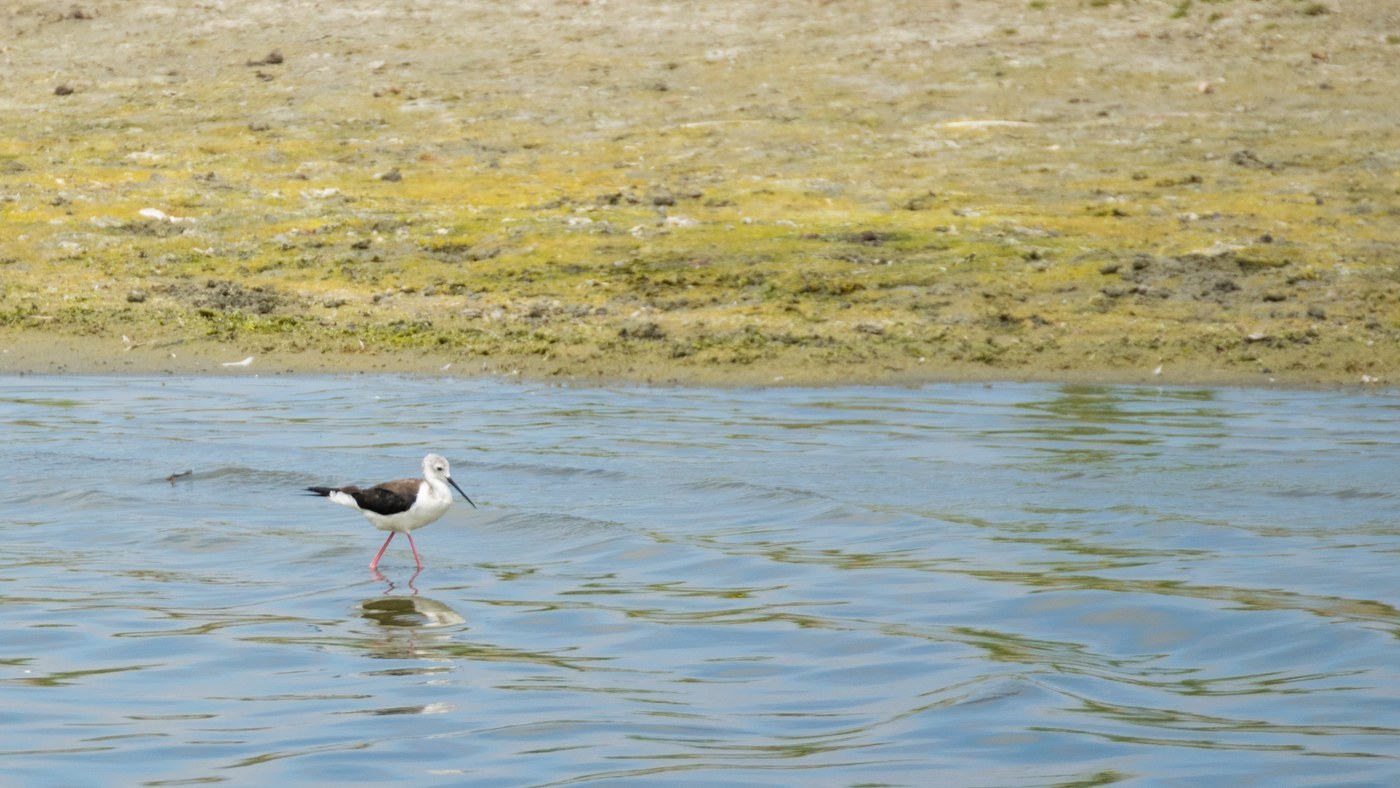
Key Field Marks
- Slender, elegant wader, about 35-40 cm long, with proportionally the longest legs relative to body size of any bird — bright pink to red
- Thin, straight, needle-like black bill
- White body with glossy black wings and back; the amount of black on the head and hindneck is variable, ranging from an all-white head to varying amounts of gray or black on the crown and nape, often more extensive in males and breeding condition
- In flight, the long legs trail conspicuously well beyond the tail, and the wings appear entirely black above and below with no wing stripe
- Juveniles show a browner tinge to the black areas and duller, more orange-pink legs
Similar Species
- Black-necked Stilt (treated as a separate species in the Americas by some authorities): shows more extensive and consistently black head/neck markings; ranges do not overlap
- Pied Avocet: shares a black-and-white pattern but has a distinctive thin, upturned bill and shorter, blue-gray legs
- No other wader combines the extremely long pink legs with a thin straight bill and black-and-white body, making adults straightforward to identify
Habitat & Range
- Found in shallow wetlands including lagoons, salt pans, flooded fields, sewage ponds, and mudflats, usually wading in water too deep for most other small waders
- Very widely distributed across Europe, Africa, and Asia, with additional populations in Australia
- Northern populations are migratory, while those in warmer regions are largely resident
Seasonality
- Breeds in spring and summer across temperate parts of its range; migratory populations move to warmer wintering areas in Africa and southern Asia in autumn, returning in spring
- Resident year-round in tropical and subtropical parts of the range
Voice
- Sharp, repeated, yapping "kik-kik-kik" or "kyip-kyip" notes, especially given in alarm near the nest
- Generally noisy and conspicuous when breeding, mobbing intruders with persistent calling
Frequently asked questions
What is the most distinctive feature of the Black-winged Stilt?
Its extremely long, bright pink legs relative to body size — proportionally the longest legs of any bird — combined with a thin straight black bill and black-and-white plumage.
How much black does a Black-winged Stilt show on its head?
It is highly variable — some individuals have an all-white head and neck, while others show a black or gray cap and hindneck; this variation is normal within the species.
How do you separate this species from an avocet?
Avocets have a thin, distinctly upturned bill and shorter blue-gray legs, while Black-winged Stilt has a straight bill and much longer pink legs.
Is the Black-winged Stilt the same as the American Black-necked Stilt?
They are very closely related and sometimes considered the same species; where treated separately, Black-necked Stilt (of the Americas) shows more consistently extensive black on the head and neck.